
Table of Contents
The information in this preliminary prospectus supplement is not complete and may be changed. This preliminary prospectus supplement and the accompanying base prospectus are not an offer to sell, nor a solicitation of an offer to buy, the notes in any jurisdiction where the offer or sale is not permitted.
Filed Pursuant to Rule 424(b)(5)
Registration No. 333-279735
| PRELIMINARY PROSPECTUS SUPPLEMENT (To Prospectus dated May 24, 2024) |
Subject to Completion, dated October 5, 2026 |
$

% Convertible Senior Notes due 2032
We are offering $ aggregate principal amount of our % convertible senior notes due 2032. In addition, we have granted the underwriters an option, which is exercisable within 30 days after the date of this prospectus supplement, to purchase up to an additional $ aggregate principal amount of notes solely to cover over-allotments.
MATURITY; INTEREST
We will pay interest on the notes at an annual rate of %, payable semi-annually in arrears on April 15 and October 15 of each year, beginning on April 15, 2027. The notes will mature on October 15, 2032, unless earlier converted or redeemed or repurchased by us.
CONVERSION
Noteholders may convert their notes at their option only in the following circumstances: (1) during the 30 consecutive trading days immediately after the period consisting of the first 20 trading days of any calendar quarter commencing after the calendar quarter ending on December 31, 2026, if the last reported sale price per share of our common stock (the “common stock”) exceeds 130% of the conversion price for each of at least five trading days during such 20 trading day period; (2) during the five consecutive business days immediately after any 10 consecutive trading day period (such 10 consecutive trading day period, the “measurement period”) in which the trading price per $1,000 principal amount of notes for each trading day of the measurement period was less than 98% of the product of the last reported sale price per share of our common stock on such trading day and the conversion rate on such trading day; (3) upon the occurrence of certain corporate events or distributions on our common stock, as described in this prospectus supplement; (4) if we call such notes for redemption; and (5) at any time from, and including, July 15, 2032 until the close of business on the second scheduled trading day immediately before the maturity date. We will settle conversions by paying or delivering, as applicable, cash, shares of our common stock or a combination of cash and shares of our common stock, at our election, based on the applicable conversion rate(s). The initial conversion rate is shares per $1,000 principal amount of notes, which represents an initial conversion price of approximately $ per share, and is subject to adjustment as described in this prospectus supplement. If a “make-whole fundamental change” (as defined in this prospectus supplement) occurs, then we will in certain circumstances increase the conversion rate for a specified period of time.
REDEMPTION AND REPURCHASE
We will have the right, at our election, to redeem all, or any portion (subject to certain limitations described in this prospectus supplement), of the notes, at any time, and from time to time on or after October 22, 2029 and on or before the 20th scheduled trading day immediately before the maturity date, at a cash redemption price equal to the principal amount of the notes to be redeemed, plus accrued and unpaid interest, if any, to, but excluding, the redemption date, but only if the last reported sale price per share of our common stock exceeds 130% of the conversion price on (x) each of at least 20 trading days, whether or not consecutive, during the 30 consecutive trading days ending on, and including, the trading day immediately before the date we send the related redemption notice; and (y) the trading day immediately before the date we send such notice. We refer to a redemption pursuant to the provision described in the preceding sentence as a “provisional redemption.” We will also have the right, at our election, to redeem all, but not less than all, of the notes, at a cash redemption price equal to the principal amount of the notes to be redeemed, plus accrued and unpaid interest, if any, to, but excluding, the redemption date, if the principal amount of the notes then outstanding is less than 10% of the aggregate principal amount of the notes issued in this offering (including any additional notes issued pursuant to any exercise of the underwriters’ option to purchase additional notes). We refer to a redemption pursuant to the provision described in the preceding sentence as a “cleanup redemption.” In addition, calling any note for provisional redemption or cleanup redemption will constitute a make-whole fundamental change with respect to that note, in which case the conversion rate applicable to the conversion of that note will be increased in certain circumstances if it is converted after it is called for such redemption.
Table of Contents
If a “fundamental change” (as defined in this prospectus supplement) occurs, then, except as described in this prospectus supplement, noteholders may require us to repurchase their notes at a cash repurchase price equal to the principal amount of the notes to be repurchased, plus accrued and unpaid interest, if any.
RANKING
The notes will be our senior, unsecured obligations and will be equal in right of payment with our existing and future senior, unsecured indebtedness, senior in right of payment to our existing and future indebtedness that is expressly subordinated to the notes and effectively subordinated to our existing and future secured indebtedness, to the extent of the value of the collateral securing that indebtedness. The notes will be structurally subordinated to all existing and future indebtedness and other liabilities, including trade payables, and (to the extent we are not a holder thereof) preferred equity, if any, of our subsidiaries.
CONCURRENT EQUITY OFFERING
Concurrently with this offering, we are offering, pursuant to a separate prospectus supplement shares of our common stock, (or, in lieu of common stock to certain investors, pre-funded warrants to purchase shares of our common stock), plus up to an additional shares of our common stock that the underwriters of the concurrent equity offering have the option to purchase from us (“concurrent equity offering”). The completion of this offering is not contingent on the completion of the concurrent equity offering, and the completion of the concurrent equity offering is not contingent on the completion of this offering.
LISTING; COMMON STOCK
No public market currently exists for the notes, and we do not intend to apply to list the notes on any securities exchange or for quotation on any inter-dealer quotation system. Our common stock is listed on the Nasdaq Global Select Market under the symbol “PCVX.” On October 5, 2026, the last reported sale price of our common stock was $73.82 per share.
| Per Note |
Total | |||||||
| Public offering price(1) |
% | $ | ||||||
| Underwriting discounts and commissions(2) |
% | $ | ||||||
| Proceeds, before expenses, to us |
% | $ | ||||||
| (1) | Plus accrued interest, if any, from, and including, , 2026. |
| (2) | We refer you to “Underwriting” beginning on page S-78 of this prospectus supplement for additional information regarding underwriting compensation. |
An investment in the notes involves risks. See “Risk Factors” beginning on page S-15.
Neither the Securities and Exchange Commission nor any state or foreign securities commission or regulatory authority has approved or disapproved of the notes or the shares of our common stock, if any, issuable upon conversion of the notes or passed upon the adequacy or accuracy of this prospectus supplement or the accompanying base prospectus. Any representation to the contrary is a criminal offense.
We expect to deliver the notes in book-entry form through the facilities of The Depository Trust Company on or about October , 2026, which will be the second business day after the initial trade date for the notes (this settlement cycle being referred to as “T+2”). Under Rule 15c6-1 under the Securities Exchange Act of 1934, as amended (the “Exchange Act”), trades in the secondary market generally are required to settle in one business day, unless the parties to any such trade expressly agree otherwise. Accordingly, purchasers who wish to trade notes prior to the business day preceding the settlement date will be required, by virtue of the fact that the notes initially will settle T+2, to specify an alternate settlement cycle at the time of any such trade to prevent a failed settlement. Purchasers of the notes who wish to trade the notes prior to the business day preceding the settlement date should consult their own advisors.
Bookrunning Managers
| Jefferies | Leerink Partners | BofA Securities | Goldman Sachs & Co. LLC | Evercore ISI |
Bookrunners
| Guggenheim Securities | Mizuho | |
| Lead Manager | ||
| Needham & Company | ||
| Financial Advisor to Vaxcyte, Inc. | ||
| J. Wood Capital Advisors | ||
Prospectus Supplement dated , 2026.
Table of Contents
TABLE OF CONTENTS
| S-1 | ||||
| S-3 | ||||
| S-10 | ||||
| S-15 | ||||
| S-23 | ||||
| S-25 | ||||
| S-27 | ||||
| S-29 | ||||
| S-70 | ||||
| S-77 | ||||
| S-78 | ||||
| S-85 | ||||
| S-85 | ||||
| S-85 | ||||
| S-86 |
Prospectus
| Page | ||||
| 1 | ||||
| WHERE YOU CAN FIND MORE INFORMATION; INCORPORATION BY REFERENCE |
2 | |||
| 4 | ||||
| 5 | ||||
| 6 | ||||
| 7 | ||||
| 8 | ||||
| 9 | ||||
| 14 | ||||
| 21 | ||||
| 23 | ||||
| 27 | ||||
| 29 | ||||
| 30 | ||||
S-i
Table of Contents
ABOUT THIS PROSPECTUS SUPPLEMENT
This prospectus supplement and the accompanying prospectus relate to an offering of our notes. Before buying any of the notes that we are offering, we urge you to carefully read this prospectus supplement and the accompanying prospectus, together with the information incorporated by reference as described under the headings “Where You Can Find More Information” and “Incorporation of Certain Information by Reference” in this prospectus supplement. These documents contain important information that you should consider when making your investment decision.
This document is in two parts. The first part is this prospectus supplement, which describes the terms of this offering of notes and also adds to, updates and changes information contained in the accompanying prospectus and the documents incorporated by reference herein and therein. The second part is the accompanying prospectus, which gives more general information. To the extent the information contained in this prospectus supplement differs from or conflicts with the information contained in the accompanying prospectus or any document incorporated by reference herein or therein, the information in this prospectus supplement will control. If any statement in one of these documents is inconsistent with a statement in another document having a later date—for example, a document incorporated by reference into the accompanying prospectus—the statement in the document having the later date modifies or supersedes the earlier statement.
We have not, and the underwriters have not, authorized anyone else to provide you with information that is in addition to or different from that contained or incorporated by reference in this prospectus supplement and the accompanying prospectus, along with the information contained in any permitted free writing prospectus we have authorized for use in connection with this offering. We take, and the underwriters take, no responsibility for, and can provide no assurance as to the reliability of, any other information that others may give you. We are offering to sell, and seeking offers to buy, the notes only in jurisdictions where offers and sales are permitted. The information contained in this prospectus supplement, the accompanying prospectus and any authorized free writing prospectus is accurate only as of the date of this prospectus supplement or the date of the accompanying prospectus, and the information in the documents incorporated by reference in this prospectus supplement and the accompanying prospectus is accurate only as of the date of those respective documents, regardless of the time of delivery of this prospectus supplement and the accompanying prospectus or of any sale of the notes. Our business, financial condition, results of operations and prospects may have changed since those dates. You should read this prospectus supplement and the accompanying prospectus, as well as the documents incorporated by reference into this prospectus supplement and the accompanying prospectus, and any free writing prospectus that we have authorized for use in connection with this offering, in their entirety, before making an investment decision.
Neither we nor the underwriters have done anything that would permit this offering or possession or distribution of this prospectus supplement and the accompanying prospectus in any jurisdiction where action for that purpose is required, other than in the United States. Persons who come into possession of this prospectus supplement, the accompanying prospectus and any free writing prospectus related to this offering in jurisdictions outside the United States are required to inform themselves about and to observe any restrictions as to this offering and the distribution of this prospectus supplement, the accompanying prospectus and any such free writing prospectus applicable to that jurisdiction.
Unless the context otherwise requires, all references in this prospectus supplement to “we,” “us,” “our,” “our company” and “Vaxcyte” refer to Vaxcyte, Inc. and its consolidated subsidiary, as reflected in the consolidated financial statements incorporated by reference herein. Accordingly, references in this prospectus supplement to our “subsidiary” or “subsidiaries,” as the context requires, refer to our operating subsidiary.
This prospectus supplement, the accompanying prospectus and the information incorporated by reference herein and therein may include trademarks, service marks and trade names owned by us or other companies. All trademarks, service marks and trade names included or incorporated by reference into this prospectus supplement or the accompanying prospectus are the property of their respective owners. Vaxcyte, the Vaxcyte logo and our other registered or common law trade names, trademarks or service marks appearing in this prospectus
S-1
Table of Contents
supplement, the accompanying prospectus and the documents incorporated by reference herein and therein are the property of Vaxcyte, Inc. or exclusively licensed for Vaxcyte’s use. Solely for convenience, trademarks and tradenames referred to in this prospectus supplement, the accompanying prospectus and the documents incorporated by reference herein and therein may appear without the ® and ™ symbols, but those references are not intended to indicate, in any way, that we will not assert, to the fullest extent under applicable law, our rights or that the applicable owner will not assert its rights, to these trademarks and tradenames.
S-2
Table of Contents
This summary highlights selected information contained elsewhere or incorporated by reference in this prospectus supplement and the accompanying prospectus. This summary does not contain all the information you should consider before investing in our notes. You should read and consider carefully the more detailed information in this prospectus supplement and the accompanying prospectus (including the documents incorporated by reference herein and therein), including the factors described under the heading “Risk Factors” in this prospectus supplement and documents incorporated by reference and the financial and other information incorporated by reference in this prospectus supplement and the accompanying prospectus, as well as the information included in any free writing prospectus that we have authorized for use in connection with this offering, before making an investment decision.
Overview
We are a clinical-stage vaccine innovation company engineering high-fidelity vaccines to protect humankind from the consequences of bacterial diseases. We are re-engineering the way highly complex vaccines are made through the XpressCF™ cell-free protein synthesis platform. Unlike conventional cell-based approaches, our system for producing difficult-to-make proteins and antigens is intended to develop and deliver high-fidelity vaccines with enhanced immunological benefits that are beyond the capabilities of conventional approaches.
Vaccines are one of the most successful and cost-effective global health interventions and prevent millions of deaths worldwide each year. Routine pediatric vaccinations in the United States are estimated to prevent approximately 17 million cases of disease over the lifetimes of each annual birth cohort, and it is estimated that every $1 spent on childhood vaccination results in savings of approximately $11. Adult vaccination has increased with the introduction of new vaccines along with expanded age recommendations and growing international adoption, which is contributing to the growth of the overall vaccine market. Given the critical role vaccines play in preventing disease from childhood through adulthood, the global vaccine market is large, durable and growing. There are areas of significant unmet medical need, including vaccines that can provide broader protection, against both currently circulating and historically prevalent strains, than currently marketed vaccines and novel vaccines that target pathogens for which there are no currently approved vaccines. We are driven to eradicate or treat invasive bacterial infections, which have serious and costly health consequences when left unchecked.
We carefully select our target disease areas and vaccine candidates based on the following criteria: areas of significant unmet medical need, clear commercial opportunity and efficient market adoption, acceptable biological risk and established or acceptable clinical pathways. We are leveraging our scalable cell-free protein synthesis platform to develop potentially superior and novel conjugate and protein vaccine candidates for adult and pediatric indications using these criteria.
S-3
Table of Contents
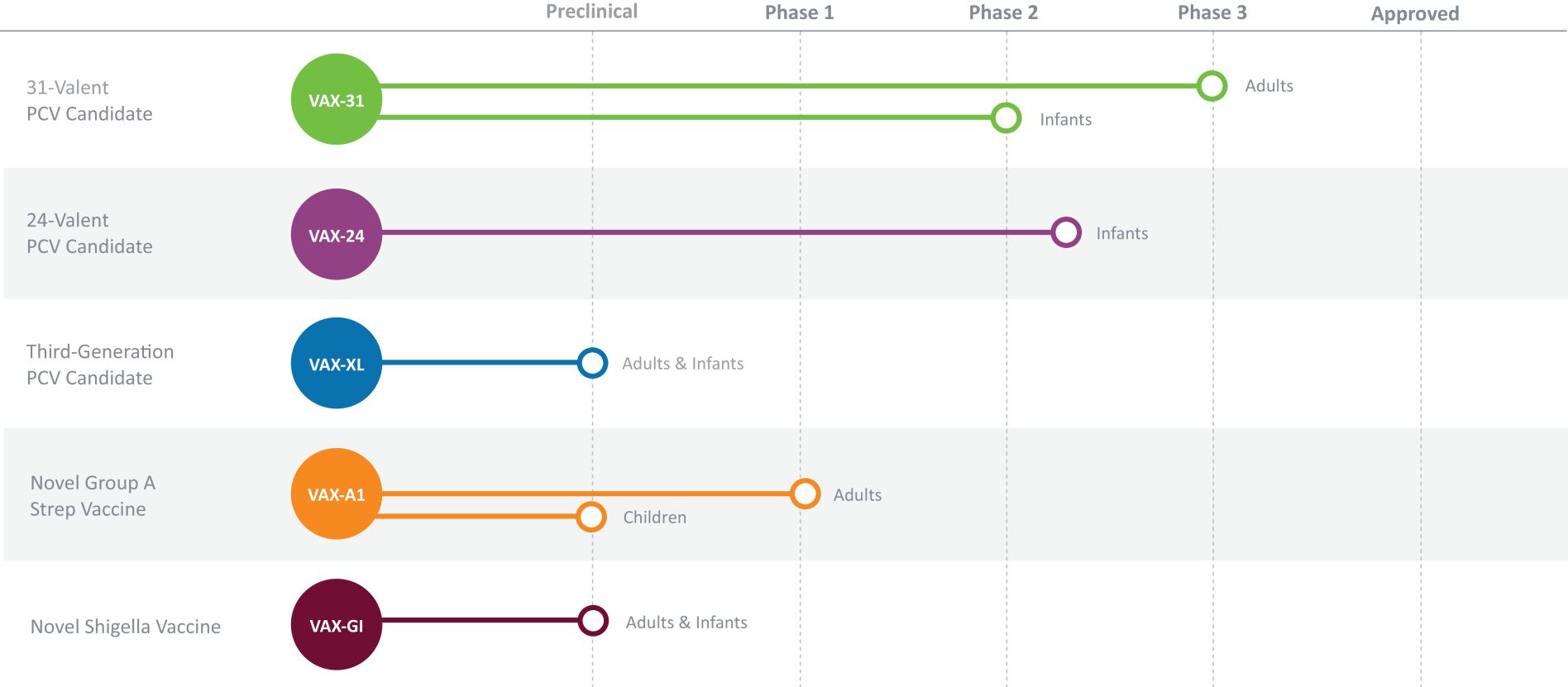
Our pipeline includes:
| • | PCV candidates that we believe are among the broadest-spectrum PCV candidates currently in development, targeting the approximately $8.5 billion global pneumococcal vaccine market. Pneumococcal disease (“PD”) is an infection caused by Streptococcus pneumoniae bacteria. It can result in invasive pneumococcal disease (“IPD”), including meningitis and bacteremia, and non-invasive PD, including pneumonia, otitis media and sinusitis. Our broad-spectrum, carrier-sparing PCV candidates, VAX-31, VAX-24 and VAX-XL, are designed to improve upon standard-of-care PCVs for both adults and children by covering the serotypes that are responsible for increasing portions of IPD in circulation and are associated with high case-fatality rates, antibiotic resistance and meningitis, while maintaining coverage of previously circulating strains that are currently contained through continued vaccination. |
| • | PCV Franchise Adult Indication: |
| • | VAX-31 is a 31-valent, broad-spectrum, carrier-sparing investigational PCV being developed for the prevention of IPD and pneumonia. VAX-31 is the broadest-spectrum PCV in the clinic, and has the potential to provide protection against both currently circulating and historically prevalent serotypes. VAX-31 was designed to increase coverage, in a single vaccine, to approximately 95% of IPD and approximately 88% of pneumococcal pneumonia circulating in adults in the United States aged 50 and older, with the potential to provide an incremental 13-36% broader coverage for IPD and an incremental 19-31% broader coverage for pneumococcal pneumonia over current standard-of-care adult PCVs. |
| • | In September 2024, we announced positive topline results from a Phase 1/2 study of VAX-31 in adults. The VAX-31 Phase 1/2 clinical study was a randomized, observer-blind, active-controlled, dose-finding clinical study designed to evaluate the safety, tolerability and immunogenicity of a single injection of VAX-31 at three dose levels (Low, Middle and High) and compared to Prevnar 20® (“PCV20”) in 1,015 healthy adults aged 50 and older. VAX-31 was observed to be well tolerated and demonstrated a safety profile at all doses studied through the full six-month evaluation period similar to PCV20. VAX-31 showed robust OPA immune responses for all 31 serotypes at all doses studied. |
| • | Based on these positive results, we selected the High Dose of VAX-31 to advance to an adult Phase 3 program. |
S-4
Table of Contents
| • | In November 2024, we announced that the U.S. Food and Drug Administration (“FDA”) granted breakthrough therapy designation (“BTD”) for VAX-31 for the prevention of IPD in adults and, in August 2025, we announced that the FDA expanded the BTD for VAX-31 to include the prevention of pneumonia caused by Streptococcus pneumoniae. |
| • | In December 2025, following an FDA End-of-Phase 2 meeting, we announced that the first participants were dosed in a Phase 3 pivotal, non-inferiority trial (“OPUS-1”) evaluating the safety, tolerability and immune responses of VAX-31 in healthy, pneumococcal-naïve (defined as having no known prior history of IPD or pneumococcal pneumonia, or receipt of any licensed or investigational pneumococcal vaccine) adults aged 50 and older through direct, head-to-head comparisons with both PCV20 and PCV21, the current standard-of-care PCVs. In March 2026, we announced that we completed enrollment of this trial. |
| • | In January 2026, we announced the initiation of an additional Phase 3 trial evaluating VAX-31 when administered concomitantly with a licensed, high-dose seasonal influenza vaccine in pneumococcal-naïve adults aged 50 years and older (“OPUS-2”). In February 2026, we announced the initiation of a separate Phase 3 study evaluating VAX-31 in adults previously vaccinated with a lower-valency pneumococcal vaccine (“OPUS-3”). In March 2026, we announced we completed enrollment of the OPUS-2 trial and in May 2026, we announced we completed enrollment of the OPUS-3 trial. We expect to report safety, tolerability and immunogenicity data from the OPUS-2 and OPUS-3 studies in the first half of 2027. We are also planning for a manufacturing consistency study (e.g., a lot-to-lot study) to be the final Phase 3 study to enable the potential submission of a Biologics License Application (“BLA”). |
| • | In October 2026, we announced positive topline results from the Phase 3 OPUS-1 trial. OPUS-1 is a randomized, double-blind, active-controlled Phase 3 trial evaluating the safety, tolerability and immunogenicity of the VAX-31 High Dose, the adult formulation being evaluated in the OPUS Phase 3 program, in healthy, pneumococcal-naïve U.S. adults aged 50 years and older (n=3,572), with a separate cohort of adults aged 18-49 years (n=475). |
In the Phase 3 study, VAX-31 was well tolerated and demonstrated a safety profile similar to PCV20 and Capvaxive® (“PCV21”) at all ages studied. VAX-31 met all prespecified co-primary immunogenicity endpoints in adults 50 and older. All 28 VAX-31 serotypes shared with PCV20 and/or PCV21 met the prespecified noninferiority criteria (lower bound of the 95% confidence interval (“LBCI”) >0.667). For the 11 serotypes shared by VAX-31, PCV20 and PCV21, VAX-31 met all 11 primary noninferiority assessments based on opsonophagocytic activity (“OPA”) geometric mean ratios (“GMRs”). For each serotype, the prespecified analysis required noninferiority against one or both comparators, using an OPA GMR noninferiority criterion of LBCI >0.667 with prespecified Hochberg multiplicity adjustment. For the nine serotypes only in VAX-31 and PCV20, all nine met the prespecified OPA GMR noninferiority criterion (LBCI >0.667). For the eight serotypes only in VAX-31 and PCV21, all eight met the prespecified OPA GMR noninferiority criterion (LBCI >0.667). The three serotypes unique to VAX-31 and cross-reactive serotype 20B met the OPA GMR superiority criterion (LBCI >2.0) with prespecified Hochberg multiplicity adjustment. For the prespecified primary immunobridging endpoint, VAX-31 met the noninferiority criterion (LBCI >0.667) for all 32 serotype OPA GMR comparisons in adults aged 18-49 compared to adults aged 50-64. In the prespecified individual comparator analyses, VAX-31 met the noninferiority criterion (LBCI >0.667) for 20 of
S-5
Table of Contents
20 serotypes shared with PCV20 and 17 of 19 shared with PCV21. Compared to PCV21, serotypes 3 and 12F missed the LBCI >0.667 noninferiority criterion and met the historical LBCI >0.5 threshold.
| • | PCV Franchise Pediatric Indication: |
| • | VAX-31 is a 31-valent, broad-spectrum, carrier-sparing investigational PCV also being developed for the prevention of IPD in children. VAX-31 is the broadest-spectrum PCV in the clinic designed to cover approximately 91% of IPD in U.S. children under five years of age and approximately 96% of otitis media due to Streptococcus pneumoniae in U.S. children five years of age or under. |
| • | In December 2024, we announced that the first participants were dosed in the first stage of a Phase 2, randomized, dose-finding study of VAX-31 in infants. Stage 1 of the study evaluated the safety and tolerability of VAX-31 at three dose levels (Low, Middle and High) and compared to PCV20 in 48 infants in a dose-escalation approach. In the Low, Middle and High Doses, all serotypes were dosed at 1.1mcg, 2.2mcg and 3.3mcg, respectively, except serotypes 1, 5 and 22F, which were dosed at 1.65mcg, 3.3mcg, and 4.4mcg, respectively. Participants who received VAX-31 in Stage 1 continued the standard dosing regimen as part of Stage 2. |
| • | In February 2025, we announced that the Phase 2, randomized, dose-finding study of VAX-31 in healthy infants had advanced to the second stage of the study. Stage 2 of the study is evaluating the safety, tolerability and immunogenicity of VAX-31 at the same three dose levels evaluated in Stage 1 and compared to PCV20. In line with recommendations from the ACIP, the study design includes a primary immunization series consisting of three doses given at two months, four months and six months of age, followed by a subsequent booster dose at 12-15 months of age. |
| • | In September 2025, we announced advancement of the VAX-31 infant Phase 2 randomized, dose-finding study to the third and final stage following modifications to the protocol to add a new dose arm to evaluate a VAX-31 Optimized Dose (majority of serotypes dosed at 4.4mcg and the balance dosed at 3.3mcg) and discontinued further enrollment in the Low Dose arm. The Middle and High Dose arms continued as planned. |
| • | The modified study is evaluating the safety, tolerability and immunogenicity of VAX-31 compared to PCV20 in 900 participants, including the 100 participants previously enrolled in the Low Dose arm. |
| • | In January 2026, we announced that we completed enrollment of this study. We expect to announce topline safety, tolerability and immunogenicity data from the primary three-dose immunization series and booster dose either sequentially or together by the end of the first half of 2027. |
| • | Pending the VAX-31 Phase 2 infant study readout, we plan to initiate a Phase 3 program in infants with an Optimized Dose formulation of VAX-24 or VAX-31. |
| • | VAX-24 is a 24-valent, broad-spectrum, carrier-sparing investigational PCV being developed for the prevention of IPD in infants, and it covers more serotypes than any pneumococcal infant vaccine on the market today. |
| • | In March 2025, we announced positive topline, interim data from the VAX-24 infant Phase 2 study, a randomized, observer-blind, dose-finding two-stage clinical study evaluating the safety, tolerability and immunogenicity of VAX-24 in healthy infants that enrolled 803 participants. |
S-6
Table of Contents
| • | In November 2025, we announced final safety, tolerability, and immunogenicity results from the VAX-24 infant Phase 2 study that were consistent with the positive interim data reported in March 2025 and showed that VAX-24 elicited robust, dose-dependent immune responses, with little to no evidence of carrier suppression observed. The final data analysis included full 6-month safety results and complete post-dose 3 (primary immunization series) and post-dose 4 (booster dose) IgG and OPA results. The key immunogenicity endpoints included an assessment of immune responses for each of the VAX-24 dose levels (Low, Mid, Mixed) compared to PCV20 for the 20 common and 4 unique serotypes in VAX-24. At 1-month post-dose 3 and post-dose 4, immune responses were assessed based on serotype-specific IgG seroconversion rates (IgG threshold value of ≥0.35mcg/mL). IgG GMRs were also assessed at 1-month post-dose 3 and post-dose 4, along with other key immunogenicity endpoints, including OPA. |
| • | In this study, VAX-24 was well-tolerated and demonstrated a safety profile similar to PCV20 across all doses studied. Post-dose 3 and post-dose 4, all VAX-24 doses evaluated demonstrated robust IgG and OPA immunogenicity responses. |
| • | Post-dose 3, all VAX-24 doses met target precedent Phase 2 non-inferiority criteria on relative seroconversion rates (lower limit of the 95% confidence interval for the difference between the proportion of participants achieving the pre-defined seroconversion rate (IgG concentration ≥0.35 mcg/mL) is > -15% for each serotype) for the highest circulating serotypes, as defined by the percentage of IPD caused in individuals <5 years of age in the U.S. in 2023 based on the U.S. Center for Disease Control (“CDC”) active bacterial core (“ABC”) surveillance data, contained in VAX-24. The Low and Mid doses met the seroconversion rate criteria for 20 of 24 serotypes overall and the Mixed Dose met such criteria for 19 of 24 serotypes. The Mid and Mixed Doses met the target Phase 2 IgG GMR point estimate of >0.6 for 21 of 24 serotypes. |
| • | Post-dose 4, all VAX-24 doses met our target Phase 2 IgG GMR point estimate of >0.6 for the three highest circulating serotypes contained in VAX-24. The Mixed Dose met this target for 19 of 24 serotypes overall and the Mid dose met this target for 18 of 24 serotypes. Post-dose 4, VAX-24 elicited robust memory responses across all doses for all serotypes. |
| • | Additionally, the four incremental serotypes unique to VAX-24 that provide expanded serotype coverage relative to PCV20 elicited robust immune responses and met all target criteria across all endpoints at all doses evaluated. |
| • | We believe the final data from the VAX-24 infant Phase 2 dose-finding study further supported our rationale for exploring higher doses in the ongoing VAX-31 infant Phase 2 study. |
| • | VAX-XL is a third-generation PCV candidate designed to provide the broadest coverage of any PCV currently in development. |
| • | VAX-A1 is a novel conjugate vaccine candidate designed to prevent disease caused by Group A Streptococcus (Streptococcus pyogenes) (“Group A Strep”). Group A Strep is pervasive globally and causes an estimated 800 million cases of illness annually, including pharyngitis, or strep throat, and certain severe invasive infections and sequelae. There is currently no vaccine against Group A Strep, which is one of the leading infectious disease-related causes of death and disability worldwide and a significant contributor to the prescription of antibiotics in children. We believe we have demonstrated preclinical proof of concept for VAX-A1, the data for which were published in December 2020. In |
S-7
Table of Contents
| June 2026, we initiated a Phase 1 adult study for VAX-A1, with the primary objective of assessing safety and tolerability, along with a secondary objective of evaluating initial immunogenicity data, to support potential further advancement. We expect to report topline data from this study in the second half of 2027. |
| • | VAX-GI is a novel preclinical vaccine candidate being developed as a preventative treatment for dysentery and shigellosis, which is caused by Shigella bacteria. Shigella is a bacterial illness estimated to cause 80 million to 165 million cases of disease and 600,000 deaths annually, mostly among children. The central antigen in VAX-GI is IpaB, a well-appreciated antigen that other developers have been unable to produce in an amount sufficient to enable a commercial product. With our cell-free technology, we believe we can produce this antigen at substantially improved yields, allowing for commercial-scale production. VAX-GI is being developed in collaboration with the University of Maryland, Baltimore as well as with partial funding from two research grants awarded by the National Institutes of Health (“NIH”). As part of our continued focus on strategic capital deployment and in order to prioritize our resources towards our PCV franchise, we announced in August 2025 that we had paused the advancement, beyond preclinical development, of VAX-GI while remaining confident in its potential and preserving the option to advance the program in the future. |
Other discovery-stage programs that leverage our cell-free protein synthesis platform, which, if proven successful in preclinical studies, could also be advanced into IND-enabling activities and clinical studies.
Recent Developments
VAX-31 Phase 3 OPUS-1 Study in Adults
On October 5, 2026, we announced positive topline results from the Phase 3 OPUS-1 trial. OPUS-1 is a randomized, double-blind, active-controlled Phase 3 trial evaluating the safety, tolerability and immunogenicity of the VAX-31 High Dose, the adult formulation being evaluated in the OPUS Phase 3 program, in healthy, pneumococcal-naïve U.S. adults aged 50 years and older (n=3,572), with a separate cohort of adults aged 18-49 years (n=475). In this study, VAX-31 was well tolerated and demonstrated a safety profile similar to PCV20 and PCV21 at all ages studied. VAX-31 met all prespecified co-primary immunogenicity endpoints in adults 50 and older. All 28 VAX-31 serotypes shared with PCV20 and/or PCV21 met the prespecified noninferiority criteria (LBCI >0.667). For the 11 serotypes shared by VAX-31, PCV20 and PCV21, VAX-31 met all 11 primary noninferiority assessments based on OPA GMRs. For each serotype, the prespecified analysis required noninferiority against one or both comparators, using an OPA GMR noninferiority criterion of LBCI >0.667 with prespecified Hochberg multiplicity adjustment. For the nine serotypes only in VAX-31 and PCV20, all nine met the prespecified OPA GMR noninferiority criterion (LBCI >0.667). For the eight serotypes only in VAX-31 and PCV21, all eight met the prespecified OPA GMR noninferiority criterion (LBCI >0.667). The three serotypes unique to VAX-31 and cross-reactive serotype 20B met the OPA GMR superiority criterion (LBCI >2.0) with prespecified Hochberg multiplicity adjustment. For the prespecified primary immunobridging endpoint, VAX-31 met the noninferiority criterion (LBCI >0.667) for all 32 serotype OPA GMR comparisons in adults aged 18-49 compared to adults aged 50-64. In the prespecified individual comparator analyses, VAX-31 met the noninferiority criterion (LBCI >0.667) for 20 of 20 serotypes shared with PCV20 and 17 of 19 shared with PCV21. Compared to PCV21, serotypes 3 and 12F missed the LBCI >0.667 noninferiority criterion and met the historical LBCI >0.5 threshold.
Concurrent Equity Offering
Concurrently with this offering, we are offering, pursuant to a separate prospectus supplement, shares of our common stock, (or, in lieu of common stock to certain investors, pre-funded warrants to purchase shares of our common stock), plus up to an additional shares of our common stock that the underwriters of the
S-8
Table of Contents
concurrent equity offering have the option to purchase from us. The completion of this offering is not contingent on the completion of the concurrent equity offering, and the completion of the concurrent equity offering is not contingent on the completion of this offering. Accordingly, you should not assume that the concurrent equity offering will be consummated on the terms described in this prospectus supplement, if at all, or that we will receive any additional proceeds from the concurrent equity offering. This prospectus supplement does not constitute an offer to sell, or the solicitation of an offer to buy, any securities being offered in the concurrent equity offering. The prospectus supplement for the concurrent equity offering does not constitute an offer to sell, or the solicitation of an offer to buy, any of the notes, or the shares of common stock, if any, issuable upon conversion of the notes, that we are offering pursuant to this prospectus supplement. See “The Concurrent Equity Offering.”
Certain Unaudited Preliminary Financial Results
Although our financial results as of and for the three months ended September 30, 2026 are not yet finalized, based on currently available information, we expect cash, cash equivalents and investments as of September 30, 2026 to be reported as approximately $2.3 billion. Neither our independent accountants, nor any other independent accountants, have compiled, examined, or performed any procedures with respect to the preliminary financial information contained herein, nor have they expressed any opinion or any other form of assurance on such information, and assume no responsibility for, and disclaim any association with, the preliminary financial information.
Corporate Information
We were incorporated under the laws of the state of Delaware in November 2013 as SutroVax, Inc. and changed our name to Vaxcyte, Inc. in May 2020. Our principal executive offices are located at 825 Industrial Road, Suite 300, San Carlos, California 94070. Our telephone number is (650) 837-0111. Our website address is https://www.vaxcyte.com. Information contained on, or that can be accessed through, our website is not incorporated by reference into this prospectus supplement and the accompanying prospectus.
S-9
Table of Contents
The summary below describes the principal terms of the notes. Certain of the terms of the notes described below are subject to important limitations and exceptions that are described in more detail under the caption “Description of Notes.” As used in this section, (i) “we,” “our” and “us” refer to Vaxcyte, Inc. and not to its consolidated subsidiary; and (ii) our “common stock” refers to our common stock, $0.001 par value per share.
| Issuer |
Vaxcyte, Inc. |
| Notes |
$ aggregate principal amount of % convertible senior notes due 2032. We have granted the underwriters an option, which is exercisable within 30 days after the date of this prospectus supplement, to purchase up to an additional $ aggregate principal amount of notes solely to cover over-allotments. |
| Settlement |
, 2026, which will be the second business day following the initial trade date for the notes offered pursuant to this prospectus supplement (this settlement cycle being referred to as “T+2”). Under Rule 15c6-1 under the Exchange Act, trades in the secondary market generally are required to settle in one business day, unless the parties to any such trade expressly agree otherwise. Accordingly, purchasers who wish to trade the notes being offered hereby prior to the business day preceding the settlement date will be required, by virtue of the fact that the notes initially will settle T+2, to specify an alternate settlement cycle at the time of any such trade to prevent a failed settlement. Purchasers of the notes who wish to trade the notes prior to the business day preceding the settlement date should consult their own advisors. |
| Ranking |
The notes will be our senior, unsecured obligations and will be: |
| • | equal in right of payment with our existing and future senior, unsecured indebtedness; |
| • | senior in right of payment to our existing and future indebtedness that is expressly subordinated to the notes; |
| • | effectively subordinated to our existing and future secured indebtedness, to the extent of the value of the collateral securing that indebtedness; and |
| • | structurally subordinated to all existing and future indebtedness and other liabilities, including trade payables, and (to the extent we are not a holder thereof) preferred equity, if any, of our subsidiaries. |
| Maturity |
October 15, 2032, unless earlier repurchased, redeemed or converted. |
| Interest |
% per annum, payable semi-annually in arrears on April 15 and October 15 of each year, beginning on April 15, 2027. In addition, special interest will accrue on the notes in the circumstances described under the caption “Description of Notes—Events of Default—Special Interest as Sole Remedy for Certain Reporting Defaults”. |
S-10
Table of Contents
| Conversion Rights |
Noteholders may convert their notes at their option only in the following circumstances: |
| • | during the 30 consecutive trading days immediately after the period consisting of the first 20 trading days of any calendar quarter commencing after the calendar quarter ending on December 31, 2026, if the last reported sale price per share of our common stock exceeds 130% of the conversion price for each of at least five trading days during such 20 trading day period |
| • | during the five consecutive business days immediately after any 10 consecutive trading day period (such 10 consecutive trading day period, the “measurement period”) in which the trading price per $1,000 principal amount of notes for each trading day of the measurement period was less than 98% of the product of the last reported sale price per share of our common stock on such trading day and the conversion rate on such trading day; |
| • | upon the occurrence of certain corporate events or distributions on our common stock, as described in this prospectus supplement; |
| • | if we call such notes for redemption; and |
| • | at any time from, and including, July 15, 2032 until the close of business on the second scheduled trading day immediately before the maturity date. |
| We will settle conversions by paying or delivering, as applicable, cash, shares of our common stock or a combination of cash and shares of our common stock, at our election, based on the applicable conversion rate(s). If we elect to deliver cash or a combination of cash and shares of our common stock, then the consideration due upon conversion will be determined over an observation period consisting of 20 “VWAP trading days” (as defined in this prospectus supplement). The initial conversion rate is shares per $1,000 principal amount of notes, which represents an initial conversion price of approximately $ per share, and is subject to adjustment as described in this prospectus supplement. |
| If a “make-whole fundamental change” (as defined in this prospectus supplement) occurs, then we will in certain circumstances increase the conversion rate for a specified period of time. |
| See “Description of Notes—Conversion Rights.” |
| Provisional Redemption |
We will have the right, at our election, to redeem (a “provisional redemption”) all, or any portion (subject to certain limitations described below), of the notes, at any time, and from time to time, on or after October 22, 2029 and on or before the 20th scheduled trading day immediately before the maturity date, at a cash redemption price equal to the principal amount of the notes to be redeemed, plus accrued and unpaid interest, if any, to, but excluding, the redemption date, but only if the last reported sale price per share of our common |
S-11
Table of Contents
| stock exceeds 130% of the conversion price on (x) each of at least 20 trading days, whether or not consecutive, during the 30 consecutive trading days ending on, and including, the trading day immediately before the date we send the related redemption notice; and (y) the trading day immediately before the date we send such notice. However, we may not redeem less than all of the outstanding notes pursuant to a provisional redemption unless at least $75.0 million aggregate principal amount of notes are outstanding and not called for redemption as of the time we send the related redemption notice. In addition, calling any note for provisional redemption will constitute a make-whole fundamental change with respect to that note, in which case the conversion rate applicable to the conversion of that note will be increased in certain circumstances if it is converted after it is called for provisional redemption. See “Description of Notes—Optional Redemption—Provisional Redemption.” |
| Optional Cleanup Redemption |
We will have the right, at our election, to redeem (a “cleanup redemption”) all, but not less than all, of the notes, at any time, at a cash redemption price equal to the principal amount of the notes to be redeemed, plus accrued and unpaid interest, if any, to, but excluding, the redemption date, but only if the principal amount of the notes outstanding at the time we send the related redemption notice is less than 10% of the aggregate principal amount of the notes issued in this offering (including any additional notes issued pursuant to any exercise of the underwriters’ option to purchase additional notes). In addition, calling the notes for cleanup redemption will constitute a make-whole fundamental change, which will require us to increase the conversion rate in certain circumstances for a specified period of time. See “Description of Notes—Optional Redemption—Cleanup Redemption.” |
| Repurchase at the Option of the Noteholders After a Fundamental Change |
If a “fundamental change” (as defined in this prospectus supplement) occurs, then, except as described in this prospectus supplement, noteholders may require us to repurchase their notes at a cash repurchase price equal to the principal amount of the notes to be repurchased, plus accrued and unpaid interest, if any, to, but excluding, the fundamental change repurchase date. See “Description of Notes—Fundamental Change Permits Noteholders to Require Us to Repurchase Notes.” |
| Trustee, Paying Agent and Conversion Agent |
U.S. Bank Trust Company, National Association. |
| No Public Market |
The notes are a new class of securities for which no public market currently exists. We do not intend to apply to list the notes on any securities exchange or for quotation on any inter-dealer quotation system. Accordingly, a liquid market for the notes may never develop. Certain of the underwriters have advised us that they intend to make a market in the notes. However, they are not obligated to do so and may discontinue any market-making activity at any time and without notice. |
S-12
Table of Contents
| The Nasdaq Global Select Market Symbol |
Our common stock is listed on the Nasdaq Global Select Market under the symbol “PCVX.” On October 5, 2026, the last reported sale price of our common stock was $73.82 per share. |
| Use of Proceeds |
We estimate that the net proceeds to us from this offering will be approximately $ million (or approximately $ million if the underwriters fully exercise their option to purchase additional notes), after deducting the underwriting discounts and commissions and our estimated offering expenses. Our primary use of the net proceeds from this offering, together with the net proceeds from the concurrent equity offering described below, if it is consummated, will be to fund (i) clinical development of the VAX-31 adult and pediatric programs, including (a) for the ongoing VAX-31 adult Phase 3 program, the trial evaluating concomitant administration with a seasonal influenza vaccine (OPUS-2, enrolled), the trial in adults who have previously received a pneumococcal vaccine (OPUS-3, enrolled) and the planned manufacturing consistency study, and the anticipated topline safety, tolerability and immunogenicity data announcements from such studies, and (b) for the VAX-31 infant Phase 2 dose- finding study (enrolled), the anticipated topline data announcement(s) from the primary three-dose immunization series and booster dose; (ii) manufacturing scale-up, processes and supply to support our clinical studies and the potential commercial launches of our PCV programs, including (a) to establish additional manufacturing capacity to meet potential incremental supply requirements for the global adult and pediatric populations following the potential initial commercial launch of VAX-31 in adults in the United States and (b) to build inventory levels in advance of such potential commercial launch; (iii) medical affairs, commercial and systems-related investments to prepare for and execute the anticipated U.S. launch of VAX-31 in adults; (iv) ongoing research and development of our other early-stage pipeline vaccine candidates; and (v) general corporate purposes, including working capital, operating expenses and capital expenditures, as well as potential expansion of our research pipeline. See “Use of Proceeds.” |
| Concurrent Equity Offering |
Concurrently with this offering, we are offering, pursuant to a separate prospectus supplement, shares of our common stock, (or, in lieu of common stock to certain investors, pre-funded warrants to purchase shares of our common stock), plus up to an additional shares of our common stock that the underwriters of the concurrent equity offering have the option to purchase from us. We estimate that the net proceeds to us from the concurrent equity offering, if it is consummated, will be approximately $ million (or approximately $ million if the underwriters of the concurrent equity offering fully exercise their option to purchase additional shares of common stock), after deducting the underwriting discounts and commissions and our estimated offering expenses. |
S-13
Table of Contents
| The completion of this offering is not contingent on the completion of the concurrent equity offering, and the completion of the concurrent equity offering is not contingent on the completion of this offering. Accordingly, you should not assume that the concurrent equity offering will be consummated on the terms described in this prospectus supplement, if at all, or that we will receive any additional proceeds from the concurrent equity offering. This prospectus supplement does not constitute an offer to sell, or the solicitation of an offer to buy, any securities being offered in the concurrent equity offering. The prospectus supplement for the concurrent equity offering does not constitute an offer to sell, or the solicitation of an offer to buy, any of the notes, or the shares of common stock, if any, issuable upon conversion of the notes, we are offering pursuant to this prospectus supplement. See “The Concurrent Equity Offering.” |
| Risk Factors |
Investing in the notes involves risks. See “Risk Factors.” |
| U.S. Federal Income Tax Considerations |
For a description of U.S. federal income tax considerations of owning, converting and disposing of the notes and owning and disposing of shares of our common stock, if any, issuable upon conversion of the notes, see “U.S. Federal Income Tax Considerations.” |
| Book-Entry Form |
We will initially issue the notes in the form of one or more global notes registered in the name of Cede & Co., as nominee of The Depository Trust Company (“DTC”), without interest coupons, which we will deposit with the trustee as custodian for DTC. Beneficial interests in global notes will be shown on, and transfers of global notes will be effected only through, the records maintained by DTC. Except in limited circumstances, we will not issue certificated notes. See “Description of Notes—Book Entry, Settlement and Clearance.” |
S-14
Table of Contents
Investing in the notes involves a high degree of risk. In addition to the other information included and incorporated by reference in this prospectus supplement or the accompanying base prospectus, you should carefully consider the risks described or referred to below before deciding to purchase the notes. The occurrence of any of these risks may materially harm our business, results of operations and financial condition. As a result, the trading price of the notes and our common stock may decline, and you might lose part or all of your investment. Before deciding whether to invest, you should consider carefully the risk factors discussed below and those contained in the section titled “Risk Factors” contained in our Quarterly Report on Form 10-Q for the quarter ended June 30, 2026, as filed with the Securities and Exchange Commission (the “SEC”), which is incorporated herein by reference in its entirety. As used in this section, “we,” “our” and “us” refer to Vaxcyte, Inc. and not to its consolidated subsidiary.
Risks Related to Our Notes
The notes will be effectively subordinated to our existing and future secured indebtedness and structurally subordinated to the liabilities of our subsidiaries.
The notes will be our senior, unsecured obligations and will rank equal in right of payment with our existing and future senior, unsecured indebtedness, senior in right of payment to our existing and future indebtedness that is expressly subordinated to the notes and effectively subordinated to our existing and future secured indebtedness, to the extent of the value of the collateral securing that indebtedness. In addition, because none of our subsidiaries will guarantee the notes, the notes will be structurally subordinated to all existing and future indebtedness and other liabilities, including trade payables, and (to the extent we are not a holder thereof) preferred equity, if any, of our subsidiaries. As of June 30, 2026, excluding our subsidiary, we had no indebtedness for borrowed money, and our subsidiary had no indebtedness for borrowed money and no material liabilities (other than lease liabilities and trade payables). The indenture governing the notes will not prohibit us or our subsidiary from incurring additional indebtedness, including senior or secured indebtedness, in the future.
If a bankruptcy, liquidation, dissolution, reorganization or similar proceeding occurs with respect to us, then the holders of any secured indebtedness that we may have in the future may proceed directly against the assets securing that indebtedness. Accordingly, those assets would not be available to satisfy any outstanding amounts under our unsecured indebtedness, including the notes, unless the secured indebtedness is first paid in full. The remaining assets, if any, would then be allocated pro rata among the holders of our senior indebtedness, including the notes. There may be insufficient assets to pay all amounts then due.
If a bankruptcy, liquidation, dissolution, reorganization or similar proceeding occurs with respect to any of our subsidiaries, then we, as a direct or indirect common equity owner of that subsidiary (and, accordingly, holders of our unsecured and unguaranteed indebtedness, including the notes), will be subject to the prior claims of that subsidiary’s creditors, including trade creditors and preferred equity holders. We may never receive any amounts from that subsidiary to satisfy amounts due under the notes.
The notes are our obligations only and are not and will not be guaranteed by our subsidiaries.
The notes are our obligations exclusively and are not guaranteed by any of our operating subsidiaries. Our subsidiaries are separate and distinct legal entities and have no obligation, contingent or otherwise, to make payments on the notes or to make any funds available for that purpose. In addition, dividends, loans or other distributions to us from such subsidiaries may be subject to contractual and other restrictions and are subject to other business considerations.
S-15
Table of Contents
Our indebtedness and liabilities could limit the cash flow available for our operations, expose us to risks that could adversely affect our business, financial condition and results of operations and impair our ability to satisfy our obligations under the notes.
As of June 30, 2026, we had no consolidated indebtedness for borrowed money. We will incur $ million (or, if the underwriters fully exercise their option to purchase additional notes, $ million) principal amount of additional indebtedness as a result of this offering. We may also incur additional indebtedness to meet future financing needs. Our indebtedness could have significant negative consequences for our security holders and our business, results of operations and financial condition by, among other things:
| • | increasing our vulnerability to adverse economic and industry conditions; |
| • | limiting our ability to obtain additional financing; |
| • | requiring the dedication of a substantial portion of our cash flow from operations to service our indebtedness, which will reduce the amount of cash available for other purposes; |
| • | limiting our flexibility to plan for, or react to, changes in our business; |
| • | diluting the interests of our existing stockholders as a result of issuing shares of our common stock upon conversion of the notes; and |
| • | placing us at a possible competitive disadvantage with competitors that are less leveraged than us or have better access to capital. |
Our business may not generate sufficient funds, and we may otherwise be unable to maintain sufficient cash reserves, to pay amounts due under our indebtedness, including the notes, and our cash needs may increase in the future. In addition, future indebtedness that we may incur may contain financial and other restrictive covenants that limit our ability to operate our business, raise capital or make payments under our other indebtedness. If we fail to comply with these covenants or to make payments under our indebtedness when due, then we would be in default under that indebtedness, which could, in turn, result in that and our other indebtedness becoming immediately payable in full.
We may be unable to raise the funds necessary to repurchase the notes for cash following a fundamental change or to pay any cash amounts due upon maturity or conversion of the notes, and our other indebtedness may limit our ability to repurchase the notes or to pay any cash amounts due upon their maturity or conversion.
Noteholders may, subject to a limited exception described in this prospectus supplement, require us to repurchase their notes following a fundamental change at a cash repurchase price generally equal to the principal amount of the notes to be repurchased, plus accrued and unpaid interest, if any. See “Description of Notes—Fundamental Change Permits Noteholders to Require Us to Repurchase Notes.” Upon maturity of the notes, we must pay their principal amount and accrued and unpaid interest in cash, unless they have been previously repurchased, redeemed or converted. In addition, upon conversion, we will satisfy part or all of our conversion obligation in cash unless we elect to settle conversions solely in shares of our common stock. We may not have enough available cash or be able to obtain financing at the time we are required to repurchase the notes or pay any cash amounts due upon their maturity or conversion. In addition, applicable law, regulatory authorities and the agreements governing our other indebtedness may restrict our ability to repurchase the notes or to pay any cash amounts due upon their maturity or conversion. Our failure to repurchase notes or to pay any cash amounts due upon their maturity or conversion when required will constitute a default under the indenture. A default under the indenture or the fundamental change itself could also lead to a default under agreements governing our other indebtedness, which may result in that other indebtedness becoming immediately payable in full. We may not have sufficient funds to satisfy all amounts due under the other indebtedness and the notes.
S-16
Table of Contents
Not all events that may adversely affect the trading price of the notes and our common stock will result in an adjustment to the conversion rate.
We will adjust the conversion rate of the notes for certain events, including:
| • | certain stock dividends, splits and combinations; |
| • | the issuance of certain rights, options or warrants to holders of our common stock; |
| • | certain distributions of assets, debt securities, capital stock or other property to holders of our common stock; |
| • | cash dividends on our common stock; and |
| • | certain tender or exchange offers. |
See “Description of Notes—Conversion Rights—Conversion Rate Adjustments.” We are not required to adjust the conversion rate for other events, such as third-party tender offers or an issuance of our common stock (or securities convertible into, or exercisable or exchangeable for, our common stock) for cash, which may adversely affect the trading price of the notes and our common stock. An event may occur that adversely affects the noteholders and the trading price of the notes and the underlying shares of our common stock but that does not result in an adjustment to the conversion rate.
Not all significant restructuring transactions will constitute a fundamental change, in which case you will not have the right to require us to repurchase your notes for cash.
If certain corporate events called “fundamental changes” occur, then, subject to a limited exception described in this prospectus supplement, you will have the right to require us to repurchase your notes for cash. See “Description of Notes—Fundamental Change Permits Noteholders to Require Us to Repurchase Notes.” However, the definition of “fundamental change” is limited to specific corporate events and does not include all events that may adversely affect our financial condition or the trading price of the notes. For example, a leveraged recapitalization, refinancing, restructuring or acquisition by us may not constitute a fundamental change that would require us to repurchase the notes. Nonetheless, these events could significantly increase the amount of our indebtedness, harm our credit rating or adversely affect our capital structure and the trading price of the notes.
The increase to the conversion rate resulting from a make-whole fundamental change may not adequately compensate noteholders for the lost option value of their notes. In addition, a variety of transactions that do not constitute a make-whole fundamental change may significantly reduce the option value of the notes without a corresponding increase to the conversion rate.
If certain corporate events that constitute a “make-whole fundamental change” occur, then we will, in certain circumstances, temporarily increase the conversion rate. See “Description of Notes—Conversion Rights—Increase in Conversion Rate in Connection with a Make-Whole Fundamental Change.” The amount of the increase to the conversion rate will depend on the date on which the make-whole fundamental change becomes effective and the applicable “stock price.” While the increase to the conversion rate is designed to compensate noteholders for the lost option value of their notes resulting from a make-whole fundamental change, the increase is only an approximation and may not adequately compensate noteholders for the loss in option value. In addition, if the applicable “stock price” is greater than $ per share or less than $ per share (in each case, subject to adjustment), then we will not increase the conversion rate for the make-whole fundamental change. Moreover, we will not increase the conversion rate pursuant to these provisions to an amount that exceeds shares of our common stock per $1,000 principal amount of notes, subject to adjustment.
Furthermore, the definition of make-whole fundamental change is limited to certain specific transactions. Accordingly, the make-whole fundamental change provisions of the indenture will not protect noteholders from
S-17
Table of Contents
other transactions that could significantly reduce the option value of the notes. For example, a spin-off or sale of a subsidiary or business division with volatile earnings, or a change in our line of business, could significantly affect the trading characteristics of our common stock and reduce the option value of the notes without constituting a make-whole fundamental change that results in a temporary increase to the conversion rate.
In addition, our obligation to increase the conversion rate in connection with a make-whole fundamental change could be considered a penalty, in which case its enforceability would be subject to general principles of reasonableness and equitable remedies.
There is currently no trading market for the notes. If an active trading market for the notes does not develop, then noteholders may be unable to sell their notes at desired times or prices, or at all.
The notes are a new class of securities for which no market currently exists. We do not intend to apply to list the notes on any securities exchange or for quotation on any inter-dealer quotation system. Although certain of the underwriters have advised us that they intend to make a market in the notes, they are not obligated to do so and may discontinue any market-making activity at any time and without notice. Accordingly, an active market for the notes may never develop, and, even if one develops, it may not be maintained. If an active trading market for the notes does not develop or is not maintained, then the market price and liquidity of the notes will be adversely affected and noteholders may not be able to sell their notes at desired times or prices, or at all.
The liquidity of the trading market, if any, and future trading prices of the notes will depend on many factors, including, among other things, the trading price and volatility of our common stock, prevailing interest rates, our dividend yield, financial condition, results of operations, business, prospects and credit quality relative to our competitors, the market for similar securities and the overall securities market. Many of these factors are beyond our control. Historically, the market for convertible debt has been volatile. Market volatility could significantly harm the market for the notes, regardless of our financial condition, results of operations, business, prospects or credit quality.
The trading price of our common stock, the condition of the financial markets, prevailing interest rates and other factors could significantly affect the trading price of the notes.
We expect that the trading price of our common stock will significantly affect the trading price of the notes, which could result in greater volatility in the trading price of the notes than would be expected for non-convertible securities. The trading price of our common stock will likely continue to fluctuate in response to the factors described or referred to elsewhere in this section and under the caption “Cautionary Note Regarding Forward-Looking Statements,” among others, many of which are beyond our control.
In addition, the condition of the financial markets and changes in prevailing interest rates can have an adverse effect on the trading price of the notes. For example, prevailing interest rates have fluctuated in the past and are likely to fluctuate in the future, and we would expect an increase in prevailing interest rates to depress the trading price of the notes. An increase in short- or long-term interest rates, including as a result of a rise in actual or expected inflation, could cause the trading price of the notes to fall significantly.
The issuance or sale of shares of our common stock, including pursuant to the concurrent equity offering, or rights to acquire shares of our common stock, could depress the trading price of our common stock and the notes.
Concurrently with this offering, we are offering shares of our common stock (or, in lieu of common stock to certain investors, pre-funded warrants to purchase shares of our common stock), plus up to an additional shares of our common stock that the underwriters of the concurrent equity offering have the option to purchase from us. We may also conduct future offerings of common stock, preferred stock or other securities that are convertible into, or exercisable or exchangeable for, our common stock to finance our operations or fund
S-18
Table of Contents
acquisitions, or for other purposes. In addition, as of June 30, 2026, we had reserved 12,111,431 shares of our common stock issuable upon the exercise of outstanding options to purchase shares of common stock, 3,019,377 shares of our common stock issuable upon settlement of outstanding restricted stock units, 275,396 shares of our common stock issuable pursuant to purchase rights outstanding under our 2020 Employee Stock Purchase Plan, 13,407,465 shares of common stock for future issuance under our 2020 Equity Incentive Plan and 5,463,793 shares of common stock issuable upon the exercise of pre-funded warrants outstanding. The indenture for the notes will not restrict our ability to issue additional equity securities in the future. If we issue additional shares of our common stock or rights to acquire shares of our common stock, if any of our existing stockholders sells a substantial amount of our common stock, or if the market perceives that such issuances or sales may occur, then the trading price of our common stock and, accordingly, the notes may significantly decline. In addition, our issuance of additional shares of common stock will dilute the ownership interests of our existing common stockholders, including noteholders who have received shares of our common stock upon conversion of their notes.
This offering is not contingent on the consummation of the concurrent equity offering, and vice versa.
The completion of this offering is not contingent on the completion of the concurrent equity offering, and the completion of the concurrent equity offering is not contingent on the completion of this offering. Accordingly, you should not assume that the concurrent equity offering will be consummated on the terms described in this prospectus supplement, if at all, or that we will receive any additional proceeds from the concurrent equity offering. This prospectus supplement does not constitute an offer to sell, or the solicitation of an offer to buy, any securities being offered in the concurrent equity offering. See “The Concurrent Equity Offering.”
We will make only very limited covenants in the indenture, and these limited covenants may not protect your investment.
Many debt instruments contain provisions that restrict the borrower’s activities and operations in a manner that is designed to preserve the borrower’s ability to make payments on the related indebtedness when due. These provisions include financial and operating covenants, and restrictions on the payments of dividends, the incurrence of indebtedness or the issuance or repurchase of securities by the borrower or any of its subsidiaries. The indenture for the notes will not contain any of these covenants or restrictions or otherwise place any meaningful restrictions on our ability to operate our business as management deems appropriate. As a result, your investment in the notes may not be as protected as an investment in an instrument that contains some or all of these types of covenants and restrictions.
Regulatory actions, changes in market conditions and other events may adversely affect the trading price and liquidity of the notes and the ability of investors to implement a convertible note arbitrage trading strategy.
We expect that many investors in the notes, including potential purchasers of the notes from investors in this offering, will seek to employ a convertible note arbitrage strategy. Under this strategy, investors typically short sell a certain number of shares of our common stock and adjust their short position over time while they continue to hold the notes. Investors may also implement this type of strategy by entering into swaps on our common stock in lieu of, or in addition to, short selling shares of our common stock.
The SEC and other regulatory authorities have implemented various rules and taken certain actions, and may in the future adopt additional rules and take other actions, that may impact those engaging in short selling activity involving equity securities (including our common stock). These rules and actions include Rule 201 of SEC Regulation SHO, the adoption by the Financial Industry Regulatory Authority, Inc., and the national securities exchanges of a “limit up-limit down” program, the imposition of market-wide circuit breakers that halt trading of securities for certain periods following specific market declines, and the implementation of certain regulatory reforms required by the Dodd-Frank Wall Street Reform and Consumer Protection Act of 2010. Any governmental or regulatory action that restricts investors’ ability to effect short sales of our common stock or enter into equity swaps on our common stock could depress the trading price of, and the liquidity of the market for, the notes.
S-19
Table of Contents
In addition, the liquidity of the market for our common stock and other market conditions could deteriorate, which could reduce, or eliminate entirely, the number of shares available for lending in connection with short sale transactions and the number of counterparties willing to enter into an equity swap on our common stock with a note investor. These and other market events could make implementing a convertible note arbitrage strategy prohibitively expensive or infeasible. If investors in this offering or potential purchasers of the notes that seek to employ a convertible note arbitrage strategy are unable to do so on commercial terms, or at all, then the trading price of, and the liquidity of the market for, the notes may significantly decline.
You may be subject to tax if we adjust, or fail to adjust, the conversion rate of the notes, even though you will not receive a corresponding cash distribution.
We will adjust the conversion rate of the notes for certain events, including the payment of cash dividends. If we adjust the conversion rate as a result of a dividend that is taxable to our common stockholders, such as a cash dividend, then you may be deemed, for U.S. federal income tax purposes, to have received a taxable dividend to the extent of our earnings and profits, without the receipt of any cash or other property. In addition, if we do not adjust (or adjust adequately) the conversion rate after an event that increases your proportionate interest in us, then you could be deemed to have received a taxable dividend. Adjustments to the conversion rate made pursuant to a bona fide reasonable adjustment formula that has the effect of preventing the dilution of the interest of the holders of the notes will generally not be considered to result in a constructive distribution. If a make-whole fundamental change occurs prior to the maturity date, then, under some circumstances, we will increase the conversion rate for notes converted in connection with that make-whole fundamental change. Such an increase may also be treated as a distribution subject to U.S. federal income tax as a dividend. In the case of Non-U.S. Holders (defined below under “U.S. Federal Income Tax Considerations”), any such deemed dividends may be subject to U.S. federal withholding tax, which may be withheld from interest on the notes (including special interest and default interest), shares of the common stock, or proceeds from a sale. See “U.S. Federal Income Tax Considerations” for additional U.S. federal income tax considerations applicable to an investment in the notes.
A rating agency may not rate the notes or may assign a rating that is lower than expected.
We do not intend to seek to have the notes rated by any rating agency. However, if one or more rating agencies rate the notes and assign a rating that is lower than the rating that investors expect, or reduce their rating in the future, then the trading price of our common stock and the notes could significantly decline.
In addition, market perceptions of our creditworthiness will directly affect the trading price of the notes. Accordingly, if a ratings agency rates any of our indebtedness in the future or downgrades or withdraws the rating, or puts us on credit watch, then the trading price of the notes will likely decline.
Provisions in the indenture could delay or prevent an otherwise beneficial takeover of us.
Certain provisions in the notes and the indenture could make a third-party attempt to acquire us more difficult or expensive. For example, if a takeover constitutes a fundamental change, then, except as described in this prospectus supplement, noteholders will have the right to require us to repurchase their notes for cash. In addition, if a takeover constitutes a make-whole fundamental change, then we may be required to temporarily increase the conversion rate. In either case, and in other cases, our obligations under the notes and the indenture could increase the cost of acquiring us or otherwise discourage a third party from acquiring us or removing incumbent management, including in a transaction that noteholders or holders of our common stock may view as favorable.
You may be unable to convert your notes before July 15, 2032, and the trading price of the notes could be less than the value of the consideration into which they could otherwise be converted.
Before July 15, 2032, you may convert your notes only if specific conditions are met. If these conditions are not met, then you will not be able to convert your notes and receive the cash, shares of our common stock or
S-20
Table of Contents
combination of cash and shares, as applicable, into which the notes would otherwise be convertible. As a result, the notes may trade at prices that are less than the value of the consideration into which they would otherwise be convertible.
Fluctuations in the trading price of our common stock after you elect to convert your notes may cause you to receive less valuable consideration than expected.
We will generally have the right to settle conversions in cash, shares of our common stock or a combination of cash and shares. If we elect to settle conversions solely in cash or in a combination of cash and shares, then the consideration due upon conversion will be determined based on the volume-weighted average price of our common stock during the related “observation period,” which is defined under the caption “Description of Notes—Definitions” and will consist of 20 “VWAP trading days.” Except in certain circumstances, the observation period will begin after the related conversion date. Accordingly, a considerable amount of time may lapse between the time you elect to convert your notes and the time you receive the consideration due upon conversion, and if the trading price of our common stock declines during this time, then you may receive less consideration, or consideration that is less valuable, than expected.
Your investment in the notes may be harmed if we redeem the notes.
We will have the right to redeem the notes in certain circumstances before the maturity date. See “Description of Notes—Optional Redemption.” If we redeem your notes, then you may not be entitled to benefit from potential future appreciation in the trading price of our common stock, and you may be unable to reinvest any proceeds from the redemption in comparable investments at favorable interest rates. In addition, we will be permitted, in certain circumstances, to redeem less than all of the outstanding notes in connection with a provisional redemption. A redemption of less than all of the outstanding notes will likely harm the liquidity of the market for the unredeemed notes following the redemption. Accordingly, if your notes are not redeemed in a partial redemption, then you may be unable to sell your notes at the times you desire or at favorable prices, if at all, and the trading price of your notes may decline.
We have broad discretion in how we use the proceeds of this offering and, if it is consummated, the concurrent equity offering, and may not use these proceeds effectively, which could affect our results of operations and cause our stock price to decline.
Although we have described in this prospectus supplement, under the caption “Use of Proceeds,” how we currently intend to use the proceeds to us from this offering and, if it is consummated, the concurrent equity offering, our management will have broad discretion to apply the net proceeds, and investors will rely on our judgment in spending the net proceeds with only limited information about our specific intentions for the use of the net proceeds. Our management may use the proceeds in ways that do not earn a profit or otherwise result in the creation of stockholder value. In addition, pending our use of the proceeds, we may invest the proceeds primarily in instruments that do not produce significant income or that may lose value.
The accounting method for the notes could adversely affect our reported financial condition and results.
The accounting method for reflecting the notes on our balance sheet, accruing interest expense for the notes and reflecting the underlying shares of our common stock in our reported diluted earnings per share may adversely affect our reported earnings and financial condition.
In accordance with applicable accounting standards, we expect that the notes we are offering will be reflected as a liability on our balance sheets, with the initial carrying amount equal to the principal amount of the notes, net of issuance costs. The issuance costs will be treated as a debt discount for accounting purposes, which will be amortized into interest expense over the term of the notes. As a result of this amortization, the interest expense that we expect to recognize for the notes for accounting purposes will be greater than the cash interest payments we will pay on the notes, which will result in lower reported income.
S-21
Table of Contents
In addition, we expect that the shares underlying the notes will be reflected in our diluted earnings per share using the “if converted” method. Under that method, diluted earnings per share would generally be calculated assuming that all the notes were converted solely into shares of our common stock at the beginning of the reporting period, unless the result would be anti-dilutive. The application of the if- converted method may reduce our reported diluted earnings per share, and accounting standards may change in the future in a manner that may adversely affect our diluted earnings per share.
Furthermore, if any of the conditions to the convertibility of the notes is satisfied, then we may be required under applicable accounting standards to reclassify the liability carrying value of the notes as a current, rather than a long-term, liability. This reclassification could be required even if no noteholders convert their notes and could materially reduce our reported working capital.
We have not reached a final determination regarding the accounting treatment for the notes, and the description above is preliminary. Accordingly, we may account for the notes in a manner that is significantly different than described above.
Because the notes will initially be held in book-entry form, noteholders must rely on DTC’s procedures to exercise their rights and remedies.
We will initially issue the notes in the form of one or more “global notes” registered in the name of Cede & Co., as nominee of DTC. Beneficial interests in global notes will be shown on, and transfers of global notes will be effected only through, the records maintained by DTC. Except in limited circumstances, we will not issue certificated notes. See “Description of Notes—Book Entry, Settlement and Clearance.” Accordingly, if you own a beneficial interest in a global note, then you will not be considered an owner or holder of the notes. Instead, DTC or its nominee will be the sole holder of the notes. Payments of principal, interest and other amounts on global notes will be made to the paying agent, who will remit the payments to DTC. We expect that DTC will then credit those payments to the DTC participant accounts that hold book-entry interests in the global notes and that those participants will credit the payments to indirect DTC participants. Unlike persons who have certificated notes registered in their names, owners of beneficial interests in global notes will not have the direct right to act on our solicitations for consents or requests for waivers or other actions from noteholders. Instead, those beneficial owners will be permitted to act only to the extent that they have received appropriate proxies to do so from DTC or, if applicable, a DTC participant. The applicable procedures for the granting of these proxies may not be sufficient to enable owners of beneficial interests in global notes to vote on any requested actions on a timely basis.
Holding notes will not, in itself, confer any rights with respect to our common stock.
Noteholders will generally not be entitled to any rights with respect to our common stock (including voting rights and rights to receive any dividends or other distributions on our common stock). However, noteholders will be subject to all changes affecting our common stock to the extent the trading price of the notes depends on the market price of our common stock and to the extent they receive shares of our common stock upon conversion of their notes. For example, if we propose an amendment to our charter documents that requires stockholder approval, then a noteholder will not, as such, be entitled to vote on the amendment, although the noteholder will be subject to any changes implemented by that amendment in the powers, preferences or special rights of our common stock.
S-22
Table of Contents
SPECIAL NOTE REGARDING FORWARD-LOOKING STATEMENTS
This prospectus supplement and the accompanying prospectus, including the documents incorporated by reference herein and therein, and any free writing prospectus that we have authorized for use in connection with this offering, contain forward-looking statements about us and our industry that involve substantial risks and uncertainties. All statements other than statements of historical facts contained in this prospectus supplement and the accompanying prospectus, including the documents incorporated by reference herein and therein, including statements regarding our future results of operations or financial condition, business strategy and plans and objectives of management for future operations, are forward-looking statements. In some cases, you can identify forward-looking statements because they contain words such as “anticipate,” “believe,” “contemplate,” “continue,” “could,” “estimate,” “expect,” “intend,” “may,” “plan,” “potential,” “predict,” “project,” “should,” “target,” “will” or “would” or the negative of these words or other similar terms or expressions. Forward-looking statements in this prospectus supplement and the accompanying prospectus, including the documents incorporated by reference herein and therein, include, but are not limited to, statements about:
| • | the concurrent equity offering and the expected terms thereof; |
| • | our expected uses of the net proceeds from this offering and, if consummated, the concurrent equity offering; |
| • | our expectations regarding the potential benefits, spectrum of coverage and immunogenicity of our vaccine candidates; |
| • | our expectations regarding our preclinical study results and prior clinical study results potentially being predictive of future clinical study results; |
| • | the timing of the initiation, progress and potential results of our preclinical studies, clinical trials and our research and development programs; |
| • | our ability to advance vaccine candidates into, and successfully complete, preclinical studies and clinical trials; |
| • | the commercialization of our vaccine candidates, if approved; |
| • | estimates of our future expenses, capital requirements and our needs for additional financing; |
| • | our ability to compete effectively with existing competitors and new market entrants; |
| • | our ability to establish and maintain intellectual property protection for our products or avoid claims of infringement; |
| • | our and our third-party manufacturers’ manufacturing capabilities and the scalable nature of our manufacturing process; |
| • | potential effects of extensive or changes in government regulation; |
| • | the pricing, coverage and reimbursement of our vaccine candidates, if approved; |
| • | our ability and the ability of our third-party contract manufacturers to operate and continue operations; |
| • | our ability to hire and retain key personnel; |
| • | our ability to obtain additional financing in this or future offerings; and |
| • | the volatility of the trading price of our common stock. |
You should not rely on forward-looking statements as predictions of future events. We have based the forward-looking statements contained in this prospectus supplement and the accompanying prospectus, including the documents incorporated by reference herein and therein, primarily on our current expectations and projections about future events and trends that we believe may affect our business, financial condition and operating results. The outcome of the events described in these forward-looking statements is subject to risks, uncertainties and other factors described in the section titled “Risk Factors” and elsewhere in this prospectus supplement and the accompanying prospectus, including the documents incorporated by reference herein and therein. Moreover, we
S-23
Table of Contents
operate in a very competitive and rapidly changing environment. New risks and uncertainties emerge from time to time, and it is not possible for us to predict all risks and uncertainties that could have an impact on the forward-looking statements contained in this prospectus supplement and the accompanying prospectus, including the documents incorporated by reference herein and therein. The results, events and circumstances reflected in the forward-looking statements may not be achieved or occur, and actual results, events or circumstances could differ materially from those described in the forward-looking statements.
In addition, statements that “we believe” and similar statements reflect our beliefs and opinions on the relevant subject. These statements are based on information available to us as of the date of this prospectus supplement and the accompanying prospectus, including the documents incorporated by reference herein and therein. While we believe that information provides a reasonable basis for these statements, that information may be limited or incomplete. Our statements should not be read to indicate that we have conducted an exhaustive inquiry into, or review of, all relevant information. These statements are inherently uncertain, and investors are cautioned not to unduly rely on these statements.
The forward-looking statements made in this prospectus supplement and the accompanying prospectus, including the documents incorporated by reference herein and therein, relate only to events as of the date on which the statements are made. We undertake no obligation to update any forward-looking statements made in this prospectus supplement and the accompanying prospectus, including the documents incorporated by reference herein and therein, to reflect events or circumstances after the date of this prospectus supplement, or to reflect new information or the occurrence of unanticipated events, except as required by law. We may not actually achieve the plans, intentions or expectations disclosed in our forward-looking statements, and you should not place undue reliance on our forward-looking statements. Our forward-looking statements do not reflect the potential impact of any future acquisitions, mergers, dispositions, joint ventures or investments.
S-24
Table of Contents
We estimate that the net proceeds to us from this offering will be approximately $ million (or approximately $ million if the underwriters fully exercise their option to purchase additional notes), after deducting the underwriting discounts and commissions and our estimated offering expenses.
We estimate that the net proceeds to us from the concurrent equity offering, if it is consummated, will be approximately $ million (or approximately $ million if the underwriters exercise their option to purchase an additional shares in full), based on the public offering price of $ per share of common stock and $ per pre-funded warrant, after deducting underwriting discounts and commissions and estimated offering expenses payable by us. We will receive only nominal additional proceeds from the exercise of the pre-funded warrants.
The principal purposes of this offering and the concurrent equity offering are to increase our capitalization and financial flexibility. We currently intend to use the net proceeds we receive from this offering and, if it is consummated, the concurrent equity offering, together with our existing cash, cash equivalents and investments, to fund:
| • | clinical development of the VAX-31 adult and pediatric programs, including (a) for the ongoing VAX-31 adult Phase 3 program, the trial evaluating concomitant administration with a seasonal influenza vaccine (OPUS-2, enrolled), the trial in adults who have previously received a pneumococcal vaccine (OPUS-3, enrolled) and the planned manufacturing consistency study, and the anticipated topline safety, tolerability and immunogenicity data announcements from such studies, and (b) for the VAX-31 infant Phase 2 dose-finding study (enrolled), the anticipated topline data announcement(s) from the primary three-dose immunization series and booster dose; |
| • | manufacturing scale-up, processes and supply to support our clinical studies and the potential commercial launches of our PCV programs, including (a) to establish additional manufacturing capacity to meet potential incremental supply requirements for the global adult and pediatric populations following the potential initial commercial launch of VAX-31 in adults in the United States and (b) to build inventory levels in advance of such potential commercial launch; |
| • | medical affairs, commercial and systems-related investments to prepare for and execute the anticipated U.S. launch of VAX-31 in adults; |
| • | ongoing research and development of our other early-stage pipeline vaccine candidates; and |
| • | general corporate purposes, including working capital, operating expenses and capital expenditures, as well as potential expansion of our research pipeline. |
This expected use of the net proceeds from this offering and, if it is consummated, the concurrent equity offering, represents our intentions based on our current plans and business conditions, which could change in the future as our plans and business conditions evolve. Further, due to the uncertainties inherent in the vaccine development process, it is difficult to estimate with certainty the exact amounts of the net proceeds from this offering and, if it is consummated, the concurrent equity offering, that may be used for the above purposes. We cannot specify with certainty all of the particular uses for the remaining net proceeds to us from this offering and, if it is consummated, the concurrent equity offering. We may also use a portion of the net proceeds for acquisitions or strategic investments in complementary businesses, products, services or technologies or in connection with partnering and manufacturing arrangements. However, we do not have agreements or commitments to enter into any such acquisitions or investments at this time. We will have broad discretion over how to use the net proceeds from this offering and, if it is consummated, the concurrent equity offering, and our investors will be relying on the judgment of our management regarding the application of the net proceeds of this offering and, if it is consummated, the concurrent equity offering. The amounts and timing of our expenditures will depend upon numerous factors including the results of our research and development efforts, the timing and success of
S-25
Table of Contents
preclinical studies and any clinical trials we may commence in the future, the timing of regulatory submissions and the amount of cash obtained through any future collaborations.
We intend to invest the net proceeds to us from this offering and, if it is consummated, the concurrent equity offering, that are not used as described above in short- and intermediate-term, interest-bearing obligations, investment-grade instruments, certificates of deposit or direct or guaranteed obligations of the U.S. government.
S-26
Table of Contents
The following table presents our cash, cash equivalents and investments and our capitalization as of June 30, 2026:
| • | on an actual basis; |
| • | on an as adjusted basis to give effect to the issuance and sale of $ aggregate principal amount of the notes we are offering, after deducting the underwriting discounts and commissions and our estimated offering expenses; and |
| • | on a pro forma as adjusted basis to give further effect to the issuance and sale of our common stock and pre-funded warrants in the concurrent equity offering (assuming no exercise of the option of the underwriters of the concurrent equity offering to purchase additional shares of our common stock), after deducting the underwriting discounts and commissions and our estimated offering expenses, assuming the concurrent equity offering is consummated. |
The information in the table below is illustrative only, and our capitalization following the completion of this offering and the concurrent equity offering, if it is completed, will depend on the final terms of the offerings. Moreover, because the completion of this offering is not contingent on the completion of the concurrent equity offering, you should not assume that the concurrent equity offering, as reflected in the pro forma as adjusted column in the table below, will take place.
This table should be read in conjunction with the other information included or incorporated by reference in this prospectus supplement, including our consolidated financial statements and related notes.
| As of June 30, 2026 | ||||||||||||
| Actual | As adjusted | Pro forma as adjusted |
||||||||||
| (In thousands, except share and per share data) | ||||||||||||
| Cash, cash equivalents and investments |
$ | 2,507,734 | $ | $ | ||||||||
|
|
|
|
|
|
|
|||||||
| Debt: |
||||||||||||
| Principal amount of % convertible senior notes due 2032 we are offering(1) |
$ | — | $ | $ | ||||||||
|
|
|
|
|
|
|
|||||||
| Total debt |
||||||||||||
|
|
|
|
|
|
|
|||||||
| Stockholders’ equity: |
||||||||||||
| Preferred stock, $0.001 par value per share; 10,000,000 shares authorized, no shares outstanding, actual, as adjusted and pro forma as adjusted |
— | — | — | |||||||||
| Common stock, $0.001 par value per share; 500,000,000 shares authorized; 144,785,934 shares outstanding, actual and as adjusted; shares outstanding, pro forma as adjusted |
148 | 148 | ||||||||||
| Additional paid-in capital |
5,525,211 | 5,525,211 | ||||||||||
| Accumulated deficit |
(2,759,871 | ) | (2,759,871 | ) | (2,759,871 | ) | ||||||
| Accumulated other comprehensive loss |
(7,546 | ) | (7,546 | ) | (7,546 | ) | ||||||
|
|
|
|
|
|
|
|||||||
| Total stockholders’ equity |
2,757,942 | 2,757,942 | ||||||||||
|
|
|
|
|
|
|
|||||||
| Total capitalization |
$ | 2,757,942 | $ | $ | ||||||||
|
|
|
|
|
|
|
|||||||
—————
| (1) | The amounts shown in the table above for the notes we are offering represent their principal amount. However, we expect that the initial liability carrying amount of the notes for accounting purposes will be |
S-27
Table of Contents
| recorded net of issuance costs, which will be treated as a debt discount for accounting purposes and amortized into interest expense over the term of the notes. As a result of this amortization, the interest expense that we expect to recognize for the notes for accounting purposes will be greater than the cash interest payments we will pay on the notes, which will result in lower reported net income or larger reported net loss. |
S-28
Table of Contents
We will issue the notes under an indenture (the “base indenture”), to be dated as of the initial closing date of this offering, between us and U.S. Bank Trust Company, National Association, as trustee (the “trustee”), as supplemented by a supplemental indenture (the base indenture, as so supplemented, the “indenture”), to be dated as of the initial closing date of this offering, between us and the trustee.
The following is a summary of certain provisions of the notes and the indenture. It is only a summary and is not complete. We qualify this summary by referring you to the indenture and the notes, because they, and not this summary, define your rights as a holder of the notes. We will provide you with a copy of the indenture, which includes the form of the notes, as provided under the caption “Where You Can Find More Information.” In addition, the indenture and the notes will be deemed to include certain terms that are made a part of the indenture and the notes pursuant to the Trust Indenture Act of 1939, as amended (the “Trust Indenture Act”).
This “Description of Notes” section supplements and, to the extent inconsistent therewith, supersedes the information in the accompanying prospectus under the caption “Description of Debt Securities.”
Certain terms used in this summary are defined below under the caption “ —Definitions.” Certain other terms used in this summary are defined in the indenture.
In this section, references to “we,” “us” and “our” refer to Vaxcyte, Inc. only and not to its consolidated subsidiary, as reflected in the consolidated financial statements incorporated by reference herein. Accordingly, references in this section to our “subsidiary” or “subsidiaries,” as the context requires, refer to our operating subsidiary. References to any “note” refers to any authorized denomination of a note, unless the context requires otherwise. References to our “common stock” refer to our common stock, $0.001 par value per share.
Generally
The notes will:
| • | be our senior, unsecured obligations; |
| • | initially be limited to an aggregate principal amount of $ (or $ , if the underwriters fully exercise their option to purchase additional notes); |
| • | bear interest from, and including, , 2026, at an annual rate of %, payable semi-annually in arrears on April 15 and October 15 of each year, beginning on April 15, 2027; |
| • | bear special interest in the circumstances described below under the caption “ —Events of Default—Special Interest as Sole Remedy for Certain Reporting Defaults”; |
| • | mature on October 15, 2032, unless earlier repurchased, redeemed or converted; |
| • | be redeemable, in whole or in part (subject to certain limitations), at our option, at any time, and from time to time, on or after October 22, 2029 and on or before the 20th “scheduled trading day” (as defined below under the caption “ —Definitions”) immediately before the maturity date, at a cash redemption price equal to the principal amount of the notes to be redeemed, plus accrued and unpaid interest to, but excluding, the redemption date (subject to the right of noteholders on a regular record date to receive the related interest payment), but only if the “last reported sale price” (as defined below under the caption “ —Definitions”) per share of our common stock exceeds 130% of the “conversion price” (as defined below under the caption “ —Definitions”) for a specified period of time, as described below under the caption “ —Optional Redemption—Provisional Redemption”; |
| • | be redeemable, in whole and not in part, at our option, at any time, if the principal amount of the notes then outstanding is less than 10% of the aggregate principal amount of the notes issued in this offering (including any additional notes issued pursuant to any exercise of the underwriters’ option to purchase additional notes), at a cash redemption price equal to the principal amount of the notes to be redeemed, |
S-29
Table of Contents
| plus accrued and unpaid interest to, but excluding, the redemption date (subject to the right of noteholders on a regular record date to receive the related interest payment), as described below under the caption “ —Optional Redemption—Cleanup Redemption”; |
| • | be subject to repurchase by us at the noteholders’ option if a “fundamental change” (as defined below under the caption “ —Definitions”) occurs, at a cash repurchase price equal to the principal amount of the notes to be repurchased, plus accrued and unpaid interest to, but excluding, the fundamental change repurchase date (subject to the right of noteholders on a regular record date to receive the related interest payment), as described, and subject to the limited exception set forth, below under the caption “ —Fundamental Change Permits Noteholders to Require Us to Repurchase Notes”; |
| • | be convertible, at the noteholders’ option, into cash, shares of our common stock or a combination of cash and shares of our common stock (together with cash in lieu of any fractional share, if applicable), at our election, based on an initial conversion rate of shares per $1,000 principal amount of notes (which represents an initial conversion price of approximately $ per share), under the conditions, and subject to the adjustments, described below under the caption “ —Conversion Rights”; |
| • | be issued in principal amount denominations of $1,000 or any integral multiple of $1,000 in excess thereof, which we refer to as an “authorized denomination”; and |
| • | initially be represented by one or more registered notes in global form, but may, in certain circumstances, be exchanged for notes in definitive form, as described below under the caption “ —Book Entry, Settlement and Clearance.” |
The indenture will not contain any financial covenants and will not limit us or our subsidiaries from incurring additional indebtedness, paying dividends or issuing or repurchasing any securities. Except to the extent described below under the captions “ —Conversion Rights—Increase in Conversion Rate in Connection with a Make-Whole Fundamental Change,” “ —Fundamental Change Permits Noteholders to Require Us to Repurchase Notes” and “ — Consolidation, Merger and Asset Sale,” the indenture will not contain any provisions designed to protect noteholders upon a highly leveraged transaction involving us or a decline in our credit rating as a result of a recapitalization, takeover, highly leveraged transaction or other restructuring involving us.
Without the consent of any noteholder, we may issue additional notes under the indenture with the same terms as the notes we are offering (except for certain differences, such as the date as of which interest begins to accrue on, and the first interest payment date for, such additional notes). However, such additional notes (and any notes that have been resold after they have been purchased or otherwise acquired by us or our subsidiaries) must be identified by a separate CUSIP number or by no CUSIP number if they are not fungible with other notes we issue under the indenture for purposes of federal income tax or federal securities laws or, if applicable, the “depositary procedures” (as defined below under the caption “ —Definitions”).
We do not intend to list the notes on any securities exchange or include them in any automated inter-dealer quotation system.
Absent manifest error, a person in whose name a note is registered on the registrar’s books will be considered to be the holder of that note for all purposes, and only registered noteholders (which, in the case of notes held through DTC, will initially be DTC’s nominee, Cede & Co.) will have rights under the indenture as noteholders.
Subject to applicable law, we or our subsidiaries may directly or indirectly repurchase notes in the open market or otherwise, whether through private or public tender or exchange offers, cash-settled swaps or other cash-settled derivatives. Any notes that we or our subsidiaries have purchased or otherwise acquired will be deemed to remain outstanding until such time as we deliver them to the trustee for cancellation. However, subject to the terms of the indenture, notes that we or any of our affiliates own will be deemed not to be outstanding for purposes of determining whether the noteholders have concurred in any direction, waiver or consent.
S-30
Table of Contents
Payments on the Notes
For purposes of the notes, the description below under this section titled “ —Payments on the Notes” supersedes, in its entirety, the information in the accompanying prospectus under the caption “Description of Debt Securities—Payment and Paying Agents.”
We will pay (or cause the paying agent to pay) the principal of, and interest on, any global note by wire transfer of immediately available funds. We will pay (or cause the paying agent to pay) the principal of, and interest on, any physical note as follows:
| • | if the principal amount of such note is at least $5.0 million (or such lower amount as we may choose in our sole and absolute discretion) and the holder of such note entitled to such payment has delivered to the paying agent or the trustee, no later than the time set forth below, a written request to receive payment by wire transfer to an account of such holder within the United States, by wire transfer of immediately available funds to such account; and |
| • | in all other cases, by check mailed to the address of such holder set forth in the note register. |
To be timely, a written request referred to in the first bullet point above must be delivered no later than the “close of business” (as defined below under the caption “ —Definitions”) on the following date: (i) with respect to the payment of any interest due on an interest payment date, the immediately preceding regular record date; and (ii) with respect to any other payment, the date that is 15 calendar days immediately before the date such payment is due.
If the due date for a payment on a note is not a “business day” (as defined below under the caption “ —Definitions”), then such payment may be made on the immediately following business day with the same force and effect as if such payment were made on that due date, and no interest will accrue on such payment as a result of the related delay. Solely for purposes of the immediately preceding sentence, a day on which the applicable place of payment is authorized or required by law or executive order to close or be closed will be deemed not to be a “business day.”
Registrar, Paying Agent and Conversion Agent
For purposes of the notes, the description below under this section titled “ —Registrar, Paying Agent and Conversion Agent” supersedes, in its entirety, the information in the accompanying prospectus under the caption “Description of Debt Securities—Payment and Paying Agents.”
We will maintain one or more offices or agencies in the continental United States where notes may be presented for registration of transfer or for exchange, payment and conversion, which we refer to as the “registrar,” “paying agent” and “conversion agent,” respectively. We have appointed the trustee as the initial registrar, paying agent and conversion agent and its office in the United States as a place where notes may be presented for payment. However, without prior notice to the noteholders, we may change the registrar, paying agent and conversion agent and we or any of our subsidiaries may choose to act in that capacity as well (except that the registrar, paying agent or conversion agent with respect to any global note must at all times be a person that is eligible to act in that capacity under the depositary procedures).
Transfers and Exchanges
For purposes of the notes, the description below under this section titled “ —Transfers and Exchanges” supersedes, in its entirety, the information in the accompanying prospectus under the caption “Description of Debt Securities—Form, Exchange and Transfer.”
A noteholder may transfer or exchange its notes at the office of the registrar in accordance with the indenture. We, the trustee and the registrar may require the noteholder to, among other things, deliver appropriate
S-31
Table of Contents
endorsements or transfer instruments, and such certificates or other documentation or evidence as we or they may reasonably require to determine that such transfer or exchange complies with applicable securities laws. We, the trustee and the registrar may refuse to register the transfer or exchange of any note that is subject to conversion, redemption or required repurchase.
We have appointed the trustee’s office in the continental United States as a place where notes may be presented for registration of transfer or for exchange. However, we may change the registrar or act as the registrar ourselves without prior notice to the noteholders.
Interest
The notes will bear cash interest at an annual rate of % (which we refer to as the “stated interest”), payable semi-annually in arrears on April 15 and October 15 of each year, beginning on April 15, 2027, to the noteholders of record of the notes as of the close of business on the immediately preceding April 1 and October 1, respectively. Interest will accrue from, and including, the last date to which interest has been paid or duly provided for (or, if no interest has been paid or duly provided for, from, and including, the date the notes are initially issued) to, but excluding, the next interest payment date. Interest will be computed on the basis of a 360-day year comprised of twelve 30-day months.
In addition to the stated interest on the notes referred to above, special interest will accrue on the notes in the circumstances described below under the caption “ —Events of Default—Special Interest as Sole Remedy for Certain Reporting Defaults.” All references in this prospectus supplement to interest on the notes include any special interest and default interest (as described below under the caption “ —Events of Default—Default Interest”) payable on the notes, unless the context requires otherwise.
If the first date on which any special interest begins to accrue on any global note is on or after the fifth business day before a regular record date and before the next interest payment date, then, notwithstanding anything to the contrary, the amount thereof accruing in respect of the period from, and including, such first date to, but excluding, such interest payment date will not be payable on such interest payment date but will instead be deemed to accrue (without duplication) entirely on such interest payment date (and, for the avoidance of doubt, no interest will accrue as a result of the related delay).
Ranking
The notes will be our senior, unsecured obligations and will be:
| • | equal in right of payment with our existing and future senior, unsecured indebtedness; |
| • | senior in right of payment to our existing and future indebtedness that is expressly subordinated to the notes; |
| • | effectively subordinated to our existing and future secured indebtedness, to the extent of the value of the collateral securing that indebtedness; and |
| • | structurally subordinated to all existing and future indebtedness and other liabilities, including trade payables, and (to the extent we are not a holder thereof) preferred equity, if any, of our subsidiaries. |
The indenture will not prohibit us from incurring additional indebtedness, including secured indebtedness, which would be effectively senior to the notes to the extent of the value of the collateral securing that indebtedness, or indebtedness that would rank equal in right of payment with the notes. The indenture will also not prohibit our subsidiaries from incurring any additional indebtedness or other liabilities that would be structurally senior to our obligations under the notes.
In the event of our bankruptcy, liquidation, reorganization or other winding up, our assets that secure any indebtedness will not be available to make payments under the notes unless all of that indebtedness is first paid in
S-32
Table of Contents
full. In the event of the bankruptcy, liquidation, reorganization or other winding up of any of our subsidiaries, we, as a common equity holder of that subsidiary, and, therefore, the noteholders, will rank behind that subsidiary’s creditors, including that subsidiary’s trade creditors, and (to the extent we are not a holder thereof) that subsidiary’s preferred equity holders. Even if we were a creditor of any of our subsidiaries, our rights as a creditor would be effectively subordinated to any security interest of others in the assets of that subsidiary, to the extent of the value of those assets, and would be subordinated to any indebtedness of that subsidiary that is senior in right of payment to that held by us.
Our subsidiaries will have no obligations under the notes. The ability of our subsidiaries to pay dividends or make other payments to us may be restricted by, among other things, corporate and other laws and by agreements to which our subsidiaries may become a party. Accordingly, we may be unable to gain access to the cash flow or assets of our subsidiaries to enable us to make payments on the notes.
As of June 30, 2026, excluding our subsidiary, we had no indebtedness for borrowed money, and our subsidiary had no indebtedness for borrowed money and no material liabilities (other than lease liabilities and trade payables).
See “Risk Factors—The notes will be effectively subordinated to our existing and future secured indebtedness and structurally subordinated to the liabilities of our subsidiaries.”
Optional Redemption
We may not redeem the notes at our option at any time before October 22, 2029, except pursuant to the provisions described below under the caption “ —Cleanup Redemption.”
Provisional Redemption
Subject to the terms of the indenture, we have the right, at our election, to redeem all, or any portion in an authorized denomination, of the notes, at any time, and from time to time, on a redemption date on or after October 22, 2029 and on or before the 20th scheduled trading day immediately before the maturity date, for cash, but only if the last reported sale price per share of our common stock exceeds 130% of the conversion price on (i) each of at least 20 “trading days” (as defined below under the caption “ —Definitions”), whether or not consecutive, during the 30 consecutive trading days ending on, and including, the trading day immediately before the date we send the related redemption notice; and (ii) the trading day immediately before the date we send such notice. We refer to a redemption pursuant to the provision described in the preceding sentence as a “provisional redemption.” However, we will not call less than all of the outstanding notes for provisional redemption unless the excess of the principal amount of notes outstanding as of the time we send the related redemption notice over the aggregate principal amount of notes set forth in such notice as being subject to provisional redemption is at least $75.0 million. In addition, calling any note for provisional redemption will constitute a “make-whole fundamental change” (as defined below under the caption “ —Definitions”) with respect to that note, in which case the conversion rate applicable to the conversion of that note will be increased in certain circumstances if it is converted after it is called for provisional redemption. If we elect to redeem less than all of the outstanding notes pursuant to a provisional redemption, then the provisional redemption will not constitute a make-whole fundamental change with respect to the notes not called for provisional redemption, and holders of the notes not called for provisional redemption will not be entitled to an increased conversion rate for such notes as described above on account of the provisional redemption, except to the limited extent described further below.
Cleanup Redemption
Subject to the terms of the indenture, we have the right, at our election, to redeem all, but not less than all, of the notes, at any time, for cash, but only if the principal amount of the notes outstanding at the time we send the related redemption notice is less than 10% of the aggregate principal amount of the notes issued in this offering
S-33
Table of Contents
(including any additional notes issued pursuant to any exercise of the underwriters’ option to purchase additional notes). We refer to a redemption pursuant to the provision described in the preceding sentence as a “cleanup redemption.” In addition, calling any notes for cleanup redemption will constitute a make-whole fundamental change, which may result in a temporary increase to the conversion rate.
Redemption Date
The redemption date will be a business day of our choosing that is no more than 45, nor less than 25, scheduled trading days after the date we send the related redemption notice, as described below. However, if, in accordance with the provisions described below under the caption “ —Conversion Rights—Settlement Upon Conversion—Settlement Method,” we elect to settle all conversions for notes called for redemption with a conversion date that occurs on or after the date we send such redemption notice and on or before the second business day immediately before the related redemption date by physical settlement, then we may instead elect to choose a redemption date that is a business day no more than 60, nor less than 10, calendar days after the date we send such redemption notice.
Redemption Price
The redemption price for any note called for redemption will be the principal amount of such note plus accrued and unpaid interest on such note to, but excluding, the redemption date. However, if the redemption date is after a regular record date and on or before the next interest payment date, then (i) the holder of such note at the close of business on such regular record date will be entitled, notwithstanding such redemption, to receive, on or, at our election, before such interest payment date, the unpaid interest that would have accrued on such note to, but excluding, such interest payment date; and (ii) the redemption price will not include accrued and unpaid interest on such note to, but excluding, such redemption date.
Redemption Notice
We will send to each applicable noteholder notice of the redemption containing certain information set forth in the indenture, including the redemption price and the redemption date.
Certain Provisions Applicable to Partial Redemptions
If only a portion of a note is subject to redemption and that note is converted in part, then the converted portion of that note will be deemed to be from the portion of that note that was subject to redemption, subject to, in the case of any global note, applicable DTC procedures.
If we elect to redeem less than all of the outstanding notes pursuant to a provisional redemption, and the holder of any note, or any owner of a beneficial interest in any global note, is reasonably not able to determine, before the close of business on the 22nd scheduled trading day (or, if, as described above, we irrevocably elect physical settlement for all conversions with a conversion date that occurs on or after the date we send the related redemption notice and on or before the second business day immediately before the related redemption date, the 10th calendar day) immediately before the relevant redemption date, whether such note or beneficial interest, as applicable, is to be redeemed pursuant to such redemption, then such holder or owner, as applicable, will be entitled to convert such note or beneficial interest, as applicable, at any time before the close of business on the second business day immediately before such redemption date, and each such conversion will be deemed to be of a note called for such redemption for purposes of these redemption provisions and the provisions described below under the captions “ —Conversion Rights—When the Notes May Be Converted—Conversion Upon Redemption” and “ —Conversion Rights—Increase in Conversion Rate in Connection with a Make-Whole Fundamental Change.” For the avoidance of doubt, each reference in this prospectus supplement to (i) any note that is called for redemption (or similar language) includes any note that is deemed to be called for redemption pursuant to the provision described in this paragraph; and (ii) any note that is not called for redemption (or similar language) excludes any note that is deemed to be called for redemption pursuant to the provision described in this paragraph.
S-34
Table of Contents
Redemption Prohibited in Certain Circumstances
Notwithstanding anything to the contrary above, we may not redeem any notes if the principal amount of the notes has been accelerated and such acceleration has not been rescinded on or before the redemption date (including as a result of the payment of the related redemption price and any related interest described above on the redemption date).
Conversion Rights
For purposes of the notes, the description below under this section titled “ —Conversion Rights” supersedes, in its entirety, the information in the accompanying prospectus under the caption “Description of Debt Securities—Conversion or Exchange Rights.”
Generally
Noteholders will have the right to convert their notes (or any portion of a note in an authorized denomination), in the circumstances described below, into consideration that consists, at our election, of cash, shares of our common stock or a combination of cash and shares of our common stock (together with cash in lieu of any fractional share, if applicable), based on an initial conversion rate of shares per $1,000 principal amount of notes (which represents an initial conversion price of approximately $ per share).
Noteholders may convert their notes only in the circumstances described below under the caption “ —When the Notes May Be Converted.”
Treatment of Interest Upon Conversion
We will not adjust the conversion rate to account for any accrued and unpaid interest on any note being converted, and, except as described below, our delivery of the consideration due in respect of the conversion will be deemed to fully satisfy and discharge our obligation to pay the principal of, and accrued and unpaid interest, if any, on, such note to, but excluding, the “conversion date” (as defined below under the caption “ —Conversion Procedures”). As a result, except as described below, any accrued and unpaid interest on a converted note will be deemed to be paid in full rather than cancelled, extinguished or forfeited. In addition, if the consideration due upon conversion consists of both cash and shares of our common stock, then accrued and unpaid interest that is deemed to be paid therewith will be deemed to be paid first out of such cash.
Notwithstanding anything to the contrary above, if the conversion date of a note is after a regular record date and before the next interest payment date, then:
| • | the holder of such note at the close of business on such regular record date will be entitled, notwithstanding such conversion, to receive, on or, at our election, before such interest payment date, the unpaid interest that would have accrued on such note to, but excluding, such interest payment date; and |
| • | the noteholder surrendering such note for conversion must deliver, at the time it surrenders such note, an amount of cash equal to the amount of such interest. |
However, such noteholder need not deliver such cash:
| • | if we have specified a redemption date that is after such regular record date and on or before the second business day immediately after such interest payment date; |
| • | if such conversion date occurs after the regular record date immediately before the maturity date; |
S-35
Table of Contents
| • | if we have specified a “fundamental change repurchase date” (as defined below under the caption “ —Fundamental Change Permits Noteholders to Require Us to Repurchase Notes”) that is after such regular record date and on or before the business day immediately after such interest payment date; or |
| • | to the extent of any special interest, overdue interest or interest that has accrued on any overdue interest. |
Accordingly, for the avoidance of doubt, all noteholders as of the close of business on the regular record date immediately before the maturity date, any redemption date described in the first bullet of the immediately preceding paragraph or any fundamental change repurchase date described in the third bullet of the immediately preceding paragraph will receive the full interest payment that would have been due on the maturity date or other applicable interest payment date regardless of whether their notes have been converted after such regular record date, and the converting holder will not be required to make a corresponding payment.
When the Notes May Be Converted
Noteholders may convert their notes only in the circumstances set forth below. However, in no event may notes be converted after the close of business on the second scheduled trading day immediately before the maturity date.
Conversion Upon Satisfaction of Common Stock Sale Price Condition
A noteholder may convert its notes at any time during the 30 consecutive trading days immediately after the period consisting of the first 20 trading days of any calendar quarter commencing after the calendar quarter ending on December 31, 2026, if the last reported sale price per share of our common stock exceeds 130% of the conversion price for each of at least five trading days, whether or not consecutive, during such 20 trading day period.
Conversion Upon Satisfaction of Note Trading Price Condition
A noteholder may convert its notes during the five consecutive business days immediately after any 10 consecutive trading day period (such 10 consecutive trading day period, the “measurement period”) if the “trading price” (as defined below under the caption “ —Definitions”) per $1,000 principal amount of notes, as determined following a request by a noteholder in accordance with the procedures described below, for each trading day of the measurement period was less than 98% of the product of the last reported sale price per share of our common stock on such trading day and the conversion rate on such trading day. We refer to this condition as the “trading price condition.”
The trading price will be determined by the bid solicitation agent as described below and in the definition of “trading price.” The bid solicitation agent (if not us) will have no obligation to determine the trading price of the notes unless we have requested such determination in writing, and we will have no obligation to make such request (or seek bids ourselves) unless a noteholder (or noteholders) of at least $5,000,000 in aggregate principal amount provides us with reasonable evidence that the trading price per $1,000 principal amount of notes would be less than 98% of the product of the last reported sale price per share of our common stock and the conversion rate. If a noteholder provides such evidence, then we will instruct the bid solicitation agent to (or, if we are acting as the bid solicitation agent, we will) determine the trading price of the notes beginning on the next trading day and on each successive trading day until the trading price per $1,000 principal amount of notes is greater than or equal to 98% of the product of the last reported sale price per share of our common stock on such trading day and the conversion rate on such trading day. If the trading price condition has been met as described above, then we will notify the noteholders of the same. If, on any trading day after the trading price condition has been met as described above, the trading price per $1,000 principal amount of notes is greater than or equal to 98% of the product of the last reported sale price per share of our common stock on such trading day and the conversion rate on such trading day, then we will notify the noteholders of the same.
S-36
Table of Contents
We will act as the initial bid solicitation agent. However, we may change the bid solicitation agent, and we may appoint any of our subsidiaries to act in that capacity as well, without prior notice to the noteholders.
Conversion Upon Specified Corporate Events
Certain Distributions
If, before July 15, 2032, we elect to:
| • | distribute, to all or substantially all holders of our common stock, any rights, options or warrants (other than rights issued pursuant to a stockholder rights plan, so long as such rights have not separated from our common stock and are not exercisable until the occurrence of a triggering event, except that such rights will be deemed to be distributed under this bullet point upon their separation from our common stock or upon the occurrence of such triggering event) entitling them, for a period of not more than 60 calendar days after the date such distribution is announced, to subscribe for or purchase shares of our common stock at a price per share that is less than the average of the last reported sale prices per share of our common stock for the 10 consecutive trading days ending on, and including, the trading day immediately before the date such distribution is announced (determined in accordance with the provisions described in the third paragraph of clause (2) under the heading “ —Conversion Rate Adjustments—Generally” below); or |
| • | distribute, to all or substantially all holders of our common stock, assets or securities of ours or rights to purchase our securities, which distribution per share of our common stock has a value, as reasonably determined by us in good faith and in a commercially reasonable manner, exceeding 10% of the last reported sale price per share of our common stock on the trading day immediately before the date such distribution is announced, |
then, in either case, we will send notice of such distribution, and of the related right to convert notes, to noteholders at least 25 scheduled trading days before the “ex-dividend date” (as defined below under the caption “ —Definitions”) for such distribution (or, if later in the case of any such separation of rights issued pursuant to a stockholder rights plan or the occurrence of any such triggering event under a stockholder rights plan, as soon as reasonably practicable after we become aware that such separation or triggering event has occurred or will occur). However, if we are then otherwise permitted to settle conversions by physical settlement (and, for the avoidance of doubt, we have not elected another settlement method to apply, including pursuant to the provision described in the third sentence under the caption “ —Settlement Upon Conversion—Settlement Method” below), then we may instead elect to provide such notice at least 10 scheduled trading days before such ex-dividend date. In that event, we will be required to settle all conversions with a conversion date occurring on or after the date we provide such notice and on or before the business day immediately before the ex-dividend date for such distribution (or any earlier announcement by us that such distribution will not take place) by physical settlement, and we will describe the same in the notice. Once we have sent such notice, noteholders may convert their notes at any time until the earlier of the close of business on the business day immediately before such ex-dividend date and our announcement that such distribution will not take place. However, the notes will not become convertible on account of such distribution (but we will still be required to send notice of such distribution as described above) if each noteholder participates, at the same time and on the same terms as holders of our common stock, and solely by virtue of being a noteholder, in such distribution without having to convert such noteholder’s notes and as if such noteholder held a number of shares of our common stock equal to the product of (i) the conversion rate in effect on the record date for such distribution; and (ii) the aggregate principal amount (expressed in thousands) of notes held by such noteholder on such record date.
Certain Corporate Events
If a fundamental change, make-whole fundamental change (other than a make-whole fundamental change pursuant to clause (ii) of the definition thereof) or “common stock change event” (as defined below under the caption “ —Effect of Common Stock Change Event”) occurs (other than a merger or other business combination
S-37
Table of Contents
transaction that is effected solely to change our jurisdiction of incorporation and that does not constitute a fundamental change or a make-whole fundamental change), then, in each case, noteholders may convert their notes at any time from, and including, the effective date of such transaction or event to, and including, the 35th trading day after such effective date (or, if such transaction or event also constitutes a fundamental change (other than an “exempted fundamental change,” as defined below under the caption “ —Fundamental Change Permits Noteholders to Require Us to Repurchase Notes—No Repurchase Right in Certain Circumstances”), to, but excluding, the related fundamental change repurchase date). No later than the second business day after such effective date, we will send notice to the noteholders of such transaction or event, such effective date and the related right to convert notes. If we do not provide such notice by the second business day after the effective date, then the last day on which the notes are convertible will be extended by the number of business days from, and including, the second business day after the effective date to, but excluding, the date we provide the notice.
Conversion Upon Redemption
If we call any note for redemption, then the holder of such note may convert such note at any time before the close of business on the second business day immediately before the related redemption date (or, if we fail to pay the redemption price due on such redemption date in full, at any time until such time as we pay such redemption price in full).
Conversions During Free Convertibility Period
A noteholder may convert its notes at any time from, and including, July 15, 2032 until the close of business on the second scheduled trading day immediately before the maturity date.
Conversion Procedures
To convert a beneficial interest in a global note, the owner of the beneficial interest must:
| • | comply with the depositary procedures for converting the beneficial interest (at which time such conversion will become irrevocable unless we, in our sole and absolute discretion, agree to permit the owner of the beneficial interest to withdraw such conversion and such withdrawal is reasonably feasible pursuant to the applicable procedures of the depositary); |
| • | if applicable, pay any interest payable on the next interest payment date, as described above under the caption “ —Treatment of Interest Upon Conversion”; and |
| • | if applicable, pay any documentary or other taxes as described below. |
To convert all or a portion of a physical note, the holder of such note must:
| • | complete, manually sign and deliver to the conversion agent the conversion notice attached to such note or a facsimile of such conversion notice; |
| • | deliver such note to the conversion agent (at which time such conversion will become irrevocable unless we, in our sole and absolute discretion, agree to permit the holder of such note to withdraw such conversion); |
| • | furnish any endorsements and transfer documents that we or the conversion agent may require; |
| • | if applicable, pay any interest payable on the next interest payment date, as described above under the caption “ —Treatment of Interest Upon Conversion”; and |
| • | if applicable, pay any documentary or other taxes as described below. |
Notes may be surrendered for conversion only after the “open of business” (as defined below under the caption “ —Definitions”) and before the close of business on a day that is a business day.
S-38
Table of Contents
We will pay any documentary, stamp or similar issue or transfer tax or duty due on the issue or delivery of any shares of our common stock upon conversion. However, if any tax or duty is due because the converting noteholder requests those shares to be registered in a name other than such noteholder’s name, then such noteholder must pay such tax or duty.
We refer to the first business day on which the requirements described above to convert a note are satisfied as the “conversion date,” subject to the provision described in the last sentence under the caption “ —Settlement Upon Conversion—Delivery of the Conversion Consideration.”
If a noteholder has validly delivered a “fundamental change repurchase notice” (as defined below under the caption “ —Fundamental Change Permits Noteholders to Require Us to Repurchase Notes”) with respect to a note, then such note may not be converted, except to the extent (i) such notice is withdrawn in accordance with the procedures described below; or (ii) we fail to pay the related fundamental change repurchase price for such note.
Settlement Upon Conversion
Generally
Upon conversion, we may choose to pay or deliver, as applicable, either cash (“cash settlement”), shares of our common stock (“physical settlement”) or a combination of cash and shares of our common stock (“combination settlement”), as described below. We refer to each of these settlement methods as a “settlement method.” If cash settlement or combination settlement applies to a conversion, then the consideration due will be determined based on the conversion rate, the “daily VWAPs” per share of our common stock over an “observation period” consisting of 20 consecutive “VWAP trading days” and, in the case of combination settlement, the “specified dollar amount” (as those terms are defined below under the caption “ —Definitions”) that applies to the conversion.
Settlement Method
We will have the right, as described below, to elect the settlement method applicable to the conversion of any notes. Except as described below, we must use the same settlement method for all conversions with the same conversion date, but we will not be obligated to use the same settlement method for conversions with different conversion dates. All conversions with a conversion date that occurs on or after July 15, 2032 will be settled using the same settlement method, and we will send notice of such settlement method to noteholders no later than the open of business on July 15, 2032. If we elect a settlement method for a conversion with a conversion date that occurs before July 15, 2032, then we will send notice of such settlement method to the converting noteholder no later than the close of business on the business day immediately after the conversion date. However, as described above under the captions “ —Optional Redemption—Redemption Date” and “ —When the Notes May Be Converted—Conversion Upon Specified Corporate Events—Certain Distributions,” we may in certain circumstances elect that physical settlement apply to all conversions with a conversion date occurring during the periods referred to under those captions. Notwithstanding anything to the contrary described above, if we call any notes for redemption, then (i) we will specify in the related redemption notice (and, in the case of a provisional redemption of less than all outstanding notes where the related redemption notice is not sent to all holders, in a notice simultaneously sent to all holders of notes not called for redemption) the settlement method that will apply to all conversions with a conversion date that occurs on or after the date we send such redemption notice and on or before the second business day before the related redemption date; and (ii) if the related redemption date is on or after July 15, 2032, then such settlement method must be the same settlement method that applies to all conversions with a conversion date that occurs on or after July 15, 2032.
If we do not timely elect a settlement method with respect to any conversion, then we will be deemed to have elected the “default settlement method” (as defined below). If we timely elect combination settlement with
S-39
Table of Contents
respect to a conversion but do not timely notify the converting noteholder of the applicable specified dollar amount, then the specified dollar amount for such conversion will be deemed to be $1,000 per $1,000 principal amount of notes. For the avoidance of doubt, our failure to timely elect a settlement method or specify the applicable specified dollar amount will not constitute a default or event of default under the indenture.
The “default settlement method” will initially be combination settlement with a specified dollar amount of $1,000 per $1,000 principal amount of notes. However, we may, from time to time, change the default settlement method by sending notice of the new default settlement method to the noteholders. In addition, we may, by notice to the noteholders, elect to irrevocably fix the settlement method or to irrevocably eliminate any one or more (but not all) settlement methods (including eliminating combination settlement with a particular specified dollar amount or range of specified dollar amounts). If we make such an irrevocable election, then such election will apply to all note conversions with a conversion date that is on or after the date we send such notice and we will, if needed, simultaneously change the default settlement method to a settlement method that is consistent with such irrevocable election. However, in all cases, no such irrevocable election will affect any settlement method theretofore elected (or deemed to be elected) with respect to any note pursuant to the indenture. For the avoidance of doubt, such an irrevocable election, if made, will be effective without the need to amend the indenture or the notes, including pursuant to the provisions described in the seventh bullet point of the third paragraph under the caption “ —Modification and Amendment” below. However, we may nonetheless choose to execute such an amendment at our option.
If we change the default settlement method or irrevocably fix the settlement method pursuant to the provisions described above, then we will, substantially concurrently, either post the default settlement method or fixed settlement method, as applicable, on our website or disclose the same in a current report on Form 8-K (or any successor form) that is filed with, or furnished to, the SEC.
Consideration Due Upon Conversion
Subject to the other provisions described in this section, the consideration due upon conversion of each $1,000 principal amount of a note will be as follows:
| • | if physical settlement applies, a number of shares of our common stock equal to the conversion rate in effect on the conversion date for such conversion; |
| • | if cash settlement applies, cash in an amount equal to the sum of the “daily conversion values” (as defined below under the caption “ —Definitions”) for each VWAP trading day in the observation period for such conversion; or |
| • | if combination settlement applies, (i) a number of shares of our common stock equal to the sum of the “daily share amounts” (as defined below under the caption “ —Definitions”) for each VWAP trading day in the observation period for such conversion; and (ii) an amount of cash equal to the sum of the “daily cash amounts” (as defined below under the caption “ —Definitions”) for each VWAP trading day in such observation period. |
However, in lieu of delivering any fractional share of our common stock otherwise due upon conversion, we will pay cash based on (i) the daily VWAP on the applicable conversion date (or, if such conversion date is not a VWAP trading day, the immediately preceding VWAP trading day), in the case of physical settlement; or (ii) the daily VWAP on the last VWAP trading day of the applicable observation period, in the case of combination settlement.
If a noteholder converts more than one note on a conversion date, then the consideration due upon such conversion will (in the case of any global note, to the extent permitted by, and practicable under, the depositary procedures) be computed based on the total principal amount of notes converted on such conversion date by that noteholder.
S-40
Table of Contents
Delivery of the Conversion Consideration
Except as described below under the captions “ —Conversion Rate Adjustments” and “ —Effect of Common Stock Change Event,” we will pay or deliver, as applicable, the consideration due upon conversion as follows: (i) if cash settlement or combination settlement applies, on or before the second business day immediately after the last VWAP trading day of the observation period for such conversion; and (ii) if physical settlement applies, on or before the second business day immediately after the conversion date for such conversion. However, if physical settlement applies to the conversion of any note with a conversion date that is after the regular record date immediately before the maturity date, or of any note that has been called for redemption with a conversion date that occurs during the 15 calendar days preceding the related redemption date, then, solely for purposes of such conversion, (i) we will pay or deliver, as applicable, the consideration due upon such conversion on or before the maturity date (or, if the maturity date is not a business day, the next business day), in the case of a conversion of any note with a conversion date that is after the regular record date immediately before the maturity date, or the related redemption date, in the case of a conversion of any note that has been called for redemption with a conversion date that occurs during the 15 calendar days preceding such redemption date; and (ii) the conversion date will instead be deemed to be the second business day immediately before the date referred to in clause (i).
When Converting Noteholders Become Stockholders of Record
The person in whose name any share of our common stock is issuable upon conversion of any note will be deemed to become the holder of record of that share as of the close of business on (i) the conversion date for such conversion, in the case of physical settlement; or (ii) the last VWAP trading day of the observation period for such conversion, in the case of combination settlement.
Conversion Rate Adjustments
Generally
The conversion rate will be adjusted for the events described below. However, we are not required to adjust the conversion rate for these events (other than a stock split or combination or a tender or exchange offer) if each noteholder participates, at the same time and on the same terms as holders of our common stock, and solely by virtue of being a holder of notes, in such transaction or event without having to convert such noteholder’s notes and as if such noteholder held a number of shares of our common stock equal to the product of (i) the conversion rate in effect on the related record date; and (ii) the aggregate principal amount (expressed in thousands) of notes held by such noteholder on such date.
| (1) | Stock Dividends, Splits and Combinations. If we issue solely shares of our common stock as a dividend or distribution on all or substantially all shares of our common stock, or if we effect a stock split or a stock combination of our common stock (in each case excluding an issuance solely pursuant to a common stock change event, as to which the provisions described below under the caption “ —Effect of Common Stock Change Event” will apply), then the conversion rate will be adjusted based on the following formula: |
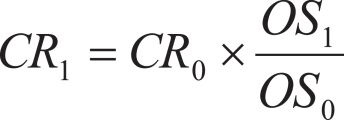
where:
CR0 = the conversion rate in effect immediately before the open of business on the ex-dividend date for such dividend or distribution, or immediately before the open of business on the effective date of such stock split or stock combination, as applicable;
CR1 = the conversion rate in effect immediately after the open of business on such ex-dividend date or effective date, as applicable;
S-41
Table of Contents
OS0 = the number of shares of our common stock outstanding immediately before the open of business on such ex-dividend date or effective date, as applicable, without giving effect to such dividend, distribution, stock split or stock combination; and
OS1 = the number of shares of our common stock outstanding immediately after giving effect to such dividend, distribution, stock split or stock combination.
If any dividend, distribution, stock split or stock combination of the type described in this paragraph (1) is declared or announced, but not so paid or made, then the conversion rate will be readjusted, effective as of the date our board of directors determines not to pay such dividend or distribution or to effect such stock split or stock combination, to the conversion rate that would then be in effect had such dividend, distribution, stock split or stock combination not been declared or announced.
| (2) | Rights, Options and Warrants. If we distribute, to all or substantially all holders of our common stock, rights, options or warrants (other than rights issued or otherwise distributed pursuant to a stockholder rights plan, as to which the provisions described below in paragraph (3)(a) and under the caption “ —Stockholder Rights Plans” will apply) entitling such holders, for a period of not more than 60 calendar days after the date such distribution is announced, to subscribe for or purchase shares of our common stock at a price per share that is less than the average of the last reported sale prices per share of our common stock for the 10 consecutive trading days ending on, and including, the trading day immediately before the date such distribution is announced, then the conversion rate will be increased based on the following formula: |
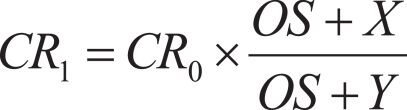
where:
CR0 = the conversion rate in effect immediately before the open of business on the ex-dividend date for such distribution;
CR1 = the conversion rate in effect immediately after the open of business on such ex-dividend date;
OS = the number of shares of our common stock outstanding immediately before the open of business on such ex-dividend date;
X = the total number of shares of our common stock issuable pursuant to such rights, options or warrants; and
Y = a number of shares of our common stock obtained by dividing (x) the aggregate price payable to exercise such rights, options or warrants by (y) the average of the last reported sale prices per share of our common stock for the 10 consecutive trading days ending on, and including, the trading day immediately before the date such distribution is announced.
To the extent such rights, options or warrants are not so distributed, the conversion rate will be readjusted to the conversion rate that would then be in effect had the increase to the conversion rate for such distribution been made on the basis of only the rights, options or warrants, if any, actually distributed. In addition, to the extent that shares of our common stock are not delivered after the expiration of such rights, options or warrants (including as a result of such rights, options or warrants not being exercised), the conversion rate will be readjusted to the conversion rate that would then be in effect had the increase to the conversion rate for such distribution been made on the basis of delivery of only the number of shares of our common stock actually delivered upon exercise of such rights, options or warrants.
For purposes of this paragraph (2) and the provisions described above under the caption “ —When the Notes May Be Converted—Conversion Upon Specified Corporate Events—Certain Distributions,” in determining whether any rights, options or warrants entitle holders of our common stock to subscribe for or purchase shares of our common stock at a price per share that is less than the average of the last
S-42
Table of Contents
reported sale prices per share of our common stock for the 10 consecutive trading days ending on, and including, the trading day immediately before the date the distribution of such rights, options or warrants is announced, and in determining the aggregate price payable to exercise such rights, options or warrants, there will be taken into account any consideration we receive for such rights, options or warrants and any amount payable on exercise thereof, with the value of such consideration, if not cash, to be determined by us in good faith and in a commercially reasonable manner.
| (3) | Spin-Offs and Other Distributed Property. |
| (a) | Distributions Other Than Spin-Offs. If we distribute shares of our “capital stock” (as defined below under the caption “ —Definitions”), evidences of our indebtedness or other assets or property of ours, or rights, options or warrants to acquire our capital stock or other securities, to all or substantially all holders of our common stock, excluding: |
| • | dividends, distributions, rights, options or warrants for which an adjustment to the conversion rate is required (or would be required without regard to the “deferral exception” (as defined below under the caption “ —The Deferral Exception”)) pursuant to paragraph (1) or (2) above; |
| • | dividends or distributions paid exclusively in cash for which an adjustment to the conversion rate is required (or would be required without regard to the deferral exception) pursuant to paragraph (4) below; |
| • | rights issued or otherwise distributed pursuant to a stockholder rights plan, except to the extent provided below under the caption “ —Stockholder Rights Plans”; |
| • | spin-offs for which an adjustment to the conversion rate is required (or would be required without regard to the deferral exception) pursuant to paragraph (3)(b) below; |
| • | a distribution solely pursuant to a tender offer or exchange offer for shares of our common stock, as to which the provisions described below in paragraph (5) will apply; and |
| • | a distribution solely pursuant to a common stock change event, as to which the provisions described below under the caption “ —Effect of Common Stock Change Event” will apply, then the conversion rate will be increased based on the following formula: |
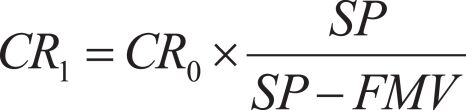
where:
CR0 = the conversion rate in effect immediately before the open of business on the ex-dividend date for such distribution;
CR1 = the conversion rate in effect immediately after the open of business on such ex-dividend date;
SP = the average of the last reported sale prices per share of our common stock for the 10 consecutive trading days ending on, and including, the trading day immediately before such ex-dividend date; and
FMV = the fair market value (as determined by us in good faith and in a commercially reasonable manner), as of such ex-dividend date, of the shares of capital stock, evidences of indebtedness, assets, property, rights, options or warrants distributed per share of our common stock pursuant to such distribution.
However, if FMV is equal to or greater than SP, then, in lieu of the foregoing adjustment to the conversion rate, each noteholder will receive, for each $1,000 principal amount of notes held by such noteholder on the record date for such distribution, at the same time and on the same terms as holders of our common stock, the amount and kind of shares of capital stock, evidences of indebtedness, assets, property, rights, options or warrants that such noteholder would have received in such distribution if such noteholder had owned, on
S-43
Table of Contents
such record date, a number of shares of our common stock equal to the conversion rate in effect on such record date.
To the extent such distribution is not so paid or made, the conversion rate will be readjusted to the conversion rate that would then be in effect had the adjustment been made on the basis of only the distribution, if any, actually made or paid.
| (b) | Spin-Offs. If we distribute or dividend shares of capital stock of any class or series, or similar equity interests, of or relating to an “affiliate” or “subsidiary” (as those terms are defined below under the caption “ —Definitions”) or other business unit of ours to all or substantially all holders of our common stock (other than solely pursuant to (x) a common stock change event, as to which the provisions described below under the caption “ —Effect of Common Stock Change Event” will apply; or (y) a tender offer or exchange offer for shares of our common stock, as to which the provisions described below in paragraph (5) will apply), and such capital stock or equity interests are listed or quoted (or will be listed or quoted upon the consummation of the transaction) on a U.S. national securities exchange (a “spin-off”), then the conversion rate will be increased based on the following formula: |
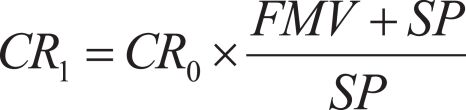
where:
CR0 = the conversion rate in effect immediately before the close of business on the last trading day of the “spin-off valuation period” (as defined below) for such spin-off;
CR1 = the conversion rate in effect immediately after the close of business on the last trading day of the spin-off valuation period;
FMV = the product of (x) the average of the last reported sale prices per share or unit of the capital stock or equity interests distributed in such spin-off over the 10 consecutive trading day period (the “spin-off valuation period”) beginning on, and including, the ex-dividend date for such spin-off (such average to be determined as if references to our common stock in the definitions of “last reported sale price,” “trading day” and “market disruption event” were instead references to such capital stock or equity interests); and (y) the number of shares or units of such capital stock or equity interests distributed per share of our common stock in such spin-off; and
SP = the average of the last reported sale prices per share of our common stock for each trading day in the spin-off valuation period.
Notwithstanding anything to the contrary, (i) if any VWAP trading day of the observation period for a note whose conversion will be settled pursuant to cash settlement or combination settlement occurs during the spin-off valuation period for such spin-off, then, solely for purposes of determining the conversion rate for such VWAP trading day for such conversion, such spin-off valuation period will be deemed to consist of the trading days occurring in the period from, and including, the ex-dividend date for such spin-off to, and including, such VWAP trading day; and (ii) if the conversion date for a note whose conversion will be settled pursuant to physical settlement occurs during the spin-off valuation period for such spin-off, then, solely for purposes of determining the consideration due in respect of such conversion, such spin-off valuation period will be deemed to consist of the trading days occurring in the period from, and including, the ex-dividend date for such spin-off to, and including, such conversion date.
To the extent any dividend or distribution of the type described above in this paragraph (3)(b) is declared but not made or paid, the conversion rate will be readjusted to the conversion rate that would then be in effect had the adjustment been made on the basis of only the dividend or distribution, if any, actually made or paid.
S-44
Table of Contents
| (4) | Cash Dividends or Distributions. If any cash dividend or distribution is made to all or substantially all holders of our common stock, then the conversion rate will be increased based on the following formula: |
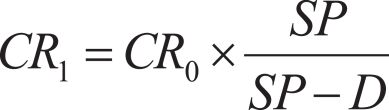
where:
CR0 = the conversion rate in effect immediately before the open of business on the ex-dividend date for such dividend or distribution;
CR1 = the conversion rate in effect immediately after the open of business on such ex-dividend date;
SP = the last reported sale price per share of our common stock on the trading day immediately before such ex-dividend date; and
D = the cash amount distributed per share of our common stock in such dividend or distribution.
However, if D is equal to or greater than SP, then, in lieu of the foregoing adjustment to the conversion rate, each noteholder will receive, for each $1,000 principal amount of notes held by such noteholder on the record date for such dividend or distribution, at the same time and on the same terms as holders of our common stock, the amount of cash that such noteholder would have received in such dividend or distribution if such noteholder had owned, on such record date, a number of shares of our common stock equal to the conversion rate in effect on such record date. To the extent such dividend or distribution is declared but not made or paid, the conversion rate will be readjusted to the conversion rate that would then be in effect had the adjustment been made on the basis of only the dividend or distribution, if any, actually made or paid.
| (5) | Tender Offers or Exchange Offers. If we or any of our subsidiaries makes a payment in respect of a tender offer or exchange offer for shares of our common stock (other than solely pursuant to an odd-lot tender offer pursuant to Rule 13e-4(h)(5) under the Exchange Act), and the value (determined as of the expiration time by us in good faith and in a commercially reasonable manner) of the cash and other consideration paid per share of our common stock in such tender or exchange offer exceeds the last reported sale price per share of our common stock on the trading day immediately after the last date (the “expiration date”) on which tenders or exchanges may be made pursuant to such tender or exchange offer (as it may be amended), then the conversion rate will be increased based on the following formula: |
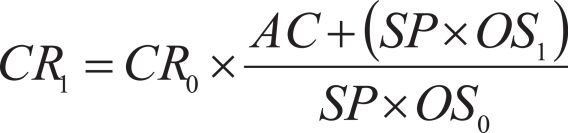
where:
CR0 = the conversion rate in effect immediately before the close of business on the last trading day of the “tender/exchange offer valuation period” (as defined below) for such tender or exchange offer;
CR1 = the conversion rate in effect immediately after the close of business on the last trading day of the tender/exchange offer valuation period;
AC = the aggregate value (determined as of the time (the “expiration time”) such tender or exchange offer expires by us in good faith and in a commercially reasonable manner) of all cash and other consideration paid for shares of our common stock purchased or exchanged in such tender or exchange offer;
OS0 = the number of shares of our common stock outstanding immediately before the expiration time (including all shares of our common stock accepted for purchase or exchange in such tender or exchange offer);
S-45
Table of Contents
OS1 = the number of shares of our common stock outstanding immediately after the expiration time (excluding all shares of our common stock accepted for purchase or exchange in such tender or exchange offer); and
SP = the average of the last reported sale prices per share of our common stock over the 10 consecutive trading day period (the “tender/exchange offer valuation period”) beginning on, and including, the trading day immediately after the expiration date;
provided, however, that the conversion rate will in no event be adjusted down pursuant to the provisions described in this paragraph (5), except to the extent provided in the immediately following paragraph. Notwithstanding anything to the contrary, (i) if any VWAP trading day of the observation period for a note whose conversion will be settled pursuant to cash settlement or combination settlement occurs during the tender/exchange offer valuation period for such tender or exchange offer, then, solely for purposes of determining the conversion rate for such VWAP trading day for such conversion, such tender/exchange offer valuation period will be deemed to consist of the trading days occurring in the period from, and including, the trading day immediately after the expiration date for such tender or exchange offer to, and including, such VWAP trading day; and (ii) if the conversion date for a note whose conversion will be settled pursuant to physical settlement occurs during the tender/exchange offer valuation period for such tender or exchange offer, then, solely for purposes of determining the consideration due in respect of such conversion, such tender/exchange offer valuation period will be deemed to consist of the trading days occurring in the period from, and including, the trading day immediately after the expiration date to, and including, such conversion date.
To the extent such tender or exchange offer is announced but not consummated (including as a result of being precluded from consummating such tender or exchange offer under applicable law), or any purchases or exchanges of shares of our common stock in such tender or exchange offer are rescinded, the conversion rate will be readjusted to the conversion rate that would then be in effect had the adjustment been made on the basis of only the purchases or exchanges of shares of our common stock, if any, actually made, and not rescinded, in such tender or exchange offer.
We will not be required to adjust the conversion rate except as described above or below under the caption “ —Increase in Conversion Rate in Connection with a Make-Whole Fundamental Change.” Without limiting the foregoing, we will not be required to adjust the conversion rate on account of:
| • | except as described above, the sale of shares of our common stock for a purchase price that is less than the market price per share of our common stock or less than the conversion price; |
| • | the issuance of any shares of our common stock pursuant to any present or future plan providing for the reinvestment of dividends or interest payable on our securities and the investment of additional optional amounts in shares of our common stock under any such plan; |
| • | the issuance of any shares of our common stock or options or rights to purchase shares of our common stock pursuant to any present or future employee, director or consultant benefit plan or program of, or assumed by, us or any of our subsidiaries; |
| • | the issuance of any shares of our common stock pursuant to any option, warrant, right or convertible or exchangeable security of ours outstanding as of the date we first issue the notes; |
| • | a third-party tender offer, other than a tender offer that is subject to paragraph (5) above; |
| • | the repurchase of any shares of our common stock pursuant to an open-market share repurchase program or other buyback transaction, including structured or derivative transactions such as accelerated share repurchase transactions or similar forward derivatives, in each case that is not subject to paragraph (5) above; |
| • | solely a change in the par value of our common stock; or |
| • | accrued and unpaid interest on the notes. |
S-46
Table of Contents
Notice of Conversion Rate Adjustments
Upon the effectiveness of any adjustment to the conversion rate pursuant to the provisions described above under the caption “ —Conversion Rate Adjustments—Generally,” we will promptly send notice to the noteholders containing (i) a brief description of the transaction or other event on account of which such adjustment was made; (ii) the conversion rate in effect immediately after such adjustment; and (iii) the effective time of such adjustment.
Voluntary Conversion Rate Increases
To the extent permitted by law and applicable stock exchange rules, we, from time to time, may (but are not required to) increase the conversion rate by any amount if (i) our board of directors determines that such increase is in our best interest or that such increase is advisable to avoid or diminish any income tax imposed on holders of our common stock or rights to purchase our common stock as a result of any dividend or distribution of shares (or rights to acquire shares) of our common stock or any similar event; (ii) such increase is in effect for a period of at least 20 business days; and (iii) such increase is irrevocable during such period.
Tax Considerations
A holder or beneficial owner of the notes may, in some circumstances, including a cash distribution or dividend on our common stock, be deemed to have received a distribution that is subject to U.S. federal income tax as a result of an adjustment or the non-occurrence of an adjustment to the conversion rate. Applicable withholding taxes (including backup withholding) may be withheld from interest and payments upon conversion, repurchase, redemption or maturity of the notes. In addition, if any withholding taxes (including backup withholding) are paid on behalf of a holder or beneficial owner, then we or the other applicable withholding agent may, at its option, withhold those withholding taxes from or set off against payments of cash or the delivery of shares of our common stock, if any, in respect of the notes (or, in some circumstances, any payments on our common stock) or sales proceeds received by, or other funds or assets of, that holder or beneficial owner. For a further discussion of the U.S. federal income tax treatment of an adjustment to the conversion rate, see “U.S. Federal Income Tax Considerations.”
The Deferral Exception
If an adjustment to the conversion rate otherwise required by the indenture would result in a change of less than 1% to the conversion rate, then we may, at our election, defer and carry forward such adjustment, except that all such deferred adjustments must be given effect immediately upon the earliest of the following: (i) when all such deferred adjustments would, had they not been so deferred and carried forward, result in an aggregate change of at least 1% to the conversion rate; (ii) the conversion date of, or any VWAP trading day of an observation period for, any note; (iii) the date a fundamental change or make-whole fundamental change occurs; (iv) the date we call any notes for redemption; and (v) July 15, 2032. We refer to our ability to defer adjustments as described above as the “deferral exception.”
Special Provisions for Adjustments that Are Not Yet Effective and Where Converting Noteholders Participate in the Relevant Transaction or Event
Notwithstanding anything to the contrary, if:
| • | a note is to be converted pursuant to physical settlement or combination settlement; |
| • | the record date, effective date or expiration time for any event that requires an adjustment to the conversion rate pursuant to the provisions described above under the caption “ —Conversion Rate Adjustments—Generally” has occurred on or before the conversion date for such conversion (in the case of physical settlement) or on or before any VWAP trading day in the observation period for such |
S-47
Table of Contents
| conversion (in the case of combination settlement), but an adjustment to the conversion rate for such event has not yet become effective as of such conversion date or VWAP trading day, as applicable; |
| • | the consideration due upon such conversion includes any whole shares of our common stock (in the case of physical settlement) or due in respect of such VWAP trading day includes any whole or fractional shares of our common stock (in the case of combination settlement); and |
| • | such shares are not entitled to participate in such event (because they were not held on the related record date or otherwise), |
then, solely for purposes of such conversion, we will, without duplication, give effect to such adjustment on such conversion date (in the case of physical settlement) or such VWAP trading day (in the case of combination settlement). In such case, if the date we are otherwise required to deliver the consideration due upon such conversion is before the first date on which the amount of such adjustment can be determined, then we will delay the settlement of such conversion until the second business day after such first date.
Notwithstanding anything to the contrary, if:
| • | a conversion rate adjustment for any dividend or distribution becomes effective on any ex-dividend date pursuant to the provisions described above under the caption “ —Conversion Rate Adjustments—Generally”; |
| • | a note is to be converted pursuant to physical settlement or combination settlement; |
| • | the conversion date for such conversion (in the case of physical settlement) or any VWAP trading day in the observation period for such conversion (in the case of combination settlement) occurs on or after such ex-dividend date and on or before the related record date; |
| • | the consideration due upon such conversion includes any whole shares of our common stock (in the case of physical settlement) or due in respect of such VWAP trading day includes any whole or fractional shares of our common stock (in the case of combination settlement), in each case based on a conversion rate that is adjusted for such dividend or distribution; and |
| • | such shares would be entitled to participate in such dividend or distribution, |
then:
| • | in the case of physical settlement, such conversion rate adjustment will not be given effect for such conversion and the shares of our common stock issuable upon such conversion based on such unadjusted conversion rate will not be entitled to participate in such dividend or distribution, but there will be added, to the consideration otherwise due upon such conversion, the same kind and amount of consideration that would have been delivered in such dividend or distribution with respect to such shares had such shares been entitled to participate in such dividend or distribution; and |
| • | in the case of combination settlement, the conversion rate adjustment relating to such ex-dividend date will be made for such conversion in respect of such VWAP trading day, but the shares of our common stock issuable with respect to such VWAP trading day based on such adjusted conversion rate will not be entitled to participate in such dividend or distribution. |
Stockholder Rights Plans
If any shares of our common stock are to be issued upon conversion of any note and, at the time of such conversion, we have in effect any stockholder rights plan, then the holder of that note will be entitled to receive, in addition to, and concurrently with the delivery of, the consideration otherwise due upon such conversion, the rights set forth in such stockholder rights plan, unless such rights have separated from our common stock at such
S-48
Table of Contents
time, in which case, and only in such case, the conversion rate will be adjusted pursuant to the provisions described above in paragraph (3)(a) under the caption “ —Conversion Rate Adjustments—Generally” on account of such separation as if, at the time of such separation, we had made a distribution of the type referred to in such paragraph to all holders of our common stock, subject to potential readjustment pursuant to the provisions described in such paragraph. We currently do not have a stockholder rights plan.
Increase in Conversion Rate in Connection with a Make-Whole Fundamental Change
Generally
If a make-whole fundamental change occurs and the conversion date for the conversion of a note occurs during the related “make-whole fundamental change conversion period” (as defined below under the caption “ —Definitions”), then, subject to the provisions described below, the conversion rate applicable to such conversion will be increased by a number of shares (the “additional shares”) set forth in the table below corresponding (after interpolation as described below) to the “make-whole fundamental change effective date” (as defined below under the caption “ —Definitions”) and the “stock price” (as defined below under the caption “ —Definitions”) of such make-whole fundamental change:
| Stock Price | ||||||||||||||||||||||||||||||||
| Make-Whole Fundamental Change |
$ | $ | $ | $ | $ | $ | $ | $ | ||||||||||||||||||||||||
| , 2026 |
||||||||||||||||||||||||||||||||
| October 15, 2027 |
||||||||||||||||||||||||||||||||
| October 15, 2028 |
||||||||||||||||||||||||||||||||
| October 15, 2029 |
||||||||||||||||||||||||||||||||
| October 15, 2030 |
||||||||||||||||||||||||||||||||
| October 15, 2031 |
||||||||||||||||||||||||||||||||
| October 15, 2032 |
||||||||||||||||||||||||||||||||
If such make-whole fundamental change effective date or stock price is not set forth in the table above, then:
| • | if such stock price is between two stock prices in the table above or the make-whole fundamental change effective date is between two dates in the table above, then the number of additional shares will be determined by straight-line interpolation between the numbers of additional shares set forth for the higher and lower stock prices in the table above or the earlier and later dates in the table above, based on a 365- or 366-day year, as applicable; and |
| • | if the stock price is greater than $ (subject to adjustment in the same manner as the stock prices set forth in the column headings of the table above are adjusted, as described below under the caption “ —Adjustment of Stock Prices and Number of Additional Shares”), or less than $ (subject to adjustment in the same manner), per share, then no additional shares will be added to the conversion rate. |
Notwithstanding anything to the contrary, in no event will the conversion rate be increased to an amount that exceeds shares of our common stock per $1,000 principal amount of notes, which amount is subject to adjustment in the same manner as, and at the same time and for the same events for which, the conversion rate is required to be adjusted pursuant to the provisions described above under the caption “ —Conversion Rate Adjustments—Generally.”
For the avoidance of doubt, calling any notes for provisional redemption will constitute a make-whole fundamental change only with respect to the notes called for such redemption, and not with respect to the notes not called for such redemption. Accordingly, if we elect to redeem less than all of the outstanding notes pursuant to a provisional redemption, then holders of the notes not called for such redemption will not be entitled to an increased conversion rate for such notes as described above on account of such redemption, except to the limited
S-49
Table of Contents
extent described above under the caption “ —Optional Redemption—Certain Provisions Applicable to Partial Redemptions.”
As set forth in the definition of “make-whole fundamental change conversion period” below under the caption “ —Definitions,” if the conversion date for the conversion of a note occurs during a make-whole fundamental change conversion period relating to both a make-whole fundamental change resulting from our calling notes for provisional redemption or cleanup redemption and another make-whole fundamental change, then, solely for purposes of that conversion, such conversion date will be deemed to occur only during the period relating to the make-whole fundamental change with the earlier make-whole fundamental change effective date. In that circumstance, the make-whole fundamental change with the later make-whole fundamental change effective date will be deemed not to occur for purposes of such conversion.
Adjustment of Stock Prices and Number of Additional Shares
The stock prices in the first row (i.e., the column headers) of the table above will be adjusted in the same manner as, and at the same time and for the same events for which, the conversion price is adjusted as a result of the operation of the provisions described above under the caption “ —Conversion Rate Adjustments—Generally.” The numbers of additional shares in the table above will be adjusted in the same manner as, and at the same time and for the same events for which, the conversion rate is adjusted pursuant to the provisions described above under the caption “ —Conversion Rate Adjustments—Generally.”
Notice of Make-Whole Fundamental Change
We will notify noteholders of each make-whole fundamental change in accordance with the provisions described above under the captions “ —When the Notes May Be Converted—Conversion Upon Specified Corporate Events—Certain Corporate Events” and “ —Optional Redemption—Redemption Notice.”
Enforceability
Our obligation to increase the conversion rate as described above in connection with a make-whole fundamental change could be considered a penalty, in which case its enforceability would be subject to general principles of reasonableness and equitable remedies.
Effect of Common Stock Change Event
Generally
If there occurs any:
| • | recapitalization, reclassification or change of our common stock, other than (x) changes solely resulting from a subdivision or combination of our common stock, (y) a change only in par value or from par value to no par value or no par value to par value or (z) stock splits and stock combinations that do not involve the issuance of any other series or class of securities; |
| • | consolidation, merger, combination or binding or statutory share exchange involving us; |
| • | sale, lease or other transfer of all or substantially all of the assets of us and our subsidiaries, taken as a whole, to any person; or |
| • | other similar event, |
and, as a result of which, our common stock is converted into, or is exchanged for, or represents solely the right to receive, other securities, cash or other property, or any combination of the foregoing (such an event, a
S-50
Table of Contents
“common stock change event,” and such other securities, cash or property, the “reference property,” and the amount and kind of reference property that a holder of one share of our common stock would be entitled to receive on account of such common stock change event (without giving effect to any arrangement not to issue or deliver a fractional portion of any security or other property), a “reference property unit”), then, notwithstanding anything to the contrary,
| • | from and after the effective time of such common stock change event, (i) the consideration due upon conversion of any note, and the conditions to any such conversion, will be determined in the same manner as if each reference to any number of shares of our common stock in the provisions described under this “ —Conversion Rights” section (or in any related definitions) were instead a reference to the same number of reference property units; (ii) for purposes of the redemption provisions described above under the caption “ —Optional Redemption—Provisional Redemption,” each reference to any number of shares of our common stock in such provisions (or in any related definitions) will instead be deemed to be a reference to the same number of reference property units; and (iii) for purposes of the definitions of “fundamental change” and “make-whole fundamental change,” references to our “common stock” and “common equity” will be deemed to refer to the common equity (including depositary receipts representing common equity), if any, forming part of such reference property; |
| • | if such reference property unit consists entirely of cash, then (i) each conversion of any note with a conversion date that occurs on or after the effective date of such common stock change event will be settled entirely in cash in an amount, per $1,000 principal amount of such note being converted, equal to the product of (x) the conversion rate in effect on such conversion date (including, for the avoidance of doubt, any increase to such conversion rate pursuant to the provisions described above under the caption “ —Increase in Conversion Rate in Connection with a Make-Whole Fundamental Change,” if applicable); and (y) the amount of cash constituting such reference property unit; and (ii) we will settle each such conversion no later than the fifth business day after the relevant conversion date; and |
| • | for these purposes, (i) the daily VWAP of any reference property unit or portion thereof that consists of a class of common equity securities will be determined by reference to the definition of “daily VWAP,” substituting, if applicable, the Bloomberg page for such class of securities in such definition; and (ii) the daily VWAP of any reference property unit or portion thereof that does not consist of a class of common equity securities, and the last reported sale price of any reference property unit or portion thereof that does not consist of a class of securities, will be the fair value of such reference property unit or portion thereof, as applicable, determined in good faith and in a commercially reasonable manner by us (or, in the case of cash denominated in U.S. dollars, the face amount thereof). |
If the reference property consists of more than a single type of consideration to be determined based in part upon any form of stockholder election, then the composition of the reference property unit will be deemed to be the weighted average of the types and amounts of consideration actually received, per share of our common stock, by the holders of our common stock. We will notify the noteholders of such weighted average as soon as practicable after such determination is made.
We will not become a party to any common stock change event unless its terms are consistent with the provisions described under this “ —Effect of Common Stock Change Event” caption.
Execution of Supplemental Indenture
At or before the effective time of the common stock change event, we and the resulting, surviving or transferee person (if not us) of such common stock change event (the “successor person”) will execute and deliver to the trustee a supplemental indenture that (i) provides for subsequent adjustments to the conversion rate in a manner consistent with the provisions described above; and (ii) contains such other provisions, if any, that we reasonably determine are appropriate to preserve the economic interests of the noteholders and to give effect to the provisions described above. If the reference property includes shares of stock or other securities or assets (other
S-51
Table of Contents
than cash) of a person other than the successor person, then such other person will also execute such supplemental indenture and such supplemental indenture will contain such additional provisions, if any, that we reasonably determine are appropriate to preserve the economic interests of noteholders.
However, no such supplemental indenture is required (but we may nonetheless choose to execute such a supplemental indenture at our option) if (i) we are the resulting, surviving or transferee person of such common stock change event; and (ii) the reference property of such common stock change event does not include consideration other than cash or our securities.
Notice of Common Stock Change Event
We will provide notice of each common stock change event to noteholders no later than the second business day after the effective date of the common stock change event.
Exchange in Lieu of Conversion
Notwithstanding anything to the contrary, and subject to the terms of the indenture, if a note is submitted for conversion, we may elect to arrange to have such note exchanged in lieu of conversion by a financial institution we designate. To make such election, we must send notice of such election to the holder of such note before the close of business on the business day immediately following the conversion date for such note, and we must arrange for the financial institution to deliver the consideration due upon such conversion in the same manner and at the same time as we would have been required to do so. We will remain responsible to deliver such consideration if the financial institution fails to timely deliver the same.
Equitable Adjustments to Prices
Whenever the indenture requires us to calculate the average of the last reported sale prices, or any function thereof, over a period of multiple days (including to calculate the stock price or an adjustment to the conversion rate), or to calculate daily VWAPs over an observation period, we will make appropriate adjustments, if any, to those calculations to account for any adjustment to the conversion rate pursuant to the provisions described above under the caption “ —Conversion Rights—Conversion Rate Adjustments—Generally” that becomes effective, or any event requiring such an adjustment to the conversion rate where the ex-dividend date or effective date, as applicable, of such event occurs, at any time during such period or observation period, as applicable.
Fundamental Change Permits Noteholders to Require Us to Repurchase Notes
Generally
If a fundamental change occurs, then each noteholder will have the right (the “fundamental change repurchase right”) to require us to repurchase its notes (or any portion thereof in an authorized denomination) for cash on a date (the “fundamental change repurchase date”) of our choosing, which must be a business day that is no more than 35, nor less than 20, business days after the date we send the related fundamental change notice, as described below.
The repurchase price (the “fundamental change repurchase price”) for a note tendered for repurchase will be the principal amount of such note plus accrued and unpaid interest on such note to, but excluding, the fundamental change repurchase date. However, if the fundamental change repurchase date is after a regular record date and on or before the next interest payment date, then (i) the holder of such note at the close of business on such regular record date will be entitled, notwithstanding such repurchase, to receive, on or, at our election, before such interest payment date, the unpaid interest that would have accrued on such note to, but excluding, such interest payment date; and (ii) the fundamental change repurchase price will not include accrued and unpaid interest on such note to, but excluding, the fundamental change repurchase date.
S-52
Table of Contents
Notwithstanding anything to the contrary above, we may not repurchase any notes if the principal amount of the notes has been accelerated and such acceleration has not been rescinded on or before the fundamental change repurchase date (including as a result of the payment of the related fundamental change repurchase price and any related interest described above on the fundamental change repurchase date).
Notice of Fundamental Change
On or before the 20th calendar day after the effective date of a fundamental change, we will send to each noteholder notice of such fundamental change containing certain information set forth in the indenture, including the fundamental change repurchase date, the fundamental change repurchase price and the procedures noteholders must follow to tender their notes for repurchase.
Procedures to Exercise the Fundamental Change Repurchase Right
To exercise its fundamental change repurchase right with respect to a note, the holder thereof must deliver a notice (a “fundamental change repurchase notice”) to the paying agent before the close of business on the business day immediately before the related fundamental change repurchase date (or such later time as may be required by law).
The fundamental change repurchase notice must contain certain information set forth in the indenture, including the certificate number of any physical notes to be repurchased, or must otherwise comply with the depositary procedures in the case of a global note.
A noteholder that has delivered a fundamental change repurchase notice with respect to a note may withdraw that notice by delivering a withdrawal notice to the paying agent at any time before the close of business on the business day immediately before the fundamental change repurchase date. The withdrawal notice must contain certain information set forth in the indenture, including the certificate number of any physical notes with respect to which the withdrawal notice is being delivered, or must otherwise comply with the depositary procedures in the case of a global note.
Notes to be repurchased must be delivered to the paying agent (in the case of physical notes) or the depositary procedures must be complied with (in the case of global notes) for the holder of those notes to be entitled to receive the fundamental change repurchase price.
Compliance with Securities Laws
We will comply, in all material respects, with all federal and state securities laws in connection with a repurchase following a fundamental change (including complying with Rules 13e-4 and 14e-1 under the Exchange Act and filing any required Schedule TO, to the extent applicable) so as to permit effecting such repurchase in the manner described above. However, to the extent that our obligations to offer to repurchase and to repurchase notes pursuant to the provisions described above conflict with any law or regulation that is applicable to us and enacted after the date we initially issue the notes, our compliance with such law or regulation will not be considered to be a default of those obligations; rather, we will be deemed to be in compliance with those obligations if we comply with our obligation to repurchase notes upon a fundamental change in accordance with the indenture, modified as necessary by us in good faith to permit compliance with such law or regulation.
Repurchase by Third Party
Notwithstanding anything to the contrary, we will be deemed to satisfy our obligations to repurchase notes pursuant to the provisions described above if (i) one or more third parties conduct the repurchase offer and repurchase tendered notes in a manner that would have satisfied our obligations to do the same if conducted directly by us; and (ii) an owner of a beneficial interest in any note repurchased by such third party or parties will
S-53
Table of Contents
not receive a lesser amount (as a result of withholding or other similar taxes) than such owner would have received had we repurchased such note.
No Repurchase Right in Certain Circumstances
Notwithstanding anything to the contrary, we will not be required to send a fundamental change notice, or offer to repurchase or repurchase any notes, as described above, in connection with a common stock change event that constitutes a fundamental change pursuant to clause (ii)(2) of the definition thereof (regardless of whether such common stock change event also constitutes a fundamental change pursuant to any other clause of such definition), if:
| • | the reference property of such common stock change event consists entirely of cash in U.S. dollars; |
| • | immediately after such fundamental change, the notes become convertible (pursuant to the provisions described above under the captions “ —Conversion Rights—Effect of Common Stock Change Event” and, if applicable, “ —Conversion Rights—Increase in Conversion Rate in Connection with a Make-Whole Fundamental Change”) into consideration that consists solely of U.S. dollars in an amount per $1,000 principal amount of notes that equals or exceeds the fundamental change repurchase price per $1,000 principal amount of notes (calculated assuming that the same includes accrued and unpaid interest to, but excluding, the latest possible fundamental change repurchase date for such fundamental change); and |
| • | we timely send the notice relating to such fundamental change required pursuant to the provisions described above under the caption “ —Conversion Rights—When the Notes May Be Converted—Conversion Upon Specified Corporate Events—Certain Corporate Events” and include, in such notice, a statement that we are relying on the provisions described in this “ —No Repurchase Right in Certain Circumstances” section. |
We refer to any fundamental change with respect to which, in accordance with the provisions described above, we do not offer to repurchase any notes as an “exempted fundamental change.”
Consolidation, Merger and Asset Sale
For purposes of the notes, the description below under this section titled “ —Consolidation, Merger and Asset Sale” supersedes, in its entirety, the information in the accompanying prospectus under the caption “Description of Debt Securities—Consolidation, Merger or Sale.”
We will not consolidate with or merge with or into, or (directly, or indirectly through one or more of our subsidiaries) sell, lease or otherwise transfer, in one transaction or a series of transactions, all or substantially all of the assets of us and our subsidiaries, taken as a whole, to another person (a “business combination event”), unless:
| • | the resulting, surviving or transferee person is us or, if not us, is a “qualified successor entity” (as defined below under the caption “ —Definitions”) (such qualified successor entity, the “successor entity”) duly organized and existing under the laws of the United States of America, any State thereof or the District of Columbia that expressly assumes (by executing and delivering to the trustee, at or before the effective time of such business combination event, a supplemental indenture) all of our obligations under the indenture and the notes; and |
| • | immediately after giving effect to such business combination event, no “default” (as defined below under the caption “ —Definitions”) will have occurred and be continuing. |
At the effective time of a business combination event that complies with the provisions described above, the successor entity (if not us) will succeed to, and may exercise every right and power of, us under the indenture and the notes, and, except in the case of a lease, the predecessor company will be discharged from its obligations under the indenture and the notes.
S-54
Table of Contents
Notwithstanding anything to the contrary above, the provisions described above will not apply to any transfer of assets (other than by merger or consolidation) between or among us and any one or more of our “wholly owned subsidiaries” (as defined below under the caption “ —Definitions”).
The definition of “business combination event” includes a reference to “all or substantially all” of our and our subsidiaries’ assets. There is no precise, established definition of the phrase “all or substantially all” under applicable law. Accordingly, there may be uncertainty as to whether the provisions described above would apply to a sale, lease or transfer of less than all of our and our subsidiaries’ assets.
Events of Default
For purposes of the notes, the description below under this section titled “ —Events of Default” supersedes, in its entirety, the information in the accompanying prospectus under the caption “Description of Debt Securities—Events of Default under the Indenture.”
Generally
An “event of default” means the occurrence of any of the following:
| (1) | a default in the payment when due (whether at maturity, upon redemption or repurchase upon fundamental change or otherwise) of the principal of, or the redemption price or fundamental change repurchase price for, any note; |
| (2) | a default for 30 consecutive days in the payment when due of interest on any note; |
| (3) | our failure to deliver, when required by the indenture, a fundamental change notice or a notice pursuant to the provisions described above under the caption “ —Conversion Rights—When the Notes May Be Converted—Conversion Upon Specified Corporate Events,” if (in the case of any notice other than a notice pursuant to the provisions described above under the caption “ —Conversion Rights—When the Notes May Be Converted—Conversion Upon Specified Corporate Events—Certain Distributions”) such failure is not cured within five days after its occurrence; |
| (4) | a default in our obligation to convert a note in accordance with the indenture upon the exercise of the conversion right with respect thereto, if such default is not cured within five days after its occurrence; |
| (5) | a default in our obligations described above under the caption “ —Consolidation, Merger and Asset Sale”; |
| (6) | a default in any of our obligations or agreements under the indenture or the notes (other than a default set forth in paragraphs (1), (2), (3), (4) or (5) above) where such default is not cured or waived within 60 days after notice to us by the trustee, or to us and the trustee by holders of at least 25% of the aggregate principal amount of notes then outstanding, which notice must specify such default, demand that it be remedied and state that such notice is a “notice of default”; |
| (7) | a default by us or any of our “significant subsidiaries” (as defined below under the caption “ —Definitions”) with respect to any one or more mortgages, agreements or other instruments under which there is outstanding, or by which there is secured or evidenced, any indebtedness for borrowed money of at least $75,000,000 (or its foreign currency equivalent) in the aggregate of us or any of our significant subsidiaries, whether such indebtedness exists as of the date we first issue the notes or is thereafter created, where such default: |
| • | constitutes a failure to pay the principal of such indebtedness when due and payable at its stated maturity, upon required repurchase, upon declaration of acceleration or otherwise, in each case after the expiration of any applicable grace period; or |
| • | results in such indebtedness becoming or being declared due and payable before its stated maturity, |
S-55
Table of Contents
in each case where such default is not cured or waived within 30 days after notice to us by the trustee or to us and the trustee by holders of at least 25% of the aggregate principal amount of notes then outstanding; and
| (8) | certain events of bankruptcy, insolvency and reorganization with respect to us or any of our significant subsidiaries. |
Acceleration
If an event of default described in paragraph (8) above occurs with respect to us (and not solely with respect to a significant subsidiary of ours), then the principal amount of, and all accrued and unpaid interest on, all of the notes then outstanding will immediately become due and payable without any further action or notice by any person. If an event of default (other than an event of default described in paragraph (8) above with respect to us and not solely with respect to a significant subsidiary of ours) occurs and is continuing, then, except as described below under the caption “ —Special Interest as Sole Remedy for Certain Reporting Defaults,” the trustee, by notice to us, or noteholders of at least 25% of the aggregate principal amount of notes then outstanding, by notice to us and the trustee, may declare the principal amount of, and all accrued and unpaid interest on, all of the notes then outstanding to become due and payable immediately. For the avoidance of doubt, if such event of default is not continuing at the time such notice is provided (that is, such event of default has been cured or waived as of such time), then such notice will not be effective to cause such amounts to become due and payable immediately.
Noteholders of a majority in aggregate principal amount of the notes then outstanding, by notice to us and the trustee, may, on behalf of all noteholders, rescind any acceleration of the notes and its consequences if (i) such rescission would not conflict with any judgment or decree of a court of competent jurisdiction; and (ii) all existing events of default (except the non-payment of principal of, or interest on, the notes that has become due solely because of such acceleration) have been cured or waived. No such rescission will affect any subsequent default or impair any right consequent thereto.
If any portion of the amount payable on the notes upon acceleration is considered by a court to be unearned interest (through the allocation of the value of the instrument to the embedded warrant or otherwise), then the court could disallow recovery of any such portion.
Waiver of Past Defaults
A default that is (or, after notice, passage of time or both, would be) an event of default pursuant to paragraph (1), (2), (4) or (6) above (that, in the case of paragraph (6) only, results from a default under any covenant that cannot be amended without the consent of each affected noteholder) can be waived only with the consent of each affected noteholder. Each other default or event of default may be waived, on behalf of all noteholders, by noteholders of a majority in aggregate principal amount of the notes then outstanding.
Cure of Defaults; Ability to Cure or Waive Before Event of Default Occurs
For the avoidance of doubt, and without limiting the manner in which any default can be cured,
| • | a default consisting of a failure to send a notice in accordance with the terms of the indenture will be cured upon the sending of such notice; |
| • | a default in making any payment on (or delivering any other consideration in respect of) any note will be cured upon the delivery, in accordance with the indenture, of such payment (or other consideration) together, if applicable, with “default interest” (as defined below under the caption “ —Default Interest”) thereon; and |
| • | a default that is (or, after notice, passage of time or both, would be) a “reporting event of default” (as defined below under the caption “ —Special Interest as Sole Remedy for Certain Reporting Defaults”) will be cured upon the filing of the relevant report(s) giving rise to such default. |
S-56
Table of Contents
In addition, for the avoidance of doubt, if a default that is not an event of default is cured or waived before such default would have constituted an event of default, then no event of default will result from such default.
Notice of Defaults
If a default occurs, then we will, within 30 days after its first occurrence, notify the trustee, setting forth what action we are taking or propose to take with respect thereto. However, we will not be required to provide such notification at any time after such default is cured or waived. We must also provide the trustee annually with a certificate as to whether any defaults have occurred and are continuing. If a default occurs and is continuing and is actually known to a responsible officer of the trustee, then the trustee must notify the noteholders of the same within 90 days after it occurs or, if it is not actually known to a responsible officer of the trustee at such time, promptly (and in any event within 20 business days) after it becomes actually known to a responsible officer of the trustee. However, except in the case of a default in the payment of the principal of, or interest on, any note, the trustee may withhold such notice if and for so long as it in good faith determines that withholding such notice is in the interests of the noteholders. For the avoidance of doubt, the trustee will not be required to deliver such notice at any time after such default is cured or waived.
Limitation on Suits; Absolute Rights of Noteholders
Except with respect to the rights referred to below, no noteholder may pursue any remedy with respect to the indenture or the notes, unless:
| • | such noteholder has previously delivered to the trustee notice that an event of default is continuing; |
| • | noteholders of at least 25% in aggregate principal amount of the notes then outstanding deliver a written request to the trustee to pursue such remedy; |
| • | such noteholder(s) offer and, if requested, provide to the trustee security and indemnity satisfactory to the trustee against any loss, liability or expense to the trustee that may result from the trustee’s following such request; |
| • | the trustee does not comply with such request within 60 calendar days after its receipt of such request and such offer of security or indemnity; and |
| • | during such 60 calendar day period, noteholders of a majority in aggregate principal amount of the notes then outstanding do not deliver to the trustee a direction that is inconsistent with such request. |
However, notwithstanding anything to the contrary, but without limiting the provisions described under the caption “ —Modification and Amendment” relating to amendments and supplements without the consent of any noteholder, the right of each holder of a note to bring suit for the enforcement of any payment or delivery, as applicable, of the principal of, or the fundamental change repurchase price or redemption price for, or any interest on, or the consideration due upon conversion of, such note on or after the respective due dates therefor, will not be impaired or affected without the consent of such holder.
Noteholders of a majority in aggregate principal amount of the notes then outstanding may direct the time, method and place of conducting any proceeding for exercising any remedy available to the trustee or exercising any trust or power conferred on it. However, the trustee may refuse to follow any direction that conflicts with law, the indenture or the notes, or that, subject to the terms of the indenture, the trustee determines may be unduly prejudicial to the rights of other noteholders or may involve the trustee in liability, unless the trustee is offered (and, if requested, provided with) security and indemnity satisfactory to the trustee against any loss, liability or expense to the trustee that may result from the trustee’s following such direction.
S-57
Table of Contents
Default Interest
Payments of any cash amounts due on the notes that are not made when due will accrue interest at a rate per annum equal to the rate per annum at which stated interest accrues on the notes. We refer to such interest, if any, as “default interest.”
Special Interest as Sole Remedy for Certain Reporting Defaults
Notwithstanding anything to the contrary described above, we may elect that the sole remedy for any event of default (a “reporting event of default”) pursuant to paragraph (6) above arising from our failure to comply with our obligations described below under the caption “ —Exchange Act Reports” (including our obligations under Section 314(a)(1) of the Trust Indenture Act) will, for each of the first 365 calendar days on which a reporting event of default has occurred and is continuing, consist exclusively of the accrual of special interest on the notes. If we have made such an election, then (i) the notes will be subject to acceleration as described above on account of the relevant reporting event of default from, and including, the 366th calendar day on which a reporting event of default has occurred and is continuing or if we fail to pay any accrued and unpaid special interest when due; and (ii) special interest will cease to accrue on any notes from, and including, such 366th calendar day.
Any special interest that accrues on a note will be payable on the same dates and in the same manner as the stated interest on such note and will accrue at a rate per annum equal to 0.25% of the principal amount thereof for the first 180 days on which special interest accrues and, thereafter, at a rate per annum equal to 0.50% of the principal amount thereof. For the avoidance of doubt, any special interest that accrues on a note will be in addition to the stated interest that accrues on such note.
To make the election to pay special interest as described above, we must provide notice of such election to noteholders before the date on which each reporting event of default first occurs. The notice will also, among other things, briefly describe the periods during which and rate at which special interest will accrue and the circumstances under which the notes will be subject to acceleration on account of such reporting event of default.
Modification and Amendment
For purposes of the notes, the description below under this section titled “ —Modification and Amendment” supersedes, in its entirety, the information in the accompanying prospectus under the caption “Description of Debt Securities—Modification of Indenture; Waiver.”
We and the trustee may, with the consent of holders of a majority in aggregate principal amount of the notes then outstanding, amend or supplement the indenture or the notes or waive compliance with any provision of the indenture or the notes. However, without the consent of each affected noteholder, no amendment or supplement to the indenture or the notes, or waiver of any provision of the indenture or the notes, may:
| • | reduce the principal, or change the stated maturity, of any note; |
| • | reduce the redemption price or fundamental change repurchase price for any note or change the times at which, or the circumstances under which, the notes may or will be redeemed or repurchased by us; |
| • | reduce the rate, or extend the time for the payment, of interest on any note; |
| • | make any change that adversely affects the conversion rights of any note; |
| • | impair the absolute rights of any holder of a note to bring suit for the enforcement of any payment or delivery, as applicable, of the principal of, or the fundamental change repurchase price or redemption price for, or any interest on, or the consideration due upon conversion of, such note on or after the respective due dates therefor; |
| • | change the ranking of the notes; |
| • | make any note payable in money, or at a place of payment, other than that stated in the indenture or the note; |
S-58
Table of Contents
| • | reduce the amount of notes whose holders must consent to any amendment, supplement, waiver or other modification; or |
| • | make any direct or indirect change to any amendment, supplement, waiver or modification provision of the indenture or the notes that requires the consent of each affected noteholder. |
Notwithstanding anything to the contrary above, we and the trustee may amend or supplement the indenture or the notes without the consent of any noteholder to:
| • | cure any ambiguity or correct any omission, defect or inconsistency in the indenture or the notes; |
| • | add guarantees with respect to our obligations under the indenture or the notes; |
| • | secure the notes; |
| • | add to our covenants or events of default for the benefit of noteholders or surrender any right or power conferred on us; |
| • | provide for the assumption of our obligations under the indenture and the notes pursuant to, and in compliance with, the provisions described above under the caption “ —Consolidation, Merger and Asset Sale”; |
| • | enter into supplemental indentures pursuant to, and in accordance with, the provisions described above under the caption “ —Conversion Rights—Effect of Common Stock Change Event” in connection with a common stock change event; |
| • | irrevocably elect or eliminate any settlement method or specified dollar amount; provided, however, that no such election or elimination will affect any settlement method theretofore elected (or deemed to be elected) with respect to any note pursuant to the provisions described above under the caption “ —Conversion Rights—Settlement Upon Conversion—Settlement Method”; |
| • | evidence or provide for the acceptance of the appointment of a successor trustee; |
| • | conform the provisions of the indenture and the notes to the “Description of Notes” section of the preliminary prospectus supplement for this offering, as supplemented by the related pricing term sheet; |
| • | provide for or confirm the issuance of additional notes pursuant to the indenture; |
| • | provide for any transfer restrictions that apply to any notes issued under the indenture (other than the notes issued in this offering, and any notes issued in exchange therefor or in substitution thereof) that, at the time of their original issuance, constitute “restricted securities” within the meaning of Rule 144 under the Securities Act or that are originally issued in reliance upon Regulation S under the Securities Act; |
| • | comply with any requirement of the SEC in connection with effecting or maintaining the qualification of the indenture, or any related supplemental indenture, under the Trust Indenture Act, as then in effect; or |
| • | make any other change to the indenture or the notes that does not, individually or in the aggregate with all other such changes, adversely affect the rights of noteholders, as such, in any material respect, as determined by us in good faith. |
Exchange Act Reports
We will send to the trustee copies of all reports that we are required to file with the SEC pursuant to Section 13(a) or 15(d) of the Exchange Act (other than Form 8-K reports) within 15 calendar days after the date that we are required to so file the same (after giving effect to all applicable grace periods under the Exchange Act). However, we need not send to the trustee any material for which we have received, or are seeking in good faith and have not been denied, confidential treatment by the SEC. Any such report that we file with the SEC through the EDGAR system (or any successor thereto) will be deemed to be sent to the trustee at the time such
S-59
Table of Contents
report is so filed via the EDGAR system (or such successor). Upon the request of any noteholder, the trustee will provide to the noteholder a copy of any report that we have sent the trustee pursuant to the provisions described above, other than a report that is deemed to be sent to the trustee pursuant to the preceding sentence. We will also comply with our other obligations under Section 314(a)(1) of the Trust Indenture Act.
The “grace periods” referred to in the preceding paragraph with respect to any report will include the maximum period afforded by Rule 12b-25 (or any successor rule thereto) under the Exchange Act regardless of whether we file, or indicate in the related Form 12b-25 (or any successor form thereto) that we expect to or will file, such report before the expiration of such maximum period.
Discharge
For purposes of the notes, the description below under this section titled “ —Discharge” supersedes, in its entirety, the information in the accompanying prospectus under the caption “Description of Debt Securities—Discharge.”
Subject to the terms of the indenture, our obligations with respect to the notes under the indenture will be discharged if we deliver all outstanding notes to the trustee for cancellation, or if all outstanding notes have become due and payable (including upon conversion, if the consideration due upon such conversion has been determined) and we have irrevocably deposited with the trustee, or caused to be delivered to noteholders, sufficient cash or other consideration to satisfy all amounts that have become due and payable.
Calculations
Except as otherwise provided in the indenture, we will be responsible for making all calculations called for under the indenture or the notes, including determinations of the last reported sale price, the daily conversion value, the daily cash amount, the daily share amount, the daily VWAP, the trading price, accrued interest on the notes, the redemption price, the fundamental change repurchase price and the conversion rate. We will make all calculations in good faith, and, absent manifest error, our calculations will be final and binding on all noteholders. We will provide a schedule of our calculations to the trustee, and the trustee will promptly forward a copy of each such schedule to any noteholder upon written request.
Trustee
The trustee under the indenture is U.S. Bank Trust Company, National Association. The trustee assumes no responsibility for the accuracy or completeness of the information contained in this prospectus supplement, the accompanying prospectus or the related documents. The trustee and its affiliates may from time to time provide banking and other services to us in the ordinary course of business.
Notices
We will send all notices or communications to noteholders pursuant to the indenture in writing by first class mail, certified or registered, return receipt requested, or by overnight air courier guaranteeing next day delivery, to the noteholders’ respective addresses shown on the register for the notes. However, in the case of global notes, we are permitted to send notices or communications to noteholders pursuant to the depositary procedures, and notices and communications that we send in this manner will be deemed to have been properly sent to such noteholders in writing.
No Personal Liability of Directors, Officers, Employees and Stockholders
No past, present or future director, officer, employee, incorporator or stockholder of ours, as such, will have any liability for any obligations of ours under the indenture or the notes or for any claim based on, in respect of, or by reason of, such obligations or their creation. By accepting any note, each noteholder will be deemed to waive and release all such liability, and such waiver and release are part of the consideration for the issuance of the notes.
S-60
Table of Contents
Governing Law; Waiver of Jury Trial
For purposes of the notes, the description below under this section titled “ —Governing Law; Waiver of Jury Trial” supersedes, in its entirety, the information in the accompanying prospectus under the caption “Description of Debt Securities—Governing Law.”
The indenture and the notes, and any claim, controversy or dispute arising under or related to the indenture or the notes, will be governed by and construed in accordance with the laws of the state of New York. The indenture will provide that we and the trustee will irrevocably waive, to the fullest extent permitted by applicable law, any and all right to trial by jury in any legal proceeding arising out of or relating to the indenture, the notes or the transactions contemplated by the indenture or the notes.
Submission to Jurisdiction
Any legal suit, action or proceeding arising out of or based upon the indenture or the transactions contemplated by the indenture may be instituted in the federal courts of the United States of America located in the City of New York or the courts of the State of New York, in each case located in the City of New York (collectively, the “specified courts”), and each party will be deemed to irrevocably submit to the non-exclusive jurisdiction of those courts in any such suit, action or proceeding. Service of any process, summons, notice or document by mail (to the extent allowed under any applicable statute or rule of court) to any party’s address as provided in the indenture will be effective service of process for any such suit, action or proceeding brought in any such court. Each of us, the trustee and each noteholder (by its acceptance of any note) will be deemed to irrevocably and unconditionally waive any objection to the laying of venue of any suit, action or other proceeding in the specified courts and to irrevocably and unconditionally waive and agree not to plead or claim any such suit, action or other proceeding has been brought in an inconvenient forum.
Definitions
“Affiliate” has the meaning set forth in Rule 144 under the Securities Act as in effect on the date we first issue the notes.
“Bid solicitation agent” means the person who is required to obtain bids for the trading price in accordance with the provisions described under the caption “ —Conversion Rights—When the Notes May Be Converted—Conversion Upon Satisfaction of Note Trading Price Condition” and in the definition of “trading price.”
“Board of directors” means our board of directors or a committee of such board duly authorized to act on behalf of such board.
“Business day” means any day other than a Saturday, a Sunday or any day on which the Federal Reserve Bank of New York is authorized or required by law or executive order to close or be closed.
“Capital stock” of any person means any and all shares of, interests in, rights to purchase, warrants or options for, participations in, or other equivalents of, in each case however designated, the equity of such person, but excluding any debt securities convertible into, or exchangeable for, such equity.
“Cleanup redemption” has the meaning set forth above under the caption “ —Optional Redemption—Cleanup Redemption.”
“Close of business” means 5:00 p.m., New York City time.
“Common equity” of any person means capital stock of such person that is generally entitled (a) to vote in the election of directors of such person or (b) if such person is not a corporation, to vote or otherwise participate in the selection of the governing body, partners, managers or others that will control the management or policies of such person.
S-61
Table of Contents
“Conversion price” means, as of any time, an amount equal to (i) $1,000 divided by (ii) the conversion rate in effect at such time.
“Conversion rate” initially means shares of our common stock per $1,000 principal amount of notes, which amount is subject to adjustment as described above under the caption “ —Conversion Rights.” Whenever in this prospectus supplement we refer to the conversion rate as of a particular date without setting forth a particular time on such date, such reference will be deemed to be to the conversion rate immediately after the close of business on such date.
“Daily cash amount” means, with respect to any VWAP trading day, the lesser of (i) the applicable daily maximum cash amount; and (ii) the daily conversion value for such VWAP trading day.
“Daily conversion value” means, with respect to any VWAP trading day, one-twentieth of the product of (i) the conversion rate on such VWAP trading day; and (ii) the daily VWAP per share of our common stock on such VWAP trading day.
“Daily maximum cash amount” means, with respect to the conversion of any note, the quotient obtained by dividing (i) the specified dollar amount applicable to such conversion by (ii) 20.
“Daily share amount” means, with respect to any VWAP trading day, the quotient obtained by dividing (i) the excess, if any, of the daily conversion value for such VWAP trading day over the applicable daily maximum cash amount by (ii) the daily VWAP for such VWAP trading day. For the avoidance of doubt, the daily share amount will be zero for such VWAP trading day if such daily conversion value does not exceed such daily maximum cash amount.
“Daily VWAP” means, for any VWAP trading day, the per share volume-weighted average price of our common stock as displayed under the heading “Bloomberg VWAP” on Bloomberg page “PCVX <EQUITY> AQR” (or, if such page is not available, its equivalent successor page) in respect of the period from the scheduled open of trading until the scheduled close of trading of the primary trading session on such VWAP trading day (or, if such volume-weighted average price is unavailable, the market value of one share of our common stock on such VWAP trading day, determined, using a volume-weighted average price method, by a nationally recognized independent investment banking firm we select, which may be any of the underwriters). The daily VWAP will be determined without regard to after-hours trading or any other trading outside of the regular trading session.
“Default” means any event that is (or, after notice, passage of time or both, would be) an event of default.
“Default interest” has the meaning set forth above under the caption “ —Events of Default—Default Interest.”
“Depositary procedures” means, with respect to any conversion, transfer, exchange or other transaction involving a global note or any beneficial interest therein, the rules and procedures of the depositary applicable to such conversion, transfer, exchange or transaction.
“DTC” means The Depository Trust Company.
“Ex-dividend date” means, with respect to an issuance, dividend or distribution on our common stock, the first date on which shares of our common stock trade on the applicable exchange or in the applicable market, regular way, without the right to receive such issuance, dividend or distribution (including pursuant to due bills or similar arrangements required by the relevant stock exchange). For the avoidance of doubt, any alternative trading convention on the applicable exchange or market in respect of our common stock under a separate ticker symbol or CUSIP number will not be considered “regular way” for this purpose.
“Exchange Act” means the U.S. Securities Exchange Act of 1934, as amended.
S-62
Table of Contents
“Fundamental change” means any of the following events:
| (i) | a “person” or “group” (within the meaning of Section 13(d)(3) of the Exchange Act), other than us or our “wholly owned subsidiaries” (as defined below), or any employee benefit plans of ours or our wholly owned subsidiaries, files any report with the SEC indicating that such person or group has become the direct or indirect “beneficial owner” (as defined below) of shares of our common stock representing more than 50% of the voting power of all of our common stock; provided, however, that no “person” or “group” will be deemed to be the beneficial owner of any securities tendered pursuant to a tender or exchange offer made by or on behalf of such “person” or “group” until such tendered securities are accepted for purchase or exchange under such offer; |
| (ii) | the consummation of: (1) any sale, lease or other transfer, in one transaction or a series of transactions, of all or substantially all of the assets of us and our subsidiaries, taken as a whole, to any person, other than solely to one or more of our wholly owned subsidiaries; or (2) any transaction or series of related transactions in connection with which (whether by means of merger, consolidation, share exchange, combination, reclassification, recapitalization, acquisition, liquidation or otherwise) all of our common stock is exchanged for, converted into, acquired for, or constitutes solely the right to receive, other securities, cash or other property (other than changes resulting solely from a stock split or a stock combination, or a change in par value, of our common stock); provided, however, that any merger, consolidation, share exchange or combination of us pursuant to which the persons that directly or indirectly “beneficially owned” (as defined below) all classes of our common equity immediately before such transaction directly or indirectly “beneficially own,” immediately after such transaction, more than 50% of all classes of common equity of the surviving, continuing or acquiring company or other transferee, as applicable, or the parent thereof, in substantially the same proportions vis-à -vis each other as immediately before such transaction will be deemed not to be a fundamental change pursuant to this clause (ii); |
| (iii) | our stockholders approve any plan or proposal for our liquidation or dissolution; or |
| (iv) | our common stock (or other common stock or depositary receipts in respect of common equity, in each case, into which the notes become convertible) ceases to be listed on any of the New York Stock Exchange, the Nasdaq Global Market or the Nasdaq Global Select Market (or any of their respective successors); |
provided, however, that a transaction or event described in clause (i) or (ii) above will not constitute a fundamental change if at least 90% of the consideration received or to be received by the holders of our common stock (excluding cash payments for fractional shares or pursuant to dissenters rights), in connection with such transaction or event, consists of shares of common stock or depositary receipts in respect of common equity, in each case, that are listed on any of the New York Stock Exchange, the Nasdaq Global Market or the Nasdaq Global Select Market (or any of their respective successors), or that will be so listed when issued or exchanged in connection with such transaction or event, and such transaction or event constitutes a common stock change event whose reference property consists of such consideration.
If any transaction in which our common stock is replaced by the securities of another entity occurs, following completion of any related make-whole fundamental change conversion period (or, in the case of a transaction that would have been a fundamental change or a make-whole fundamental change but for the proviso to the immediately preceding paragraph, following the effective date of such transaction), references to us for purposes of this definition of “fundamental change” will instead be references to such other entity.
For the purposes of this definition, (x) any transaction or event described in both clause (i) and in clause (ii)(1) or (2) above (without regard to the proviso in clause (ii)) will be deemed to occur solely pursuant to clause (ii) above (subject to such proviso); and (y) whether a person is a “beneficial owner,” whether shares are “beneficially owned,” and percentage beneficial ownership, will be determined in accordance with Rule 13d-3 under the Exchange Act subject to the proviso to clause (i) above.
S-63
Table of Contents
“Holder” and “noteholder” mean a person in whose name a note is registered in the register for the notes.
“Last reported sale price” of our common stock for any trading day means the closing sale price per share (or, if no closing sale price is reported, the average of the last bid price and the last ask price per share or, if more than one in either case, the average of the average last bid prices and the average last ask prices per share) of our common stock on such trading day as reported in composite transactions for the principal U.S. national or regional securities exchange on which our common stock is then listed. If our common stock is not listed on a U.S. national or regional securities exchange on such trading day, then the last reported sale price will be the last quoted bid price per share of our common stock on such trading day in the over-the-counter market as reported by OTC Markets Group Inc. or a similar organization. If our common stock is not so quoted on such trading day, then the last reported sale price will be the average of the mid-point of the last bid price and the last ask price per share of our common stock on such trading day from a nationally recognized independent investment banking firm we select, which may be any of the underwriters.
“Make-whole fundamental change” means (i) a fundamental change (determined after giving effect to the proviso immediately after clause (iv) of the definition thereof, but without regard to the proviso to clause (ii)(2) of such definition); or (ii) the sending of any redemption notice with respect to a provisional redemption or a cleanup redemption pursuant to the provisions described above under the caption “ —Optional Redemption”; provided, however, that the sending of any such redemption notice for a provisional redemption will constitute a make-whole fundamental change only with respect to the notes called for redemption pursuant to such notice and not with respect to any other notes.
“Make-whole fundamental change conversion period” has the following meaning:
| (i) | in the case of a make-whole fundamental change pursuant to clause (i) of the definition thereof, the period from, and including, the make-whole fundamental change effective date of such make-whole fundamental change to, and including, the 35th trading day after such make-whole fundamental change effective date (or, if such make-whole fundamental change also constitutes a fundamental change (other than an exempted fundamental change), to, but excluding, the related fundamental change repurchase date); and |
| (ii) | in the case of a make-whole fundamental change pursuant to clause (ii) of the definition thereof, the period from, and including, the date we send the redemption notice for the related redemption to, and including, the second business day immediately before the related redemption date; |
provided, however, that if the conversion date for the conversion of a note that has been called for redemption occurs during the make-whole fundamental change conversion period for both a make-whole fundamental change occurring pursuant to clause (i) of the definition of “make-whole fundamental change” and a make-whole fundamental change resulting from such redemption pursuant to clause (ii) of such definition, then, solely for purposes of such conversion, (x) such conversion date will be deemed to occur solely during the make-whole fundamental change conversion period for the make-whole fundamental change with the earlier make-whole fundamental change effective date; and (y) the make-whole fundamental change with the later make-whole fundamental change effective date will be deemed not to have occurred.
“Make-whole fundamental change effective date” means (i) with respect to a make-whole fundamental change pursuant to clause (i) of the definition thereof, the date on which such make-whole fundamental change occurs or becomes effective; and (ii) with respect to a make-whole fundamental change pursuant to clause (ii) of the definition thereof, the applicable “redemption notice date” (as defined below).
“Market disruption event” means, with respect to any date, the occurrence or existence, during the one-half hour period ending at the scheduled close of trading on such date on the principal U.S. national or regional securities exchange or other market on which our common stock is listed for trading or trades, of any material suspension or limitation imposed on trading (by reason of movements in price exceeding limits permitted by the relevant
S-64
Table of Contents
exchange or otherwise, but, in each case, excluding any suspension or limitation on trading imposed solely pursuant to Rule 201 of Regulation SHO under the Exchange Act, as such rule exists as of the date the notes are first issued) in our common stock or in any options contracts or futures contracts relating to our common stock.
“Maturity date” means October 15, 2032.
“Observation period” means, with respect to any note to be converted, (i) subject to clause (ii) below, if the conversion date for such note occurs on or before July 15, 2032, the 20 consecutive VWAP trading days beginning on, and including, the second VWAP trading day immediately after such conversion date; (ii) if such conversion date occurs on or after the date we have sent a redemption notice calling all or any notes for redemption and on or before the second business day before the related redemption date, the 20 consecutive VWAP trading days beginning on, and including, the 21st scheduled trading day immediately before such redemption date; and (iii) subject to clause (ii) above, if such conversion date occurs after July 15, 2032, the 20 consecutive VWAP trading days beginning on, and including, the 21st scheduled trading day immediately before the maturity date.
“Open of business” means 9:00 a.m., New York City time.
“Person” means any individual, corporation, partnership, limited liability company, joint venture, association, joint-stock company, trust, unincorporated organization or government or other agency or political subdivision thereof. Any division or series of a limited liability company, limited partnership or trust will constitute a separate “person.”
“Provisional redemption” has the meaning set forth above under the caption “ —Optional Redemption—Provisional Redemption.”
“Qualified successor entity” means, with respect to a business combination event, a corporation; provided, however, that a limited liability company, limited partnership or other similar entity will also constitute a qualified successor entity with respect to such business combination event if either (i) such business combination event is an exempted fundamental change; or (ii) both of the following conditions are satisfied: (1) either (a) such limited liability company, limited partnership or other similar entity, as applicable, is treated as a corporation or is a direct or indirect, wholly owned subsidiary of, and disregarded as an entity separate from, a corporation, in each case for U.S. federal income tax purposes; or (b) we have received an opinion of a nationally recognized tax counsel to the effect that such business combination event will not be treated as an exchange under Section 1001 of the Internal Revenue Code of 1986, as amended, for holders or beneficial owners of the notes; and (2) either (a) such business combination event constitutes a common stock change event whose reference property consists solely of any combination of cash in U.S. dollars and shares of common stock or other corporate common equity interests of an entity that is (I) treated as a corporation for U.S. federal income tax purposes; (II) duly organized and existing under the laws of the United States of America, any State thereof or the District of Columbia; and (III) the direct or indirect parent of such limited liability company, limited partnership or other similar entity; or (b) both of the following conditions are satisfied: (I) such business combination event does not constitute a common stock change event; and (II) we (x) remain an obligor of the notes following such business combination event; and (y) are the direct or indirect parent of such limited liability company, limited partnership or other similar entity.
“Redemption” means a provisional redemption or a cleanup redemption.
“Redemption notice date” means, with respect to a redemption, the date on which we send the related redemption notice pursuant to the provisions described above under the caption “ —Optional Redemption—Redemption Notice.”
“Scheduled trading day” means any day that is scheduled to be a trading day on the principal U.S. national or regional securities exchange on which our common stock is then listed or, if our common stock is not then listed
S-65
Table of Contents
on a U.S. national or regional securities exchange, on the principal other market on which our common stock is then traded. If our common stock is not so listed or traded, then “scheduled trading day” means a business day.
“Securities Act” means the U.S. Securities Act of 1933, as amended.
“Significant subsidiary” of any person means any subsidiary of that person that constitutes a “significant subsidiary” (as defined in Rule 1-02(w) of Regulation S-X under the Exchange Act) of that person; provided, however, that, if a subsidiary meets the criteria of clause (1)(iii) of the definition of “significant subsidiary” in Rule 1-02(w) but not clause (1)(i) or (1)(ii) thereof (or, if applicable, the respective successor clauses to the aforementioned clauses), then such subsidiary will be deemed not to be a significant subsidiary of that person unless such subsidiary’s income from continuing operations before income taxes, exclusive of amounts attributable to any non-controlling interests, for the last completed fiscal year before the date of determination exceeds $75,000,000.
“Specified dollar amount” means, with respect to the conversion of a note to which combination settlement applies, the maximum cash amount per $1,000 principal amount of such note deliverable upon such conversion (excluding cash in lieu of any fractional share of common stock).
“Stated interest” has the meaning set forth above under the caption “ —Interest.”
“Stock price” has the following meaning for any make-whole fundamental change: (i) if the holders of our common stock receive only cash in consideration for their shares of our common stock in such make-whole fundamental change and such make-whole fundamental change is pursuant to clause (ii) of the definition of “fundamental change,” then the stock price is the amount of cash paid per share of our common stock in such make-whole fundamental change; and (ii) in all other cases, the stock price is the average of the last reported sale prices per share of our common stock for the five consecutive trading days ending on, and including, the trading day immediately before the make-whole fundamental change effective date of such make-whole fundamental change.
“Subsidiary” means, with respect to any person, (i) any corporation, association or other business entity (other than a partnership or limited liability company) of which more than 50% of the total voting power of the capital stock entitled (without regard to the occurrence of any contingency, but after giving effect to any voting agreement or stockholders’ agreement that effectively transfers voting power) to vote in the election of directors, managers or trustees, as applicable, of such corporation, association or other business entity is owned or controlled, directly or indirectly, by such person or one or more of the other subsidiaries of such person; and (ii) any partnership or limited liability company where (x) more than 50% of the capital accounts, distribution rights, equity and voting interests, or of the general and limited partnership interests, as applicable, of such partnership or limited liability company are owned or controlled, directly or indirectly, by such person or one or more of the other subsidiaries of such person, whether in the form of membership, general, special or limited partnership or limited liability company interests or otherwise; and (y) such person or any one or more of the other subsidiaries of such person is a controlling general partner of, or otherwise controls, such partnership or limited liability company.
“Trading day” means any day on which (i) trading in our common stock generally occurs on the principal U.S. national or regional securities exchange on which our common stock is then listed or, if our common stock is not then listed on a U.S. national or regional securities exchange, on the principal other market on which our common stock is then traded; and (ii) there is no “market disruption event” (as defined above in this “ —Definitions” section). If our common stock is not so listed or traded, then “trading day” means a business day.
“Trading price” of the notes on any trading day means the average of the secondary market bid quotations, expressed as a cash amount per $1,000 principal amount of notes, obtained by the bid solicitation agent for $1,000,000 (or such lesser amount as may then be outstanding) in principal amount of notes at approximately
S-66
Table of Contents
3:30 p.m., New York City time, on such trading day from three nationally recognized independent securities dealers we select, which may include any of the underwriters; provided, however, that, if three such bids cannot reasonably be obtained by the bid solicitation agent but two such bids are obtained, then the average of the two bids will be used, and if only one such bid can reasonably be obtained by the bid solicitation agent, then that one bid will be used. If, on any trading day, (i) the bid solicitation agent cannot reasonably obtain at least one bid for $1,000,000 (or such lesser amount as may then be outstanding) in principal amount of notes from a nationally recognized independent securities dealer; (ii) we are not acting as the bid solicitation agent and we fail to instruct the bid solicitation agent to obtain bids when required; or (iii) the bid solicitation agent fails to solicit bids when required, then, in each case, the trading price per $1,000 principal amount of notes on such trading day will be deemed to be less than 98% of the product of the last reported sale price per share of our common stock on such trading day and the conversion rate on such trading day.
“VWAP market disruption event” means, with respect to any date, (i) the failure by the principal U.S. national or regional securities exchange on which our common stock is then listed, or, if our common stock is not then listed on a U.S. national or regional securities exchange, the principal other market on which our common stock is then traded, to open for trading during its regular trading session on such date; or (ii) the occurrence or existence, for more than one half hour period in the aggregate, of any suspension or limitation imposed on trading (by reason of movements in price exceeding limits permitted by the relevant exchange or otherwise, but, in each case, excluding any suspension or limitation on trading imposed solely pursuant to Rule 201 of Regulation SHO under the Exchange Act, as such rule exists as of the date the notes are first issued) in our common stock or in any options contracts or futures contracts relating to our common stock, and such suspension or limitation occurs or exists at any time before 1:00 p.m., New York City time, on such date.
“VWAP trading day” means a day on which (i) there is no VWAP market disruption event; and (ii) trading in our common stock generally occurs on the principal U.S. national or regional securities exchange on which our common stock is then listed or, if our common stock is not then listed on a U.S. national or regional securities exchange, on the principal other market on which our common stock is then traded. If our common stock is not so listed or traded, then “VWAP trading day” means a business day.
“Wholly owned subsidiary” of a person means any subsidiary of such person all of the outstanding capital stock or other ownership interests of which (other than directors’ qualifying shares) are owned by such person or one or more wholly owned subsidiaries of such person.
Book Entry, Settlement and Clearance
For purposes of the notes, the description below under this section titled “ —Book Entry, Settlement and Clearance” supersedes, in its entirety, the information in the accompanying prospectus under the caption “Global Securities.”
Global Notes
The notes will be initially issued in the form of one or more notes registered in the name of Cede & Co., as nominee of DTC, without interest coupons (the “global notes”), and will be deposited with the trustee as custodian for DTC.
Only persons who have accounts with DTC (“DTC participants”) or persons who hold interests through DTC participants may own beneficial interests in a global note. We expect that, under procedures established by DTC:
| • | upon deposit of a global note with DTC’s custodian, DTC will credit portions of the principal amount of the global note to the accounts of the DTC participants designated by the underwriters; and |
| • | ownership of beneficial interests in a global note will be shown on, and transfers of such interests will be effected only through, records maintained by DTC (with respect to interests of DTC participants) and the records of DTC participants (with respect to other owners of beneficial interests in the global note). |
S-67
Table of Contents
Book-Entry Procedures for Global Notes
All interests in a global note will be subject to the operations and procedures of DTC. Accordingly, you must allow for sufficient time in order to comply with those operations and procedures if you wish to exercise any of your rights with respect to global notes. The operations and procedures of DTC are controlled by DTC and may be changed at any time. None of us, the trustee or any of the underwriters will be responsible for those operations or procedures.
DTC has advised us that it is:
| • | a limited purpose trust company organized under the laws of the State of New York; |
| • | a “banking organization” within the meaning of the New York State Banking Law; |
| • | a member of the Federal Reserve System; |
| • | a “clearing corporation” within the meaning of the Uniform Commercial Code; and |
| • | a “clearing agency” registered under Section 17A of the Exchange Act. |
DTC was created to hold securities for its participants and to facilitate the clearance and settlement of securities transactions between its participants through electronic book-entry changes to the accounts of its participants. DTC’s participants include securities brokers and dealers (including the underwriters), banks and trust companies, clearing corporations and other organizations. Indirect access to DTC’s book-entry system is also available to other “indirect participants,” such as banks, brokers, dealers and trust companies, who directly or indirectly clear through or maintain a custodial relationship with a DTC participant. Purchasers of notes who are not DTC participants may beneficially own securities held by or on behalf of DTC only through DTC participants or indirect participants in DTC.
So long as DTC or its nominee is the registered owner of a global note, DTC or that nominee will be considered the sole owner or holder of the notes represented by that global note for all purposes under the indenture. Except as provided below, owners of beneficial interests in a global note:
| • | will not be entitled to have notes represented by the global note registered in their names; |
| • | will not receive or be entitled to receive physical, certificated notes; and |
| • | will not be considered the owners or holders of the notes under the indenture for any purpose. |
As a result, each investor who owns a beneficial interest in a global note must rely on the procedures of DTC (and, if the investor is not a participant or an indirect participant in DTC, on the procedures of the DTC participant through whom the investor owns its interest) to exercise any rights of a noteholder under the indenture.
Payments on any global notes will be made to DTC’s nominee as the registered holder of the global note. None of us, the trustee or any of the underwriters will have any responsibility or liability for the payment of amounts to owners of beneficial interests in a global note, for any aspect of the records relating to, or payments made on account of, those interests by DTC or for maintaining, supervising or reviewing any records of DTC relating to those interests. Payments by participants and indirect participants in DTC to the owners of beneficial interests in a global note will be governed by standing instructions and customary industry practice and will be the responsibility of those participants or indirect participants and DTC.
Transfers between participants in DTC will be effected under DTC’s procedures and will be settled in same-day funds.
S-68
Table of Contents
Physical Notes
A global note will be exchanged, pursuant to customary procedures, for one or more physical notes only if:
| • | DTC notifies us or the trustee that it is unwilling or unable to continue as depositary for such global note or DTC ceases to be a “clearing agency” registered under Section 17A of the Exchange Act and, in each case, we fail to appoint a successor depositary within 90 days of such notice or cessation; |
| • | an event of default has occurred and is continuing and we, the trustee or the registrar has received a written request from DTC, or from a holder of a beneficial interest in such global note, to exchange such global note or beneficial interest, as applicable, for one or more physical notes; or |
| • | we, in our sole discretion, permit the exchange of any beneficial interest in such global note for one or more physical notes at the request of the owner of such beneficial interest. |
S-69
Table of Contents
U.S. FEDERAL INCOME TAX CONSIDERATIONS
The following discussion is a summary of U.S. federal income tax considerations generally applicable to the ownership and disposition of the notes and common stock, if any, issuable upon a conversion of the notes. This summary is based on the U.S. Internal Revenue Code of 1986, as amended (the “Code”), Treasury regulations promulgated thereunder (the “Treasury Regulations”), rulings, official pronouncements, and judicial decisions, all as in effect on the date of this prospectus supplement and all of which are subject to change and differing interpretations, possibly with retroactive effect. This summary addresses tax considerations only for holders that purchase the notes pursuant to this offering at the original issue price and that hold the notes and any common stock as “capital assets” as defined in the Code (generally, property held for investment). Moreover, this summary does not address all of the tax consequences that may be relevant to specific investors in light of their particular circumstances or to investors subject to special treatment under U.S. federal income tax laws (such as banks, insurance companies, regulated investment companies, real estate investment trusts, tax-exempt entities, dealers in securities, traders in securities that elect to use a mark to market method of tax accounting or persons subject to special tax accounting rules as a result of any item of gross income with respect to the notes or common stock being taken into account in an “applicable financial statement,” brokers, expatriates, entities or arrangements treated as partnerships for U.S. federal income tax purposes, controlled foreign corporations, passive foreign investment companies, persons that own, directly or indirectly, actually or constructively, 10% or more of the total combined voting power of all classes of our stock entitled to vote, persons that own, directly or indirectly, actually or constructively, more than 5% or more of the common stock, persons that hold their notes or common stock as part of a straddle, hedge, conversion transaction or other integrated investment, U.S. Holders (defined below) whose functional currency is not the U.S. dollar, and persons subject to any minimum tax), all of whom may be subject to tax rules that differ significantly from those summarized below. The discussion below does not address U.S. federal estate and gift tax considerations, the Medicare tax or the effect of any state, local or non-U.S. tax law. There can be no assurance that the Internal Revenue Services (the “IRS”) will not take, or that a court will not sustain, a contrary position with respect to the U.S. federal income tax considerations described herein.
PROSPECTIVE INVESTORS SHOULD CONSULT THEIR TAX ADVISORS AS TO THE TAX CONSEQUENCES TO THEM OF THE OWNERSHIP, CONVERSION AND DISPOSITION OF THE NOTES AND THE OWNERSHIP AND DISPOSITION OF COMMON STOCK, IF ANY, ISSUABLE UPON CONVERSION OF THE NOTES, AS WELL AS THE APPLICABILITY OF U.S. FEDERAL, STATE OR LOCAL TAX LAWS, NON-U.S. TAX LAWS AND INCOME TAX TREATIES.
For purposes of this summary, a “U.S. Holder” is a beneficial owner of a note or common stock received upon conversion of a note (as determined for U.S. federal income tax purposes) that is, for U.S. federal income tax purposes:
| • | a citizen or individual resident of the United States; |
| • | a corporation (or entity or arrangement classified as a corporation for U.S. federal income tax purposes) created or organized in or under the laws of the United States, any state thereof, or the District of Columbia; |
| • | an estate the income of which is subject to U.S. federal income tax regardless of its source; or |
| • | a trust (1) if a court within the United States is able to exercise primary supervision over its administration and one or more U.S. persons have the authority to control all of its substantial decisions, or (2) that has in effect a valid election under applicable Treasury Regulations to be treated as a U.S. person for U.S. federal income tax purposes. |
For purposes of this summary, a “Non-U.S. Holder” is a beneficial owner of a note or common stock received upon conversion of a note (as determined for U.S. federal income tax purposes) that is not a U.S. Holder, other than an entity or arrangement classified as a partnership for U.S. federal income tax purposes.
S-70
Table of Contents
If a partnership (or other entity or arrangement classified as a partnership for U.S. federal income tax purposes) holds the notes or common stock, the U.S. federal income tax treatment of its partners will generally depend upon the status of the partners and the activities of such partnership. A partnership holding the notes or common stock and each of its partners should consult their tax advisors as to the tax consequences of holding and disposing of notes or common stock in light of their particular circumstances.
U.S. Holders
Ownership and Disposition of Notes
Interest on the Notes
It is anticipated, and this discussion assumes, that the notes will be issued with less than a de minimis amount of original issue discount for U.S. federal income tax purposes. Interest on the notes will be includible in a U.S. Holder’s gross income as ordinary income at the time such interest is paid or accrued, in accordance with such holder’s usual method of accounting for U.S. federal income tax purposes.
Sale, Exchange, Redemption, Retirement, or other Taxable Disposition of Notes
A U.S. Holder will generally recognize gain or loss on the sale, exchange, redemption, retirement, or other taxable disposition of a note (including an exchange with a designated financial institution in lieu of conversion, as described in “Description of Notes—Conversion Rights—Exchange in Lieu of Conversion”) in an amount equal to the difference between (i) the amount of cash and the fair market value of any property received on the disposition (except to the extent attributable to accrued but unpaid interest, which will be subject to tax as described above under “ —Interest on the Notes”) and (ii) such holder’s adjusted tax basis in the note. A U.S. Holder’s adjusted tax basis in its notes will generally be equal to the U.S. Holder’s cost of the notes, increased by the amount of any constructive distribution treated as a dividend for U.S. federal income tax purposes as described below under “ —Adjustments to Conversion Rate.” Any gain or loss recognized on the taxable disposition of a note will generally be capital gain or loss and will be long-term capital gain or loss if, at the time of such disposition, the U.S. Holder’s holding period in the note exceeds one year. Long-term capital gains recognized by individuals and other non-corporate U.S. Holders will generally be eligible for reduced rates of taxation. The deductibility of capital losses is subject to limitation.
Conversion of Notes Solely into Cash
If a U.S. Holder’s note is converted solely into cash, such conversion will be treated as a taxable sale or exchange of the note and such holder will recognize gain or loss as described above under “ — Sale, Exchange, Redemption, Retirement, or other Taxable Disposition of Notes.”
Conversion of Notes Solely into Common Stock
A U.S. Holder that receives solely common stock (or solely common stock and cash in lieu of a fractional share of common stock) upon conversion of a note will generally not recognize any gain or loss, except to the extent of cash received in lieu of a fractional share (discussed below), and except to the extent of the fair market value of common stock received with respect to accrued interest, which will be taxable as interest income as discussed above under “ —Interest on the Notes” to the extent not previously included in income by the U.S. Holder.
A U.S. Holder’s tax basis in the common stock received upon a conversion (other than common stock attributable to accrued interest, the tax basis of which will equal its fair market value) will equal the tax basis in the note that was converted (excluding the portion of the tax basis that is allocable to any fractional share). A U.S. Holder’s holding period for common stock received will generally include the period during which the U.S. Holder held the notes, except that the holding period of any common stock received with respect to accrued interest will commence on the day after the date of receipt.
S-71
Table of Contents
Conversion of Notes into Cash and Common Stock
The U.S. federal income tax treatment of the conversion of a note into cash and common stock is unclear and subject to different characterizations. We intend to treat any such conversion as a recapitalization for U.S. federal income tax purposes to the extent permissible under applicable law at the time of the conversion. If the conversion is treated as a recapitalization, then, except with respect to cash received in lieu of a fractional share and cash or common stock received with respect to accrued interest (each discussed below), a U.S. Holder should generally recognize gain, but not loss, equal to the lesser of (i) the amount of cash received and (ii) the excess of the amount of cash and the fair market value of common stock received (including any fractional shares deemed received) at the time of the conversion over the U.S. Holder’s adjusted tax basis in the notes. Any such gain should generally be capital gain and will be long-term capital gain if, at the time of the conversion, the U.S. Holder’s holding period in the note exceeds one year.
A U.S. Holder’s adjusted tax basis in common stock received in the recapitalization (other than any such stock received with respect to accrued interest and any fractional share deemed received) should generally equal the holder’s tax basis in the note reduced by the amount of cash received (excluding cash attributable to accrued interest and cash received in lieu of a fractional share) and increased by the amount of any taxable gain recognized on the conversion (other than with respect to a fractional share), reduced by the basis allocable to any fractional share of common stock deemed received.
Alternatively, if the receipt of cash and common stock on the conversion of a note is not treated as a recapitalization, such conversion could be treated as a sale of a portion of the note solely for cash and as an exchange of a portion of the note solely for common stock. In such event, a U.S. Holder should generally be subject to the tax treatment described above under “ —Sale, Exchange, Redemption, Retirement, or other Taxable Disposition of Notes” with respect to the portion of the note treated as sold solely for cash (other than cash attributable to accrued interest and cash received in lieu of a fractional share) and should generally not be subject to tax on the receipt of common stock, except to the extent such stock is received with respect to accrued interest or to the extent cash is received in lieu of a fractional share.
Although the law on this point is not entirely clear, if the conversion is treated as described in the immediately preceding paragraph, a U.S. Holder’s basis in the common stock received in such a conversion (other than any such stock received with respect to accrued interest) should generally equal a proportionate part of the basis of the surrendered note (based on the relative fair market values of such stock and the amount of cash received in the conversion (other than cash attributable to accrued interest, but including any cash received in lieu of a fractional share)).
A U.S. Holder’s holding period for common stock received in a conversion described in this section will generally include the period during which the holder held the notes, except that the holding period of any common stock received with respect to accrued interest should commence on the day after the receipt of such stock.
Cash Received in Lieu of a Fractional Share
Cash received in lieu of a fractional share of common stock will generally be treated as a payment in exchange for the fractional share. The amount of gain or loss on the deemed sale of a fractional share will be equal to the difference between the amount of cash such U.S. Holder receives in respect of such fractional share and the portion of such U.S. Holder’s adjusted tax basis in the note that was converted that is allocable to the fractional share treated as received. A U.S. Holder’s tax basis in a fractional share will be determined by allocating its tax basis in the common stock received (including the fractional share deemed received) between the common stock actually received upon conversion and the fractional share, in accordance with their respective fair market values. Any gain or loss recognized on the deemed sale of a fractional share will generally be capital gain or loss and will be long-term capital gain or loss if, at the time of such deemed sale, the U.S. Holder’s
S-72
Table of Contents
holding period in the note exceeds one year. Long-term capital gains recognized by individuals and other non-corporate U.S. Holders will generally be eligible for reduced rates of taxation. The deductibility of capital losses is subject to limitation.
Cash or Common Stock Attributable to Accrued Interest
Any cash and the fair market value of any common stock received with respect to accrued interest will be subject to tax as described above under “ —Interest on the notes.” The U.S. Holder’s tax basis in such shares will be equal to their fair market value when received.
Prospective investors should consult their tax advisors with respect to the tax consequences of the conversion of notes by us into a combination of cash and common stock.
Exchange in Lieu of Conversion
If a U.S. Holder surrenders notes for conversion, we direct the notes to be offered to an financial institution for exchange in lieu of conversion (as described under “Description of Notes—Conversion Rights—Exchange in Lieu of Conversion”), and such institution accepts the notes and delivers common stock, cash, or a combination thereof in exchange for the notes, such U.S. Holder may be treated, depending on the particular arrangement between us and the entity regarding such exchange, as having disposed of such notes in a taxable sale or exchange regardless of whether the notes are settled for cash, common stock, or a combination thereof. In such event, a U.S. Holder will be required to recognize gain or loss as described above under “ —Sale, Exchange, Redemption, Retirement, or other Taxable Disposition of Notes,” the U.S. Holder’s tax basis in any common stock received will be equal to the fair market value of such common stock on the date of the exchange, and the U.S. Holder’s holding period in the common stock will commence on the day after the date of the exchange. A U.S. Holder whose notes to be converted are transferred to a third party for settlement should consult its tax advisors regarding the tax consequences of such an exchange.
Adjustments to Conversion Rate
The conversion rate of the notes is subject to adjustment in certain circumstances as described above under “Description of Notes—Conversion Rights.” Adjustments (or failures to make adjustments) that have the effect of increasing a U.S. Holder’s proportionate interest in assets or earnings of the Company may in some circumstances cause the U.S. Holder to have received a constructive distribution of, or with respect to, common stock even though no cash or property is received. Adjustments to the conversion rate made pursuant to a bona fide reasonable adjustment formula that has the effect of preventing the dilution of the interest of the holders of the notes will generally not be considered to result in a constructive distribution. Certain of the possible adjustments to the conversion rate (including adjustments in respect of taxable dividends to our shareholders) do not qualify as made pursuant to a bona fide reasonable adjustment formula. In addition, an adjustment to the conversion rate in connection with a make-whole fundamental change or in connection with a notice of redemption may be treated as a constructive distribution. If such adjustments are made, we intend to take the position that you have received constructive distributions from us, even though you have not received any cash or property as a result of such adjustments. The tax consequences of the receipt of such a distribution will generally be as described below under “Ownership and Disposition of Common Stock—Dividends and Distributions.” However, it is not entirely clear whether such deemed distributions would be eligible for the reduced tax rate applicable to certain dividends paid to non-corporate holders or for the dividends-received deduction applicable to certain dividends paid to corporate holders. The U.S. Holder’s adjusted tax basis in a note will generally be increased to the extent of any constructive distribution that is treated as a dividend. In certain circumstances, the failure to make an adjustment to the conversion rate may result in a taxable distribution to holders of the notes if, as a result of such failure, the proportionate interest of the note holders in the assets or earnings and profits of the Company is effectively increased.
S-73
Table of Contents
Prospective investors should consult their tax advisors with respect to the tax consequences of any adjustment (or the absence of any adjustment) to the conversion rate and any resulting deemed distribution.
Ownership and Disposition of Common Stock
Dividends and Distributions
Distributions with respect to our common stock will generally be includible in a U.S. Holder’s gross income as ordinary dividends for U.S. federal income tax purposes to the extent of the Company’s current and accumulated earnings and profits. Distributions in excess of such current and accumulated earnings and profits will be treated as a return of capital that reduces the U.S. Holder’s adjusted tax basis in its common stock (but not below zero). Any remainder will be treated as gain realized on the sale or other disposition of such stock subject to tax as described under “ —Sale or Other Taxable Disposition of Common Stock” below. Dividends received by individuals and other non-corporate U.S. Holders will generally qualify for the lower rates of tax applicable to “qualified dividend income,” provided that certain holding period and other requirements are satisfied. Corporate U.S. Holders will generally be entitled to a dividends received deduction in respect of dividends received on common stock, subject to applicable limitations.
Sale or Other Taxable Disposition of Common Stock
A U.S. Holder will generally recognize gain or loss on the sale or other taxable disposition of common stock in an amount equal to the difference between the holder’s adjusted tax basis in such common stock and the amount realized on the disposition. Any such gain or loss will generally be capital gain or loss and will be long-term if, at the time of the sale or other disposition, the U.S. Holder’s holding period for such stock exceeds one year. Long-term capital gains recognized by individuals and other non-corporate U.S. Holders are generally eligible for reduced rates of taxation. The deductibility of capital losses is subject to limitation.
Non-U.S. Holders
Payments of Interest on the Notes
A Non-U.S. Holder will generally not be subject to U.S. federal income or withholding tax on payments of interest on the notes (including any common stock received on a conversion of the notes that is attributable to accrued but unpaid interest on the notes), provided that such interest is not effectively connected with such Non-U.S. Holder’s conduct of a trade or business in the United States and such holder certifies as to its non-U.S. status and that no withholding is required pursuant to the Foreign Account Tax Compliance Act (discussed below) on a properly completed IRS Form W-8BEN or W-8BEN-E (or other applicable form).
Interest on the notes that is effectively connected with a Non-U.S. Holder’s conduct of a trade or business within the United States (and, if an applicable income tax treaty so requires, is attributable to a permanent establishment or fixed base maintained by the Non-U.S. Holder in the United States) will generally not be subject to U.S. federal withholding tax if the Non-U.S. Holder complies with applicable certification and disclosure requirements (generally by providing an IRS Form W-8ECI). Instead, such interest will generally be subject to U.S. federal income tax on a net income basis at the regular graduated rates generally applicable to U.S. Holders and, in the case of corporate Non-U.S. Holders, may also be subject to branch profits tax at a rate of 30% (or lesser rate under an applicable income tax treaty).
A Non-U.S. Holder that does not satisfy any of the requirements described above will generally be subject to U.S. federal withholding tax on payments of interest on the notes at a rate of 30%. Under certain treaties, the U.S. federal withholding tax on such payments of interest may be reduced or eliminated provided that the Non-U.S. Holder certifies as to its eligibility for treaty benefits (generally, by providing a properly completed IRS Form W-8BEN or W-8BEN-E).
S-74
Table of Contents
Dividends and Distributions on Common Stock
Dividends received by a Non-U.S. Holder with respect to common stock (including any constructive distributions resulting from an adjustment to the conversion rate as described above under “ —U.S. Holders—Ownership and Disposition of Notes—Adjustments to Conversion Rate” that are treated as dividends) will generally be subject to U.S. federal withholding tax at a rate of 30% unless the Non-U.S. Holder provides proper certification of its eligibility for a reduced rate under an applicable income tax treaty (generally on IRS Form W-8BEN or W-8BEN-E). Distributions (including constructive distributions) will constitute dividends for U.S. federal income tax purposes to the extent of the Company’s current or accumulated earnings and profits as determined under the Code. Distributions to the extent in excess of such current or accumulated earnings and profits will be treated as a return of capital that reduces the Non-U.S. Holder’s basis in its common stock (but not below zero). Any excess will be treated as gain realized on the sale or other taxable disposition of common stock and will be treated as described under “ —Sale or Other Disposition of Notes or Common Stock” below.
Notwithstanding the foregoing, Non-U.S. Holders should expect that the gross amount of any actual or constructive distributions with respect to common stock will generally be subject to U.S. federal withholding tax, unless the applicable withholding agent elects to withhold a lesser amount based on a reasonable estimate of the amount of the distribution that would be treated as a dividend. Because constructive distributions will not give rise to cash from which any applicable U.S. federal withholding tax can be satisfied, any applicable withholding tax may be withheld from cash payments of interest (including special interest and default interest), from cash or common stock otherwise deliverable to a holder upon a conversion, exchange, redemption, retirement, or repurchase of a note or other funds or assets of such Non-U.S. Holder.
Dividends that are effectively connected with a Non-U.S. Holder’s conduct of a trade or business within the United States (and, if an applicable income tax treaty so requires, are attributable to a permanent establishment or fixed base maintained by the Non-U.S. Holder in the United States) will generally not be subject to U.S. federal withholding tax if the Non-U.S. Holder complies with applicable certification and disclosure requirements (generally by providing an IRS Form W-8ECI). Instead, such dividends will generally be subject to U.S. federal income tax on a net income basis at the regular U.S. federal income tax rates generally applicable to U.S. persons and, in the case of corporate Non-U.S. Holders, may also be subject to a branch profits tax at a rate of 30% (or lower rate under an applicable income tax treaty).
Sale or Other Disposition of Notes or Common Stock
A Non-U.S. Holder will generally not be subject to U.S. federal income or withholding tax on any gain realized upon the sale or other disposition of notes (including upon a conversion or exchange) or common stock, unless:
| • | the gain is effectively connected with the Non-U.S. Holder’s conduct of a trade or business in the United States (and if an applicable income tax treaty so requires, is attributable to a permanent establishment or fixed base maintained by the Non-U.S. Holder in the United States), in which case the gain will generally be subject to U.S. federal income tax on a net income basis at the regular rates generally applicable to U.S. persons and, in the case of corporate Non-U.S. Holders, may also be subject to branch profits tax at a rate of 30% (or lower rate under an applicable income tax treaty); or |
| • | the Non-U.S. Holder is a nonresident alien individual present in the United States for 183 days or more during the taxable year of the disposition, and certain other requirements are met, in which case the gain will generally be subject to U.S. federal income tax at a rate of 30% (or lower rate under an applicable income tax treaty) and may be offset by U.S. source capital losses in certain circumstances. |
Non-U.S. Holders should consult their tax advisors regarding the tax consequences of the ownership and disposition of the notes and common stock received upon a conversion and the effects of any applicable income tax treaties.
S-75
Table of Contents
Foreign Account Tax Compliance Act
Under the Foreign Account Tax Compliance Act and the regulations and administrative guidance promulgated thereunder (“FATCA”), withholding at a rate of 30% will generally be required on payments of interest on the notes and distributions in respect of common stock (including constructive distributions) held by or through certain foreign financial institutions (including investment funds), unless such institution qualifies for an exemption or (i) enters into, and complies with, an agreement with the IRS to report, on an annual basis, information with respect to interests in, and accounts maintained by, the institution that are owned by certain U.S. persons and by certain non-U.S. entities that are wholly or partially owned by U.S. persons and to withhold on certain payments, or (ii) if required under an intergovernmental agreement between the U.S. and an applicable foreign country, reports such information to its local tax authority, which will exchange such information with the U.S. authorities. An intergovernmental agreement between the United States and an applicable foreign country, or other guidance, may modify these requirements. Similarly, in certain circumstances, interest payments in respect of notes and distributions in respect of common stock (including constructive distributions), in each case, held by an investor that is a non-financial non-U.S. entity that does not qualify under certain exemptions will generally be subject to withholding at a rate of 30%, unless such entity either (i) certifies that such entity does not have any “substantial United States owners” or (ii) provides certain information regarding the entity’s “substantial United States owners,” which we will in turn provide to the IRS. Accordingly, the entity through which an investor holds the notes or common stock will affect the determination of whether withholding under the rules described in this paragraph is required. No additional amounts will be paid to holders in respect of any amounts withheld. Prospective investors should consult their tax advisors regarding the possible implications of these rules on an investment in the notes and the common stock into which such notes may be converted.
S-76
Table of Contents
THE CONCURRENT EQUITY OFFERING
Concurrently with this offering, we are offering, pursuant to a separate prospectus supplement, shares of our common stock, (or, in lieu of common stock to certain investors, pre-funded warrants to purchase shares of our common stock), which we refer to as the “concurrent equity offering.” We have granted the underwriters of the concurrent equity offering a 30-day option to purchase up to an additional shares of our common stock. We estimate that the net proceeds to us from the concurrent equity offering, if it is consummated, will be approximately $ million (or approximately $ million if the underwriters of the concurrent equity offering fully exercise their option to purchase additional shares of common stock), after deducting the underwriting discounts and commissions and our estimated offering expenses.
The completion of this offering is not contingent on the completion of the concurrent equity offering, and the completion of the concurrent equity offering is not contingent on the completion of this offering. Accordingly, you should not assume that the concurrent equity offering will be consummated on the terms described in this prospectus supplement, if at all, or that we will receive any additional proceeds from the concurrent equity offering. This prospectus supplement does not constitute an offer to sell, or the solicitation of an offer to buy, any securities being offered in the concurrent equity offering. The prospectus supplement for the concurrent equity offering does not constitute an offer to sell, or the solicitation of an offer to buy, any of the notes, or the shares of common stock, if any, issuable upon conversion of the notes, that we are offering pursuant to this prospectus supplement.
S-77
Table of Contents
Jefferies LLC and Leerink Partners LLC are acting as representatives of each of the underwriters named below. Subject to the terms and conditions set forth in an underwriting agreement dated the date of this prospectus supplement among us and the underwriters, we have agreed to sell to the underwriters, and each of the underwriters has agreed, severally and not jointly, to purchase from us, the aggregate principal amount of notes set forth opposite its name below.
| Underwriter | Principal Amount of Notes | |||
| Jefferies LLC |
$ | |||
| Leerink Partners LLC |
$ | |||
| BofA Securities, Inc. |
$ | |||
| Goldman Sachs & Co. LLC |
$ | |||
| Evercore Group L.L.C. |
$ | |||
| Guggenheim Securities, LLC |
$ | |||
| Mizuho Securities USA LLC |
$ | |||
| Needham & Company, LLC |
$ | |||
|
|
|
|||
| Total |
$ | |||
|
|
|
|||
Subject to the terms and conditions set forth in the underwriting agreement, the underwriters have agreed, severally and not jointly, to purchase all of the notes sold under the underwriting agreement if any of these notes are purchased. If an underwriter defaults, the underwriting agreement provides that the purchase commitments of the non-defaulting underwriters may be increased or the underwriting agreement may be terminated.
We have agreed to indemnify the underwriters against certain liabilities, including liabilities under the Securities Act, or to contribute to payments the underwriters may be required to make in respect of those liabilities.
The underwriters are offering the notes, subject to prior sale, when, as and if issued to and accepted by them, subject to approval of legal matters by their counsel, including the validity of the notes, and other conditions contained in the underwriting agreement, such as the receipt by the underwriters of officer certificates and legal opinions. The underwriters reserve the right to withdraw, cancel or modify offers to the public and to reject orders in whole or in part.
Commissions and Discounts
The representatives have advised us that the underwriters propose initially to offer the notes to the public at the public offering price set forth on the cover page of this prospectus supplement and to dealers at that price less a concession not in excess of % of the principal amount of the notes. After the initial offering, the public offering price, concession or any other term of the offering may be changed.
The following table shows the public offering price, the underwriting discount that we are to pay to the underwriters in connection with this offering and the proceeds before expenses to us. The per note public offering price, underwriting discount and proceeds before expenses to us are expressed as a percentage of the principal amount of the notes. The information assumes either no exercise or full exercise by the underwriters of their over-allotment option.
| Per Note | Total Without Option Exercise |
Total With Full Option Exercise |
||||||||||
| Public offering price |
% | $ | $ | |||||||||
| Underwriting discount |
% | $ | $ | |||||||||
| Proceeds, before expenses, to us |
% | $ | $ | |||||||||
S-78
Table of Contents
The expenses of the offering, not including the underwriting discount, payable by us are estimated to be approximately $ . We have also agreed to reimburse the underwriters for certain of their expenses in an amount up to $ , and the underwriters have agreed to reimburse us for certain expenses incurred in connection with this offering.
Over-Allotment Option
We have granted an option to the underwriters, exercisable for 30 days after the date of this prospectus supplement, to purchase up to an additional $ aggregate principal amount of the notes from us, at the public offering price, less the underwriting discounts and commissions. The underwriters may exercise the over-allotment option solely for the purpose of covering over-allotments, if any. To the extent the over-allotment option is exercised, each underwriter will become obligated, subject to conditions contained in the underwriting agreement, to purchase an additional aggregate principal amount of notes approximately proportionate to that underwriter’s initial purchase commitment reflected in the above table. Any notes issued or sold under the over-allotment option will be issued or sold on the same terms and conditions as the other notes that are the subject of this offering.
No Sales of Similar Securities
We have agreed, subject to limited exceptions (including the notes to be sold to the underwriters in this offering and any shares of our common stock to be issued upon conversion of the notes, the shares of our common stock to be sold in the concurrent equity offering, shares of our common stock upon the exercise of the pre-funded warrants, and sales of our common stock under our Sales Agreement, provided no such sales shall be made for 30 days from the date of this prospectus supplement), that we will not: (i) directly or indirectly, offer, pledge, sell, contract to sell, sell any option or contract to purchase, purchase any option or contract to sell, grant any option, right or warrant to purchase or otherwise transfer or dispose of any shares of common stock or any securities convertible into or exercisable or exchangeable for common stock or file or confidentially submit any registration statement under the Securities Act, with respect to any of the foregoing or (ii) enter into any swap or any other agreement or any transaction that transfers, in whole or in part, directly or indirectly, the economic consequence of ownership of the common stock, whether any such swap or transaction described in clause (i) or (ii) above is to be settled by delivery of common stock or other securities, in cash or otherwise, in each case without the prior written consent of Jefferies LLC and Leerink Partners LLC, for a period continuing to and including the date 60 days after the date of this prospectus supplement.
Our executive officers and directors have entered into lock-up agreements with the underwriters prior to commencement of this offering pursuant to which each of these persons, with limited exceptions, for a period continuing to and including the date 60 days after the date of this prospectus supplement, may not, without the prior written consent of Jefferies LLC and Leerink Partners LLC: (i) directly or indirectly, offer, pledge, sell, contract to sell, sell any option or contract to purchase, purchase any option or contract to sell, grant any option, right or warrant to purchase or otherwise transfer or dispose of any shares of our common stock or any securities convertible into or exercisable or exchangeable for common stock, or exercise any right with respect to the registration of any shares of our common stock or any securities convertible into or exercisable or exchangeable for our common stock, or file, cause to be filed or cause to be confidentially submitted any registration statement in connection therewith, under the Securities Act, or (ii) enter into any swap or any other agreement or any transaction that transfers, in whole or in part, directly or indirectly, the economic consequence of ownership of our common stock or any securities convertible into or exercisable or exchangeable for our common stock, whether any such swap or transaction is to be settled by delivery of common stock or other securities, in cash or otherwise.
Absence of a Public Market for the Notes
The notes are a new issue of securities, and there is currently no established trading market for the notes. We do not intend to apply for the notes to be listed on any securities exchange or to arrange for the notes to be quoted on any quotation system.
S-79
Table of Contents
Certain of the underwriters have advised us that they intend to make a market in the notes, but they are not obligated to do so and they may discontinue any market-making in the notes at any time in their sole discretion without notice. Accordingly, we cannot assure you that a liquid trading market will develop for the notes. If an active trading market for the notes does not develop, the market price and liquidity of the notes may be adversely affected. If the notes are traded, they may trade at a discount from their initial public offering price depending on prevailing interest rates, the market for similar securities, our performance and other factors.
Price Stabilization and Short Positions
Until the distribution of the notes is completed, SEC rules may limit underwriters and selling group members from bidding for and purchasing the notes and our common stock. However, the representatives may engage in transactions that stabilize the price of our common stock or the notes, such as bids or purchases to peg, fix or maintain that price.
In connection with the offering, the underwriters may purchase and sell the notes and our common stock in the open market. These transactions may include short sales, purchases on the open market to cover positions created by short sales and stabilizing transactions. Short sales involve the sale by the underwriters of a greater principal amount of notes than they are required to purchase in the offering. “Covered” short sales are sales made in an amount not greater than the underwriters’ over-allotment option described above. The underwriters may close out any covered short position by either exercising their over-allotment option or purchasing notes in the open market. In determining the source of notes to close out the covered short position, the underwriters will consider, among other things, the price of notes available for purchase in the open market as compared to the price at which they may purchase notes through the over-allotment option granted to them. “Naked” short sales are sales in excess of such option. The underwriters must close out any naked short position by purchasing notes in the open market. A naked short position is more likely to be created if the underwriters are concerned that there may be downward pressure on the price of the notes in the open market after pricing that could adversely affect investors who purchase in the offering. Stabilizing transactions consist of various bids for or purchases of notes made by the underwriters in the open market prior to the completion of the offering.
Similar to other purchase transactions, the underwriters’ purchases to cover the syndicate short sales may have the effect of raising or maintaining the market price of the notes or our common stock or preventing or retarding a decline in the market price of the notes or our common stock. As a result, the price of the notes or our common stock may be higher than the price that might otherwise exist in the open market. The underwriters may conduct these transactions in the over-the-counter market or otherwise.
Neither we nor any of the underwriters make any representation or prediction as to the direction or magnitude of any effect that the transactions described above may have on the price of the notes or our common stock. In addition, neither we nor any of the underwriters make any representation that the representatives will engage in these transactions or that these transactions, once commenced, will not be discontinued without notice.
Settlement
We expect to deliver the notes in book-entry form through the facilities of DTC on or about October , 2026, which will be the second business day after the initial trade date for the notes (this settlement cycle being referred to as “T+2”). Under Rule 15c6-1 under the Exchange Act, trades in the secondary market generally are required to settle in one business day, unless the parties to any such trade expressly agree otherwise. Accordingly, purchasers who wish to trade notes prior to the business day preceding the settlement date will be required, by virtue of the fact that the notes initially will settle T+2, to specify an alternate settlement cycle at the time of any such trade to prevent a failed settlement. Purchasers of the notes who wish to trade the notes prior to the business day preceding the settlement date should consult their own advisors.
Electronic Distribution
In connection with the offering, certain of the underwriters or securities dealers may distribute prospectuses by electronic means, such as e-mail.
S-80
Table of Contents
Other Relationships
Some of the underwriters and their affiliates have engaged in, and may in the future engage in, investment banking and other commercial dealings in the ordinary course of business with us or our affiliates. They have received, or may in the future receive, customary fees and commissions for these transactions. For example, Leerink Partners LLC also serves as sales agent pursuant to our Sales Agreement for our “at-the-market” program
In addition, in the ordinary course of their business activities, the underwriters and their affiliates may make or hold a broad array of investments and actively trade debt and equity securities (or related derivative securities) and financial instruments (including bank loans) for their own account and for the accounts of their customers. Such investments and securities activities may involve securities and/or instruments of ours or our affiliates. The underwriters and their affiliates may also make investment recommendations and/or publish or express independent research views in respect of such securities or financial instruments and may hold, or recommend to clients that they acquire, long and/or short positions in such securities and instruments. For example, certain of the underwriters in this offering are also acting as underwriters in the concurrent equity offering.
Concurrent Equity Offering
Concurrently with this offering, we are conducting a public offering of shares of our common stock and pre-funded warrants to purchase shares of our common stock (or up to shares of our common stock if the underwriters in the concurrent equity offering exercise in full their option to purchase additional shares of common stock). Neither this offering nor the concurrent equity offering is conditioned upon the completion of the other, so it is possible that this offering occurs and the concurrent equity offering does not occur, or vice versa. We cannot assure you that the concurrent equity offering will be completed on the terms described herein, on significantly different terms or at all. The concurrent equity offering is being made pursuant to a separate prospectus supplement and nothing contained herein shall constitute an offer to sell or the solicitation of an offer to buy the shares of our common stock or the pre-funded warrants to be issued in the concurrent equity offering.
European Economic Area
The notes are not intended to be offered, sold or otherwise made available to and should not be offered, sold or otherwise made available to any retail investor in a member state of the European Economic Area (the “EEA”). For these purposes, a retail investor means a person who is one (or more) of: (i) a retail client as defined in point (11) of Article 4(1) of Directive 2014/65/EU (as amended, “MiFID II”); (ii) a customer within the meaning of Directive (EU) 2016/97 (as amended, the “Insurance Distribution Directive”), where that customer would not qualify as a “professional client” as defined in point (10) of Article 4(1) of MiFID II; or (iii) not a “qualified investor” as defined in Regulation (EU) 2017/1129 (as amended, the “Prospectus Regulation”). Consequently, no key information document required by Regulation (EU) No 1286/2014 (as amended, the “PRIIPs Regulation”) for offering or selling the notes or otherwise making them available to retail investors in the EEA has been prepared and therefore offering or selling the notes or otherwise making them available to any retail investor in the EEA may be unlawful under the PRIIPs Regulation.
This prospectus supplement has been prepared on the basis that any offer of notes in any Member State of the EEA will be made pursuant to an exemption under the Prospectus Regulation from the requirement to publish a prospectus for offers of notes. This prospectus supplement is not a prospectus for the purposes of the Prospectus Regulation.
Notice to Prospective Investors in the United Kingdom
The notes are not intended to be offered, sold, distributed or otherwise made available to and should not be offered, sold, distributed or otherwise made available to any retail investor in the United Kingdom (the “U.K.”).
S-81
Table of Contents
For these purposes, a “retail investor” means a person who is either one (or both) of the following: (i) not a professional client, as defined in point (8) of Article 2(1) of Regulation (EU) No 600/2014 as it forms part of domestic law by virtue of the European Union (Withdrawal) Act 2018 (the “EUWA”); or (ii) not a “qualified investor” as defined in paragraph 15 of Schedule 1 to the Public Offers and Admissions to Trading Regulations 2024 (the “POATRs”).
Consequently, no disclosure document required by the FCA Product Disclosure Sourcebook (“DISC”) for offering, selling or distributing the notes or otherwise making them available to retail investors in the U.K. has been prepared and therefore offering, selling or distributing the notes or otherwise making them available to any retail investor in the U.K. may be unlawful under DISC and the Consumer Composite Investments (Designated Activities) Regulation 2024.
Notice to Prospective Investors in Switzerland
This prospectus supplement is not intended to constitute, and does not constitute, an offer to the public or a solicitation to purchase or invest in the notes described herein. The notes have not been and will not be publicly offered, directly or indirectly, in Switzerland, within the meaning of the Swiss Financial Services Act (“FinSA”) except to any investor that qualifies as a professional client within the meaning of FinSA. The notes have not been and shall not be admitted to any trading venue (exchange or multilateral trading facility) in Switzerland.
Neither this prospectus supplement nor any other offering or marketing material relating to the notes (x) constitutes a prospectus pursuant to article 35 of FinSA for a public offering of the notes in Switzerland and no such prospectus has been or will be prepared for or in connection with the offering of the notes in Switzerland or (y) has been or will be filed with or approved by a Swiss review body (Prüfstelle) pursuant to article 52 of FinSA. Neither this prospectus supplement nor any other offering or marketing material relating to the notes may be publicly distributed or otherwise made publicly available in Switzerland.
Notice to Prospective Investors in the Dubai International Financial Centre
The notes have not been, and will not be, offered to any person in the Dubai International Financial Centre, or the DIFC, unless such offer is: (i) an “Exempt Offer” in accordance with the Markets Rules (MKT) Module of the Dubai Financial Services Authority, or the DFSA, rulebook; and (ii) made only to persons who meet the Professional Client criteria set out in Rule 2.3.3 of the Conduct of Business (COB) Module of the DFSA rulebook.
Notice to Prospective Investors in Australia
No placement document, prospectus, product disclosure statement or other disclosure document has been lodged with the Australian Securities and Investments Commission, or ASIC, in relation to the offering. This prospectus supplement does not constitute a prospectus, product disclosure statement or other disclosure document under the Corporations Act 2001, or the Corporations Act, and does not purport to include the information required for a prospectus, product disclosure statement or other disclosure document under the Corporations Act.
Any offer in Australia of the notes may only be made to persons (the “Exempt Investors”) who are “sophisticated investors” (within the meaning of section 708(8) of the Corporations Act), “professional investors” (within the meaning of section 708(11) of the Corporations Act) or otherwise pursuant to one or more exemptions contained in section 708 of the Corporations Act so that it is lawful to offer the notes without disclosure to investors under Chapter 6D of the Corporations Act.
The notes applied for by Exempt Investors in Australia must not be offered for sale in Australia in the period of 12 months after the date of allotment under the offering, except in circumstances where disclosure to investors under Chapter 6D of the Corporations Act would not be required pursuant to an exemption under section 708 of
S-82
Table of Contents
the Corporations Act or otherwise or where the offer is pursuant to a disclosure document which complies with Chapter 6D of the Corporations Act. Any person acquiring notes must observe such Australian on-sale restrictions.
This prospectus supplement contains general information only and does not take account of the investment objectives, financial situation or particular needs of any particular person. It does not contain any securities recommendations or financial product advice. Before making an investment decision, investors need to consider whether the information in this prospectus supplement is appropriate to their needs, objectives and circumstances, and, if necessary, seek expert advice on those matters.
Notice to Prospective Investors in Hong Kong
The notes have not been offered or sold, and will not be offered or sold, in Hong Kong, by means of any document, other than (a) to “professional investors” as defined in the Securities and Futures Ordinance (Cap. 571) of Hong Kong and any rules made under that Ordinance; or (b) in other circumstances which do not result in the document being a “prospectus” as defined in the Companies Ordinance (Cap. 32) of Hong Kong or which do not constitute an offer or invitation to the public for the purpose of that Ordinance.
No advertisement, invitation or document relating to the notes has been or may be issued or has been or may be in the possession of any person for the purposes of issue, whether in Hong Kong or elsewhere, which is directed at, or the contents of which are likely to be accessed or read by, the public of Hong Kong (except if permitted to do so under the securities laws of Hong Kong) other than with respect to notes which are or are intended to be disposed of only to persons outside Hong Kong or only to “professional investors” as defined in the Securities and Futures Ordinance and any rules made under that Ordinance. This prospectus supplement has not been registered with the Registrar of Companies in Hong Kong. Accordingly, this prospectus supplement may not be issued, circulated or distributed in Hong Kong, and the notes may not be offered for subscription to members of the public in Hong Kong. Each person acquiring the notes will be required, and is deemed by the acquisition of the notes, to confirm that he is aware of the restriction on offers of the notes described in this prospectus supplement and the relevant offering documents and that he is not acquiring, and has not been offered any notes in circumstances that contravene any such restrictions.
Notice to Prospective Investors in Japan
The notes have not been and will not be registered under the Financial Instruments and Exchange Law of Japan (Law No. 25 of 1948, as amended) and, accordingly, will not be offered or sold, directly or indirectly, in Japan, or for the benefit of any Japanese Person or to others for re-offering or resale, directly or indirectly, in Japan or to any Japanese Person, except in compliance with all applicable laws, regulations and ministerial guidelines promulgated by relevant Japanese governmental or regulatory authorities in effect at the relevant time. For the purposes of this paragraph, “Japanese Person” shall mean any person resident in Japan, including any corporation or other entity organized under the laws of Japan.
Notice to Prospective Investors in Singapore
This prospectus supplement has not been and will not be lodged or registered as a prospectus with the Monetary Authority of Singapore. Accordingly, this prospectus supplement and any other document or material in connection with the offer or sale, or invitation for subscription or purchase, of the notes may not be circulated or distributed, nor may the notes be offered or sold, or be made the subject of an invitation for subscription or purchase, whether directly or indirectly, to any person in Singapore other than (i) to an institutional investor (as defined in Section 4A of the SFA) pursuant to Section 274 of the SFA or (ii) to an accredited investor (as defined in Section 4A of the SFA) pursuant to and in accordance with the conditions specified in Section 275 of the SFA and (where applicable) Regulation 3 of the Securities and Futures (Classes of Investors) Regulations 2018. Any reference to the “SFA” is a reference to the Securities and Futures Act 2001 of Singapore, as modified or
S-83
Table of Contents
amended from time to time and a reference to any term as defined in the SFA or any provision in the SFA is a reference to that term or provision as modified or amended from time to time including by such of its subsidiary legislation as may be applicable at the relevant time.
Notice to Prospective Investors in Canada
The notes may be sold only to purchasers purchasing, or deemed to be purchasing, as principal that are accredited investors, as defined in National Instrument 45-106 Prospectus Exemptions or subsection 73.3(1) of the Securities Act (Ontario), and are permitted clients, as defined in National Instrument 31-103 Registration Requirements, Exemptions and Ongoing Registrant Obligations. Any resale of the notes must be made in accordance with an exemption from, or in a transaction not subject to, the prospectus requirements of applicable securities laws.
Securities legislation in certain provinces or territories of Canada may provide a purchaser with remedies for rescission or damages if this prospectus supplement (including any amendment thereto) contains a misrepresentation, provided that the remedies for rescission or damages are exercised by the purchaser within the time limit prescribed by the securities legislation of the purchaser’s province or territory. The purchaser should refer to any applicable provisions of the securities legislation of the purchaser’s province or territory for particulars of these rights or consult with a legal advisor.
Pursuant to section 3A.3 (or, in the case of securities issued or guaranteed by the government of a non-Canadian jurisdiction, section 3A.4) of National Instrument 33-105 Underwriting Conflicts (NI 33-105), the underwriters are not required to comply with the disclosure requirements of NI 33-105 regarding underwriter conflicts of interest in connection with this offering.
S-84
Table of Contents
The validity of the notes being offered by this prospectus supplement will be passed upon for us by Skadden, Arps, Slate, Meagher & Flom LLP, New York, New York. Latham & Watkins LLP, Redwood City, California, is acting as counsel to the underwriters in connection with this offering.
The financial statements of Vaxcyte, Inc. as of December 31, 2025 and 2024, and for each of the three years in the period ended December 31, 2025, incorporated by reference in this prospectus supplement by reference to Vaxcyte, Inc.’s annual report on Form 10-K for the year ended December 31, 2025, and the effectiveness of Vaxcyte, Inc.’s internal control over financial reporting have been audited by Deloitte & Touche LLP, an independent registered public accounting firm, as stated in their reports. Such financial statements are incorporated by reference in reliance upon the reports of such firm given their authority as experts in accounting and auditing.
WHERE YOU CAN FIND MORE INFORMATION
We file reports, proxy statements and other information with the SEC. The SEC maintains a website that contains reports, proxy and information statements and other information about issuers, such as us, who file electronically with the SEC. The address of that website is www.sec.gov.
Our website address is https://www.vaxcyte.com. Information contained on, or that can be accessed through, our website is not incorporated by reference into this prospectus supplement and the accompanying prospectus.
This prospectus supplement and the accompanying prospectus are part of the registration statement that we filed with the SEC and do not contain all of the information in the registration statement. The full registration statement may be obtained from the SEC or us, as provided below. Forms of the indenture and other documents establishing the terms of the offered securities are or may be filed as exhibits to the registration statement or documents incorporated by reference in the registration statement. Statements in this prospectus about these documents are summaries and each statement is qualified in all respects by reference to the document to which it refers. You should refer to the actual documents for a more complete description of the relevant matters. You may inspect a copy of the registration statement through the SEC’s website, as provided above.
S-85
Table of Contents
INCORPORATION OF CERTAIN INFORMATION BY REFERENCE
The SEC’s rules allow us to “incorporate by reference” information into this prospectus supplement and the accompanying prospectus, which means that we can disclose important information to you by referring you to another document filed separately with the SEC. The information incorporated by reference is deemed to be part of this prospectus supplement and the accompanying prospectus, and subsequent information that we file with the SEC will automatically update and supersede that information. Any statement contained in this prospectus supplement, accompanying prospectus or a previously filed document incorporated by reference will be deemed to be modified or superseded for purposes of this prospectus supplement and accompanying prospectus to the extent that a statement contained in this prospectus supplement and accompanying prospectus or a subsequently filed document incorporated by reference modifies or replaces that statement.
We incorporate by reference our documents listed below and any future filings made by us with the SEC under Sections 13(a), 13(c), 14 or 15(d) of the Exchange Act in this prospectus supplement and accompanying prospectus, between the date of this prospectus supplement and the termination of the offering of the securities described in this prospectus supplement. We are not, however, incorporating by reference any documents or portions thereof, whether specifically listed below or filed in the future, that are not deemed “filed” with the SEC, including our Compensation Committee report and performance graph or any information furnished pursuant to Items 2.02 or 7.01 of Form 8-K or related exhibits furnished pursuant to Item 9.01 of Form 8-K.
This prospectus supplement and accompanying prospectus incorporates by reference the documents set forth below that have previously been filed with the SEC:
| • | our Annual Report on Form 10-K for the year ended December 31, 2025, filed with the SEC on February 24, 2026; |
| • | our Quarterly Reports on Form 10-Q for the quarters ended March 31, 2026, filed with the SEC on May 6, 2026, and June 30, 2026, filed with the SEC on August 5, 2026. |
| • | the information specifically incorporated by reference into our Annual Report on Form 10-K for the year ended December 31, 2025 from our Definitive Proxy Statement on Schedule 14A, filed with the SEC on April 23, 2026; |
| • | the description of our common stock contained in our registration statement on Form 8-A, filed with the SEC on June 9, 2020, as updated by Exhibit 4.2 to our Annual Report on Form 10-K for the year ended December 31, 2020, and any amendment or report filed with the SEC for the purpose of updating the description; and |
| • | our Current Reports on Form 8-K filed with the SEC on February 2, 2026, February 24, 2026, June 16, 2026, June 23, 2026, July 15, 2026, September 3, 2026 (with respect to Item 5.02 only), and October 5, 2026 (with respect to Item 8.01 only). |
We will provide to each person, including any beneficial owner, to whom a prospectus is delivered, without charge upon written or oral request, a copy of any or all of the documents that are incorporated by reference into this prospectus supplement but not delivered with this prospectus supplement, including exhibits which are specifically incorporated by reference into such documents. You should direct any requests for documents by writing or telephoning us at the following address and telephone number:
Vaxcyte, Inc.
Attention: Corporate Secretary
825 Industrial Road
Suite 300
San Carlos, CA 94070
(650) 837-0111
S-86
Table of Contents
PROSPECTUS

Common Stock
Preferred Stock
Debt Securities
Warrants
We may offer and sell the securities identified above from time to time in one or more offerings. This prospectus provides you with a general description of the securities.
Each time we offer and sell securities pursuant to this prospectus, we will provide a supplement to this prospectus that contains specific information about the offering and the amounts, prices and terms of the securities. We may also authorize one or more free writing prospectuses to be provided to you in connection with these offerings. The prospectus supplement and any related free writing prospectus may also add, update or change information contained in this prospectus with respect to that offering. You should carefully read this prospectus, the applicable prospectus supplement and any related free writing prospectus, together with the documents we incorporate by reference, before you invest in any of our securities.
We may offer and sell the securities described in this prospectus and any prospectus supplement to or through one or more underwriters, dealers and agents, or directly to purchasers, or through a combination of these methods. If any underwriters, dealers or agents are involved in the sale of any of the securities, their names and any applicable purchase price, fee, commission or discount arrangement between or among them will be set forth, or will be calculable from the information set forth, in the applicable prospectus supplement. See the sections of this prospectus titled “About this Prospectus” and “Plan of Distribution” for more information. No securities may be sold without delivery of this prospectus and the applicable prospectus supplement describing the method and terms of the offering of such securities.
INVESTING IN OUR SECURITIES INVOLVES RISKS. SEE THE “RISK FACTORS” ON PAGE 5 OF THIS PROSPECTUS AND ANY SIMILAR SECTION CONTAINED IN THE APPLICABLE PROSPECTUS SUPPLEMENT AND IN ANY FREE WRITING PROSPECTUS CONCERNING FACTORS YOU SHOULD CONSIDER BEFORE INVESTING IN OUR SECURITIES.
Our common stock is listed on the Nasdaq Global Select Market under the symbol “PCVX.” On May 23, 2024, the last reported sale price of our common stock on the Nasdaq Global Select Market was $69.27 per share.
Neither the Securities and Exchange Commission nor any state securities commission has approved or disapproved of these securities or passed upon the adequacy or accuracy of this prospectus. Any representation to the contrary is a criminal offense.
The date of this prospectus is May 24, 2024.
Table of Contents
| Page | ||||
| 1 | ||||
| WHERE YOU CAN FIND MORE INFORMATION; INCORPORATION BY REFERENCE |
2 | |||
| 4 | ||||
| 5 | ||||
| 6 | ||||
| 7 | ||||
| 8 | ||||
| 9 | ||||
| 14 | ||||
| 21 | ||||
| 23 | ||||
| 27 | ||||
| 29 | ||||
| 30 | ||||
i
Table of Contents
This prospectus is part of an automatic registration statement that we filed with the U.S. Securities and Exchange Commission, or the SEC, as a “well-known seasoned issuer” as defined in Rule 405 under the Securities Act of 1933, as amended, which we refer to as the “Securities Act” in this prospectus, using a “shelf” registration process. By using a shelf registration statement, we may sell securities from time to time and in one or more offerings as described in this prospectus. Each time that we offer and sell securities, we will provide a prospectus supplement to this prospectus that contains specific information about the securities being offered and sold and the specific terms of that offering. We may also authorize one or more free writing prospectuses to be provided to you that may contain material information relating to these offerings. The prospectus supplement or free writing prospectus may also add, update or change information contained in this prospectus with respect to that offering. If there is any inconsistency between the information in this prospectus and the applicable prospectus supplement or free writing prospectus, you should rely on the prospectus supplement or free writing prospectus, as applicable. Before purchasing any securities, you should carefully read both this prospectus and the applicable prospectus supplement (and any applicable free writing prospectuses), together with the additional information described under the heading “Where You Can Find More Information; Incorporation by Reference.”
We have not authorized anyone to provide you with any information or to make any representations other than those contained in this prospectus, any applicable prospectus supplement or any free writing prospectuses prepared by or on behalf of us or to which we have referred you. We take no responsibility for, and can provide no assurance as to the reliability of, any other information that others may give you. We will not make an offer to sell these securities in any jurisdiction where the offer or sale is not permitted. You should assume that the information appearing in this prospectus and the applicable prospectus supplement to this prospectus is accurate only as of the date on its respective cover, that the information appearing in any applicable free writing prospectus is accurate only as of the date of that free writing prospectus, and that any information incorporated by reference is accurate only as of the date of the document incorporated by reference, unless we indicate otherwise. Our business, financial condition, results of operations and prospects may have changed since those dates. This prospectus incorporates by reference, and any prospectus supplement or free writing prospectus may contain and incorporate by reference, market data and industry statistics and forecasts that are based on independent industry publications and other publicly available information. Although we believe these sources are reliable, we do not guarantee the accuracy or completeness of this information and we have not independently verified this information. Although we are not aware of any misstatements regarding the market and industry data presented in this prospectus and the documents incorporated herein by reference, these estimates involve risks and uncertainties and are subject to change based on various factors, including those discussed under the heading “Risk Factors” contained in this prospectus, the applicable prospectus supplement and any applicable free writing prospectus, and under similar headings in other documents that are incorporated by reference into this prospectus. Accordingly, investors should not place undue reliance on this information.
When we refer to “Vaxcyte,” “we,” “our,” “us” and the “Company” in this prospectus, we mean Vaxcyte, Inc., unless otherwise specified.
This prospectus also includes trademarks, tradenames and service marks that are the property of other organizations. Solely for convenience, trademarks and tradenames referred to in this prospectus appear without the ® and TM symbols, but those references are not intended to indicate, in any way, that we will not assert, to the fullest extent under applicable law, our rights or that the applicable owner will not assert its rights, to these trademarks and tradenames.
1
Table of Contents
WHERE YOU CAN FIND MORE INFORMATION; INCORPORATION BY REFERENCE
Available Information
We file reports, proxy statements and other information with the SEC. The SEC maintains a website that contains reports, proxy and information statements and other information about issuers, such as us, who file electronically with the SEC. The address of that website is www.sec.gov.
Our website address is www.vaxcyte.com. The information on our website, however, is not, and should not be deemed to be, a part of this prospectus.
This prospectus and any prospectus supplement are part of an automatic registration statement that we filed with the SEC and do not contain all of the information in the registration statement. The full registration statement may be obtained from the SEC or us, as provided below. Forms of the indenture and other documents establishing the terms of the offered securities are or may be filed as exhibits to the registration statement or documents incorporated by reference in the registration statement. Statements in this prospectus or any prospectus supplement about these documents are summaries and each statement is qualified in all respects by reference to the document to which it refers. You should refer to the actual documents for a more complete description of the relevant matters. You may inspect a copy of the registration statement through the SEC’s website, as provided above.
Incorporation by Reference
The SEC’s rules allow us to “incorporate by reference” information into this prospectus, which means that we can disclose important information to you by referring you to another document filed separately with the SEC. The information incorporated by reference is deemed to be part of this prospectus, and subsequent information that we file with the SEC will automatically update and supersede that information. Any statement contained in this prospectus or a previously filed document incorporated by reference will be deemed to be modified or superseded for purposes of this prospectus to the extent that a statement contained in this prospectus or a subsequently filed document incorporated by reference modifies or replaces that statement.
We incorporate by reference our documents listed below and any future filings made by us with the SEC under Sections 13(a), 13(c), 14 or 15(d) of the Securities Exchange Act of 1934, as amended, which we refer to as the “Exchange Act” in this prospectus, between the date of this prospectus and the termination of the offering of the securities described in this prospectus. We are not, however, incorporating by reference any documents or portions thereof, whether specifically listed below or filed in the future, that are not deemed “filed” with the SEC, including any information furnished pursuant to Items 2.02 or 7.01 of Form 8-K or related exhibits furnished pursuant to Item 9.01 of Form 8-K.
This prospectus incorporates by reference the documents set forth below that have previously been filed with the SEC (Commission No. 001-39323):
| • | our Annual Report on Form 10-K for the year ended December 31, 2023, filed with the SEC on February 27, 2024; |
| • | our Quarterly Report on Form 10-Q for the quarter ended on March 31, 2024, filed with the SEC on May 8, 2024; |
| • | the information specifically incorporated by reference into our Annual Report on Form 10-K for the year ended December 31, 2023 from our Definitive Proxy Statement on Schedule 14A, filed with the SEC on April 15, 2024; |
| • | the description of our common stock contained in our registration statement on Form 8-A, filed with the SEC on June 9, 2020, as updated by Exhibit 4.2 to our Annual Report on Form 10-K for the year |
2
Table of Contents
| ended December 31, 2020, and any amendment or report filed with the SEC for the purpose of updating the description; and |
| • | our Current Report on Form 8-K filed with the SEC on January 31, 2024. |
All reports and other documents we subsequently file pursuant to Section 13(a), 13(c), 14 or 15(d) of the Exchange Act prior to the termination of this offering, but excluding any information furnished to, rather than filed with, the SEC, will also be incorporated by reference into this prospectus and deemed to be part of this prospectus from the date of the filing of such reports and documents.
You may request a free copy of any of the documents incorporated by reference in this prospectus (other than exhibits, unless they are specifically incorporated by reference in the documents) by writing or telephoning us at the following address:
Vaxcyte, Inc.
Attention: Corporate Secretary
825 Industrial Road
Suite 300
San Carlos, CA 94070
(650) 837-0111
Exhibits to the filings will not be sent, however, unless those exhibits have specifically been incorporated by reference in this prospectus or any accompanying prospectus supplement.
3
Table of Contents
We are a clinical-stage vaccine innovation company engineering high-fidelity vaccines to protect humankind from the consequences of bacterial diseases. We are developing broad-spectrum conjugate and novel protein vaccines to prevent or treat bacterial infectious diseases. We are re-engineering the way highly complex vaccines are made through modern synthetic techniques, including advanced chemistry and the XpressCF™ cell-free protein synthesis platform, exclusively licensed from Sutro Biopharma, Inc. Unlike conventional cell-based approaches, our system for producing difficult-to-make proteins and antigens is intended to accelerate our ability to efficiently create and deliver high-fidelity vaccines with enhanced immunological benefits.
Vaccines are one of the most successful and cost-effective global health interventions and prevent millions of deaths worldwide each year. Routine pediatric vaccinations in the United States are estimated to prevent 20 million cases of disease each year, and it is estimated that every $1 spent on childhood vaccination saves $10 from a societal perspective. Adult vaccination rates are lower than pediatric vaccination rates, but new technologies are driving adult vaccine development, which in turn is fueling the growth of the overall vaccine market. Given the critical role vaccines play in preventing disease from childhood to adulthood, the global vaccine market is large, durable and growing. There are areas of significant unmet medical need, including vaccines that can provide broader protection than currently marketed vaccines and novel vaccines that target pathogens for which there are no currently approved vaccines. We are driven to eradicate or treat invasive bacterial infections, which have serious and costly health consequences when left unchecked.
We carefully select our target disease areas and vaccine candidates based on the following criteria: areas of significant unmet medical need, clear commercial opportunity and efficient market adoption, acceptable biological risk and established or acceptable clinical pathways. We are leveraging our scalable cell-free protein synthesis platform to develop potentially superior and novel conjugate and protein vaccine candidates for adult and pediatric indications using these criteria.
We were incorporated under the laws of the state of Delaware in November 2013 as SutroVax, Inc. and changed our name to Vaxcyte, Inc. in May 2020. Our principal executive office is located at 825 Industrial Road, Suite 300, San Carlos, California 94070.
Our telephone number is (650) 837-0111. Our website address is www.vaxcyte.com. Information contained on, or that can be accessed through, our website is not incorporated by reference into this prospectus.
4
Table of Contents
Investment in any securities offered pursuant to this prospectus, the applicable prospectus supplement and any related free writing prospectus involves risks. You should carefully consider the risk factors incorporated by reference from our most recent Annual Report on Form 10-K and any subsequent Quarterly Reports on Form 10-Q or Current Reports on Form 8-K we file after the date of this prospectus, and all other information contained or incorporated by reference into this prospectus, as updated by our subsequent filings under the Exchange Act, and the risk factors and other information contained in the applicable prospectus supplement and any free writing prospectus before acquiring any of such securities. The occurrence of any of these risks might cause you to lose all or part of your investment in the offered securities. Please also carefully read the section below titled “Cautionary Note Regarding Forward-Looking Statements.”
5
Table of Contents
CAUTIONARY NOTE REGARDING FORWARD-LOOKING STATEMENTS
This prospectus and any accompanying prospectus supplement, as well as the documents incorporated by reference in this prospectus or any accompanying prospectus supplement, contain forward-looking statements within the meaning of Section 21E of the Exchange Act. All statements other than statements of historical facts contained in this prospectus, any accompanying prospectus supplement and the documents incorporated by reference, including statements regarding our future results of operations or financial condition, business strategy and plans and objectives of management for future operations, including our statements regarding the benefits and timing of the roll-out of new technology, are forward-looking statements. These statements involve known and unknown risks, uncertainties and other important factors that may cause our actual results, performance or achievements to be materially different from any future results, performance or achievements expressed or implied by the forward-looking statements. This prospectus, any accompanying prospectus supplement and the documents incorporated by reference also contain estimates and other statistical data made by independent parties and by us relating to market size and growth and other data about our industry. This data involves a number of assumptions and limitations, and you are cautioned not to give undue weight to such estimates. In addition, projections, assumptions and estimates of our future performance and the future performance of the markets in which we operate are necessarily subject to a high degree of uncertainty and risk.
In some cases, you can identify forward-looking statements because they contain words such as “anticipate,” “believe,” “contemplate,” “continue,” “could,” “estimate,” “expect,” “intend,” “may,” “plan,” “potential,” “predict,” “project,” “seek,” “should,” “target,” “will,” or “would,” or the negative of these words or other similar terms or expressions. The forward-looking statements in this prospectus, any accompanying prospectus supplement and the documents incorporated by reference are only predictions. We have based these forward-looking statements largely on our current expectations and projections about future events and financial trends that we believe may affect our business, financial condition and results of operations. These forward-looking statements speak only as of the date of the document containing the applicable statement and are subject to a number of risks, uncertainties and assumptions, which we discuss in greater detail in the documents incorporated by reference, including under the heading “Risk Factors” and elsewhere in this prospectus. The events and circumstances reflected in our forward-looking statements may not be achieved or occur and actual results could differ materially from those projected in the forward-looking statements. Moreover, we operate in an evolving environment. New risk factors and uncertainties may emerge from time to time, and it is not possible for management to predict all risk factors and uncertainties. Given these risks and uncertainties, you should not place undue reliance on these forward-looking statements. Except as required by applicable law, we do not plan to publicly update or revise any forward-looking statements contained in this prospectus, any accompanying prospectus supplement or the documents incorporated by reference, whether as a result of any new information, future events, changed circumstances or otherwise. For all forward-looking statements, we claim the protection of the safe harbor for forward-looking statements contained in the Private Securities Litigation Reform Act of 1995.
6
Table of Contents
Table of Contents
We have not declared or paid any cash dividend on our common stock. We intend to retain any future earnings and do not expect to pay cash dividends in the foreseeable future. Payment of cash dividends, if any, in the future will be at the discretion of our board of directors and will depend on then-existing conditions, including our financial condition, operating results, contractual restrictions, capital requirements, business prospects and other factors our board of directors may deem relevant.
8
Table of Contents
The following description of our capital stock is not complete and may not contain all the information you should consider before investing in our capital stock. This description is summarized from, and qualified in its entirety by reference to, our amended and restated certificate of incorporation, which has been publicly filed with the SEC. See “Where You Can Find More Information; Incorporation by Reference.”
General
Our authorized capital stock consists of 510,000,000 shares, all with a par value of $0.001 per share, of which:
| • | 500,000,000 shares are designated as common stock; and |
| • | 10,000,000 shares are designated as preferred stock. |
Common Stock
Holders of our common stock are entitled to one vote for each share held on all matters submitted to a vote of stockholders, including the election of directors, and do not have cumulative voting rights. Subject to preferences that may be applicable to any then outstanding preferred stock, holders of common stock are entitled to receive ratably those dividends, if any, as may be declared by the board of directors out of legally available funds. In the event of our liquidation, dissolution or winding up, the holders of common stock will be entitled to share ratably in the assets legally available for distribution to stockholders after the payment of or provision for all of our debts and other liabilities, subject to the prior rights of any preferred stock then outstanding. Holders of common stock have no preemptive or conversion rights or other subscription rights and there are no redemption or sinking funds provisions applicable to the common stock. All outstanding shares of common stock are duly authorized, validly issued, fully paid and nonassessable. All authorized but unissued shares of our common stock will be available for issuance by our board of directors without any further stockholder action, except as required by the listing standards of the Nasdaq Stock Market. The rights, preferences and privileges of holders of common stock are subject to and may be adversely affected by the rights of the holders of shares of any series of preferred stock that we may designate and issue in the future.
Preferred Stock
Pursuant to our amended and restated certificate of incorporation, our board of directors has the authority, without further action by the stockholders (unless such stockholder action is required by applicable law or stock exchange listing rules), to designate and issue up to 10,000,000 shares of preferred stock in one or more series, to establish from time to time the number of shares to be included in each such series, to fix the designations, powers, preferences, privileges and relative participating, optional or special rights and the qualifications, limitations or restrictions thereof, including dividend rights, conversion rights, voting rights, terms of redemption and liquidation preferences, and to increase or decrease the number of shares of any such series, but not below the number of shares of such series then outstanding.
The preferred shares may have voting or conversion rights that could have the effect of restricting dividends on our shares of common stock, diluting the voting power of our shares of common stock, impairing the rights of our shares of common stock in the event of our dissolution, liquidation or winding-up or otherwise adversely affect the rights of holders of our shares of common stock. The issuance of preferred shares, while providing flexibility in connection with possible acquisitions and other corporate purposes, could, among other things, have the effect of delaying, deferring or preventing a change of control and may adversely affect the market price of our shares of common stock and may preclude stockholders from realizing a potential premium over the market value of their shares.
Our board of directors will fix the designations, voting powers, preferences, rights, qualifications, limitations and restrictions of each series of preferred stock that we offer under this prospectus and applicable prospectus
9
Table of Contents
supplements in the certificate of designation relating to that series. We will file as an exhibit to the registration statement of which this prospectus is a part, or will incorporate by reference from reports that we file with the SEC, the form of any certificate of designation that describes the terms of the series of preferred stock we are offering.
This description will include:
| • | the title and stated value; |
| • | the number of shares we are offering; |
| • | the liquidation preference per share; |
| • | the purchase price per share; |
| • | the dividend rate per share, dividend period and payment dates and method of calculation for dividends; |
| • | whether dividends will be cumulative or non-cumulative and, if cumulative, the date from which dividends will accumulate; |
| • | our right, if any, to defer payment of dividends and the maximum length of any such deferral period; |
| • | the procedures for any auction and remarketing, if any; |
| • | the provisions for a sinking fund, if any; |
| • | the provisions for redemption or repurchase, if applicable, and any restrictions on our ability to exercise those redemption and repurchase rights; |
| • | any listing of the preferred stock on any securities exchange or market; |
| • | whether the preferred stock will be convertible into our common stock or other securities of ours, including depositary shares and warrants, and, if applicable, the conversion period, the conversion price, or how it will be calculated, and under what circumstances it may be adjusted; |
| • | whether the preferred stock will be exchangeable into debt securities, and, if applicable, the exchange period, the exchange price, or how it will be calculated, and under what circumstances it may be adjusted; |
| • | voting rights, if any, of the preferred stock; |
| • | preemption rights, if any; |
| • | restrictions on transfer, sale or other assignment, if any; |
| • | whether interests in the preferred stock will be represented by depositary shares; |
| • | a discussion of any material or special United States federal income tax considerations applicable to the preferred stock; |
| • | the relative ranking and preferences of the preferred stock as to dividend rights and rights if we liquidate, dissolve or wind up our affairs; |
| • | any limitations on issuances of any class or series of preferred stock ranking senior to or on a parity with the series of preferred stock being issued as to dividend rights and rights if we liquidate, dissolve or wind up our affairs; and |
| • | any other specific terms, rights, preferences, privileges, qualifications or restrictions of the preferred stock. |
The General Corporation Law of the State of Delaware, the state of our incorporation, provides that the holders of preferred stock will have the right to vote separately as a class (or, in some cases, as a series) on an
10
Table of Contents
amendment to our amended and restated certificate of incorporation if the amendment would change the par value or, unless the amended and restated certificate of incorporation provided otherwise, the number of authorized shares of the class or change the powers, preferences or special rights of the class or series so as to adversely affect the class or series, as the case may be. This right is in addition to any voting rights that may be provided for in the applicable certificate of designation.
Anti-Takeover Effects of Delaware Law and Our Certificate of Incorporation and Bylaws
Some provisions of Delaware law, our amended and restated certificate of incorporation and our amended and restated bylaws contain provisions that could make the following transactions more difficult: an acquisition of us by means of a tender offer; an acquisition of us by means of a proxy contest or otherwise; or the removal of our incumbent officers and directors. It is possible that these provisions could make it more difficult to accomplish or could deter transactions that stockholders may otherwise consider to be in their best interest or in our best interests, including transactions which provide for payment of a premium over the market price for our shares.
These provisions, summarized below, are intended to discourage coercive takeover practices and inadequate takeover bids. These provisions are also designed to encourage persons seeking to acquire control of us to first negotiate with our board of directors.
We believe that the benefits of the increased protection of our potential ability to negotiate with the proponent of an unfriendly or unsolicited proposal to acquire or restructure us outweigh the disadvantages of discouraging these proposals because negotiation of these proposals could result in an improvement of their terms.
Stockholder Meetings
Our amended and restated bylaws provide that a special meeting of stockholders may be called only by our chairman of the board, chief executive officer or president, or by a resolution adopted by a majority of our board of directors.
Requirements for Advance Notification of Stockholder Nominations and Proposals
Our amended and restated bylaws establish advance notice procedures with respect to stockholder proposals to be brought before a stockholder meeting and the nomination of candidates for election as directors, other than nominations made by or at the direction of the board of directors or a committee of the board of directors.
Elimination of Stockholder Action by Written Consent
Our amended and restated certificate of incorporation and amended and restated bylaws eliminate the right of stockholders to act by written consent without a meeting.
Staggered Board
Our board of directors is divided into three classes. The directors in each class will serve for a three-year term, one class being elected each year by our stockholders. This system of electing and removing directors may tend to discourage a third party from making a tender offer or otherwise attempting to obtain control of us, because it generally makes it more difficult for stockholders to replace a majority of the directors.
Removal of Directors
Our amended and restated certificate of incorporation provides that no member of our board of directors may be removed from office by our stockholders except for cause and, in addition to any other vote required by law, upon the approval of not less than two thirds of the total voting power of all of our outstanding voting stock then entitled to vote in the election of directors.
11
Table of Contents
Stockholders Not Entitled to Cumulative Voting
Our amended and restated certificate of incorporation does not permit stockholders to cumulate their votes in the election of directors. Accordingly, the holders of a majority of the outstanding shares of our common stock entitled to vote in any election of directors can elect all of the directors standing for election, if they choose, other than any directors that holders of our preferred stock may be entitled to elect.
Delaware Anti-Takeover Statute
We are subject to Section 203 of the Delaware General Corporation Law (“DGCL”), which prohibits persons deemed to be “interested stockholders” from engaging in a “business combination” with a publicly held Delaware corporation for three years following the date these persons become interested stockholders unless the business combination is, or the transaction in which the person became an interested stockholder was, approved in a prescribed manner or another prescribed exception applies. Generally, an “interested stockholder” is a person who, together with affiliates and associates, owns, or within three years prior to the determination of interested stockholder status did own, 15% or more of a corporation’s voting stock. Generally, a “business combination” includes a merger, asset or stock sale, or other transaction resulting in a financial benefit to the interested stockholder. The existence of this provision may have an anti-takeover effect with respect to transactions not approved in advance by the board of directors.
Choice of Forum
Our amended and restated certificate of incorporation provides that, unless we consent in writing to the selection of an alternative forum, the Court of Chancery of the State of Delaware (or, in the event that the Court of Chancery does not have jurisdiction, the federal district court for the District of Delaware or other state courts of the State of Delaware) will, to the fullest extent permitted by applicable law, be the exclusive forum for the following types of actions or proceedings under Delaware statutory or common law: (i) any derivative action or proceeding brought on our behalf; (ii) any action or proceeding asserting a claim of breach of a fiduciary duty owed by any of our current or former directors, officers, or employees to us or our stockholders; (iii) any action or proceeding asserting a claim against us or any of our current or former directors, officers or employees arising out of or pursuant to any provision of the DGCL or our certificate of incorporation or bylaws; (iv) any action or proceeding to interpret, apply, enforce or determine the validity of our certificate of incorporation or bylaws; (v) any action or proceeding as to which the DGCL confers jurisdiction to the Court of Chancery of the State of Delaware; or (vi) any action or proceeding asserting a claim against us or any of our current or former directors, officers or employees governed by the internal affairs doctrine. This provision does not apply to suits brought to enforce a duty or liability created by the Securities Act, the Exchange Act or any other claim for which the U.S. federal courts have exclusive jurisdiction. Our amended and restated certificate of incorporation further provides that the federal district courts of the United States of America will be the exclusive forum for resolving any complaint asserting a cause of action arising under the Securities Act. Our amended and restated certificate of incorporation also provides that any person or entity holding, owning, purchasing or otherwise acquiring any interest in any of our securities will be deemed to have notice of and to have consented to these choice of forum provisions. While the Delaware courts have determined that such choice of forum provisions are facially valid, it is possible that a court of law in another jurisdiction could rule that the choice of forum provisions to be contained in our amended and restated certificate of incorporation are inapplicable or unenforceable if they are challenged in a proceeding or otherwise. If a court were to find the choice of forum provision that will be contained in our amended and restated certificate of incorporation to be inapplicable or unenforceable in an action, we may incur additional costs associated with resolving such action in other jurisdictions.
Amendment of Charter Provisions
The amendment of any of the above provisions requires approval by holders of at least two-thirds of the total voting power of all of our outstanding voting stock.
12
Table of Contents
The provisions of Delaware law, our amended and restated certificate of incorporation and our amended and restated bylaws could have the effect of discouraging others from attempting hostile takeovers and, as a consequence, they may also inhibit temporary fluctuations in the market price of our common stock that often result from actual or rumored hostile takeover attempts. These provisions may also have the effect of preventing changes in the composition of our board and management. It is possible that these provisions could make it more difficult to accomplish transactions that stockholders may otherwise deem to be in their best interests.
Transfer Agent and Registrar
The transfer agent and registrar for our common stock is Equiniti Trust Company, LLC. The transfer agent and registrar’s address is 6201 15th Avenue, Brooklyn, New York 11219. The transfer agent for any series of preferred stock that we may offer under this prospectus will be named and described in the prospectus supplement for that series.
Exchange Listing
Our common stock is listed on the Nasdaq Global Select Market under the symbol “PCVX.”
13
Table of Contents
DESCRIPTION OF DEBT SECURITIES
We may issue debt securities from time to time, in one or more series, as either senior or subordinated debt or as senior or subordinated convertible debt. While the terms we have summarized below will apply generally to any debt securities that we may offer under this prospectus, we will describe the particular terms of any debt securities that we may offer in more detail in the applicable prospectus supplement. The terms of any debt securities offered under a prospectus supplement may differ from the terms described below. Unless the context requires otherwise, whenever we refer to the indenture, we also are referring to any supplemental indentures that specify the terms of a particular series of debt securities.
We will issue the debt securities under the indenture that we will enter into with the trustee named in the indenture. The indenture will be qualified under the Trust Indenture Act of 1939, as amended, or the Trust Indenture Act. We have filed the form of indenture as an exhibit to the registration statement of which this prospectus is a part, and supplemental indentures and forms of debt securities containing the terms of the debt securities being offered will be filed as exhibits to the registration statement of which this prospectus is a part or will be incorporated by reference from reports that we file with the SEC.
The following summary of material provisions of the debt securities and the indenture is subject to, and qualified in its entirety by reference to, all of the provisions of the indenture applicable to a particular series of debt securities. We urge you to read the applicable prospectus supplements and any related free writing prospectuses related to the debt securities that we may offer under this prospectus, as well as the complete indenture that contains the terms of the debt securities.
General
The indenture does not limit the amount of debt securities that we may issue. It provides that we may issue debt securities up to the principal amount that we may authorize and may be in any currency or currency unit that we may designate. Except for the limitations on consolidation, merger and sale of all or substantially all of our assets contained in the indenture, the terms of the indenture do not contain any covenants or other provisions designed to give holders of any debt securities protection against changes in our operations, financial condition or transactions involving us.
We may issue the debt securities issued under the indenture as “discount securities,” which means they may be sold at a discount below their stated principal amount. These debt securities, as well as other debt securities that are not issued at a discount, may be issued with “original issue discount,” or OID, for U.S. federal income tax purposes because of interest payment and other characteristics or terms of the debt securities. Material U.S. federal income tax considerations applicable to debt securities issued with OID will be described in more detail in any applicable prospectus supplement.
We will describe in the applicable prospectus supplement the terms of the series of debt securities being offered, including:
| • | the title of the series of debt securities; |
| • | any limit upon the aggregate principal amount that may be issued; |
| • | the maturity date or dates; |
| • | the form of the debt securities of the series; |
| • | the applicability of any guarantees; |
| • | whether or not the debt securities will be secured or unsecured, and the terms of any secured debt; |
| • | whether the debt securities rank as senior debt, senior subordinated debt, subordinated debt or any combination thereof, and the terms of any subordination; |
14
Table of Contents
| • | if the price (expressed as a percentage of the aggregate principal amount thereof) at which such debt securities will be issued is a price other than the principal amount thereof, the portion of the principal amount thereof payable upon declaration of acceleration of the maturity thereof, or if applicable, the portion of the principal amount of such debt securities that is convertible into another security or the method by which any such portion shall be determined; |
| • | the interest rate or rates, which may be fixed or variable, or the method for determining the rate and the date interest will begin to accrue, the dates interest will be payable and the regular record dates for interest payment dates or the method for determining such dates; |
| • | our right, if any, to defer payment of interest and the maximum length of any such deferral period; |
| • | if applicable, the date or dates after which, or the period or periods during which, and the price or prices at which, we may, at our option, redeem the series of debt securities pursuant to any optional or provisional redemption provisions and the terms of those redemption provisions; |
| • | the date or dates, if any, on which, and the price or prices at which we are obligated, pursuant to any mandatory sinking fund or analogous fund provisions or otherwise, to redeem, or at the holder’s option to purchase, the series of debt securities and the currency or currency unit in which the debt securities are payable; |
| • | the denominations in which we will issue the series of debt securities, if other than denominations of $1,000 and any integral multiple thereof; |
| • | any and all terms, if applicable, relating to any auction or remarketing of the debt securities of that series and any security for our obligations with respect to such debt securities and any other terms which may be advisable in connection with the marketing of debt securities of that series; |
| • | whether the debt securities of the series shall be issued in whole or in part in the form of a global security or securities; the terms and conditions, if any, upon which such global security or securities may be exchanged in whole or in part for other individual securities; and the depositary for such global security or securities; |
| • | if applicable, the provisions relating to conversion or exchange of any debt securities of the series and the terms and conditions upon which such debt securities will be so convertible or exchangeable, including the conversion or exchange price, as applicable, or how it will be calculated and may be adjusted, any mandatory or optional (at our option or the holders’ option) conversion or exchange features, the applicable conversion or exchange period and the manner of settlement for any conversion or exchange; |
| • | if other than the full principal amount thereof, the portion of the principal amount of debt securities of the series which shall be payable upon declaration of acceleration of the maturity thereof; |
| • | additions to or changes in the covenants applicable to the particular debt securities being issued, including, among others, the consolidation, merger or sale covenant; |
| • | additions to or changes in the events of default with respect to the securities and any change in the right of the trustee or the holders to declare the principal, premium, if any, and interest, if any, with respect to such securities to be due and payable; |
| • | additions to or changes in or deletions of the provisions relating to covenant defeasance and legal defeasance; |
| • | additions to or changes in the provisions relating to satisfaction and discharge of the indenture; |
| • | additions to or changes in the provisions relating to the modification of the indenture both with and without the consent of holders of debt securities issued under the indenture; |
| • | the currency of payment of debt securities if other than U.S. dollars and the manner of determining the equivalent amount in U.S. dollars; |
15
Table of Contents
| • | whether interest will be payable in cash or additional debt securities at our or the holders’ option and the terms and conditions upon which the election may be made; |
| • | the terms and conditions, if any, upon which we will pay amounts in addition to the stated interest, premium, if any, and principal amounts of the debt securities of the series to any holder that is not a “United States person” for federal tax purposes; |
| • | any restrictions on transfer, sale or assignment of the debt securities of the series; and |
| • | any other specific terms, preferences, rights or limitations of, or restrictions on, the debt securities, any other additions or changes in the provisions of the indenture, and any terms that may be required by us or advisable under applicable laws or regulations. |
Conversion or Exchange Rights
We will set forth in the applicable prospectus supplement the terms on which a series of debt securities may be convertible into or exchangeable for our common stock or our other securities. We will include provisions as to settlement upon conversion or exchange and whether conversion or exchange is mandatory, at the option of the holder or at our option. We may include provisions pursuant to which the number of shares of our common stock or our other securities that the holders of the series of debt securities receive would be subject to adjustment.
Consolidation, Merger or Sale
Unless we provide otherwise in the prospectus supplement applicable to a particular series of debt securities, the indenture will not contain any covenant that restricts our ability to merge or consolidate, or sell, convey, transfer or otherwise dispose of our assets as an entirety or substantially as an entirety. However, any successor to or acquirer of such assets (other than a subsidiary of ours) must assume all of our obligations under the indenture or the debt securities, as appropriate.
Events of Default under the Indenture
Unless we provide otherwise in the prospectus supplement applicable to a particular series of debt securities, the following are events of default under the indenture with respect to any series of debt securities that we may issue:
| • | if we fail to pay any installment of interest on any series of debt securities, as and when the same shall become due and payable, and such default continues for a period of 90 days; provided, however, that a valid extension of an interest payment period by us in accordance with the terms of any indenture supplemental thereto shall not constitute a default in the payment of interest for this purpose; |
| • | if we fail to pay the principal of, or premium, if any, on any series of debt securities as and when the same shall become due and payable whether at maturity, upon redemption, by declaration or otherwise, or in any payment required by any sinking or analogous fund established with respect to such series; provided, however, that a valid extension of the maturity of such debt securities in accordance with the terms of any indenture supplemental thereto shall not constitute a default in the payment of principal or premium, if any; |
| • | if we fail to observe or perform any other covenant or agreement contained in the debt securities or the indenture, other than a covenant specifically relating to another series of debt securities, and our failure continues for 90 days after we receive written notice of such failure, requiring the same to be remedied and stating that such is a notice of default thereunder, from the trustee or holders of at least 25% in aggregate principal amount of the outstanding debt securities of the applicable series; and |
| • | if specified events of bankruptcy, insolvency or reorganization occur. |
If an event of default with respect to debt securities of any series occurs and is continuing, other than an event of default specified in the last bullet point above, the trustee or the holders of at least 25% in aggregate principal
16
Table of Contents
amount of the outstanding debt securities of that series, by notice to us in writing, and to the trustee if notice is given by such holders, may declare the unpaid principal of, premium, if any, and accrued interest, if any, of such series of debt securities due and payable immediately. If an event of default specified in the last bullet point above occurs with respect to us, the principal amount of and accrued interest, if any, of each issue of debt securities then outstanding shall be due and payable without any notice or other action on the part of the trustee or any holder.
The holders of a majority in principal amount of the outstanding debt securities of an affected series may waive any default or event of default with respect to the series and its consequences, except defaults or events of default regarding payment of principal, premium, if any, or interest, unless we have cured the default or event of default in accordance with the indenture. Any waiver shall cure the default or event of default.
Subject to the terms of the indenture, if an event of default under an indenture shall occur and be continuing, the trustee will be under no obligation to exercise any of its rights or powers under such indenture at the request or direction of any of the holders of the applicable series of debt securities, unless such holders have offered the trustee reasonable indemnity. The holders of a majority in principal amount of the outstanding debt securities of any series will have the right to direct the time, method and place of conducting any proceeding for any remedy available to the trustee, or exercising any trust or power conferred on the trustee, with respect to the debt securities of that series; provided that:
| • | the direction so given by the holder is not in conflict with any law or the applicable indenture; and |
| • | subject to its duties under the Trust Indenture Act, the trustee need not take any action that might involve it in personal liability or might be unduly prejudicial to the holders not involved in the proceeding. |
| • | A holder of the debt securities of any series will have the right to institute a proceeding under the indenture or to appoint a receiver or trustee, or to seek other remedies only if: |
| • | the holder has given written notice to the trustee of a continuing event of default with respect to that series; |
| • | the holders of at least 25% in aggregate principal amount of the outstanding debt securities of that series have made written request; |
| • | such holders have offered to the trustee indemnity satisfactory to it against the costs, expenses and liabilities to be incurred by the trustee in compliance with the request; and |
| • | the trustee does not institute the proceeding, and does not receive from the holders of a majority in aggregate principal amount of the outstanding debt securities of that series other conflicting directions within 90 days after the notice, request and offer. |
These limitations do not apply to a suit instituted by a holder of debt securities if we default in the payment of the principal, premium, if any, or interest on, the debt securities.
We will periodically file statements with the trustee regarding our compliance with specified covenants in the indenture.
Modification of Indenture; Waiver
We and the trustee may change an indenture without the consent of any holders with respect to specific matters:
| • | to cure any ambiguity, defect or inconsistency in the indenture or in the debt securities of any series; |
| • | to comply with the provisions described above under “Description of Debt Securities—Consolidation, Merger or Sale;” |
17
Table of Contents
| • | to provide for uncertificated debt securities in addition to or in place of certificated debt securities; |
| • | to add to our covenants, restrictions, conditions or provisions such new covenants, restrictions, conditions or provisions for the benefit of the holders of all or any series of debt securities, to make the occurrence, or the occurrence and the continuance, of a default in any such additional covenants, restrictions, conditions or provisions an event of default or to surrender any right or power conferred upon us in the indenture; |
| • | to add to, delete from or revise the conditions, limitations, and restrictions on the authorized amount, terms, or purposes of issue, authentication and delivery of debt securities, as set forth in the indenture; |
| • | to make any change that does not adversely affect the interests of any holder of debt securities of any series in any material respect; |
| • | to provide for the issuance of and establish the form and terms and conditions of the debt securities of any series as provided above under “Description of Debt Securities—General” to establish the form of any certifications required to be furnished pursuant to the terms of the indenture or any series of debt securities, or to add to the rights of the holders of any series of debt securities; |
| • | to evidence and provide for the acceptance of appointment under any indenture by a successor trustee; or |
| • | to comply with any requirements of the SEC in connection with the qualification of any indenture under the Trust Indenture Act. |
In addition, under the indenture, the rights of holders of a series of debt securities may be changed by us and the trustee with the written consent of the holders of at least a majority in aggregate principal amount of the outstanding debt securities of each series that is affected. However, unless we provide otherwise in the prospectus supplement applicable to a particular series of debt securities, we and the trustee may make the following changes only with the consent of each holder of any outstanding debt securities affected:
| • | extending the fixed maturity of any debt securities of any series; |
| • | reducing the principal amount, reducing the rate of or extending the time of payment of interest, or reducing any premium payable upon the redemption of any series of any debt securities; or |
| • | reducing the percentage of debt securities, the holders of which are required to consent to any amendment, supplement, modification or waiver. |
Discharge
Each indenture provides that we can elect to be discharged from our obligations with respect to one or more series of debt securities, except for specified obligations, including obligations to:
| • | provide for payment; |
| • | register the transfer or exchange of debt securities of the series; |
| • | replace stolen, lost or mutilated debt securities of the series; |
| • | pay principal of and premium and interest on any debt securities of the series; |
| • | maintain paying agencies; |
| • | hold monies for payment in trust; |
| • | recover excess money held by the trustee; |
| • | compensate and indemnify the trustee; and |
| • | appoint any successor trustee. |
18
Table of Contents
In order to exercise our rights to be discharged, we must deposit with the trustee money or government obligations sufficient to pay all the principal of, any premium, if any, and interest on, the debt securities of the series on the dates payments are due.
Form, Exchange and Transfer
We will issue the debt securities of each series only in fully registered form without coupons and, unless we provide otherwise in the applicable prospectus supplement, in denominations of $1,000 and any integral multiple thereof. The indenture provides that we may issue debt securities of a series in temporary or permanent global form and as book-entry securities that will be deposited with, or on behalf of, The Depository Trust Company, or DTC, or another depositary named by us and identified in the applicable prospectus supplement with respect to that series. To the extent the debt securities of a series are issued in global form and as book-entry, a description of terms relating to any book-entry securities will be set forth in the applicable prospectus supplement.
At the option of the holder, subject to the terms of the indenture and the limitations applicable to global securities described in the applicable prospectus supplement, the holder of the debt securities of any series can exchange the debt securities for other debt securities of the same series, in any authorized denomination and of like tenor and aggregate principal amount.
Subject to the terms of the indenture and the limitations applicable to global securities set forth in the applicable prospectus supplement, holders of the debt securities may present the debt securities for exchange or for registration of transfer, duly endorsed or with the form of transfer endorsed thereon duly executed if so required by us or the security registrar, at the office of the security registrar or at the office of any transfer agent designated by us for this purpose. Unless otherwise provided in the debt securities that the holder presents for transfer or exchange, we will impose no service charge for any registration of transfer or exchange, but we may require payment of any taxes or other governmental charges.
We will name in the applicable prospectus supplement the security registrar, and any transfer agent in addition to the security registrar, that we initially designate for any debt securities. We may at any time designate additional transfer agents or rescind the designation of any transfer agent or approve a change in the office through which any transfer agent acts, except that we will be required to maintain a transfer agent in each place of payment for the debt securities of each series.
If we elect to redeem the debt securities of any series, we will not be required to:
| • | issue, register the transfer of, or exchange any debt securities of that series during a period beginning at the opening of business 15 days before the day of mailing of a notice of redemption of any debt securities that may be selected for redemption and ending at the close of business on the day of the mailing; or |
| • | register the transfer of or exchange of any debt securities so selected for redemption, in whole or in part, except the unredeemed portion of any debt securities we are redeeming in part. |
Information Concerning the Trustee
The trustee, other than during the occurrence and continuance of an event of default under an indenture, undertakes to perform only those duties as are specifically set forth in the applicable indenture. Upon an event of default under an indenture, the trustee must use the same degree of care as a prudent person would exercise or use in the conduct of his or her own affairs. Subject to this provision, the trustee is under no obligation to exercise any of the powers given it by the indenture at the request of any holder of debt securities unless it is offered reasonable security and indemnity against the costs, expenses and liabilities that it might incur.
19
Table of Contents
Payment and Paying Agents
Unless we otherwise indicate in the applicable prospectus supplement, we will make payment of the interest on any debt securities on any interest payment date to the person in whose name the debt securities, or one or more predecessor securities, are registered at the close of business on the regular record date for the interest.
We will pay principal of and any premium and interest on the debt securities of a particular series at the office of the paying agents designated by us, except that unless we otherwise indicate in the applicable prospectus supplement, we will make interest payments by check that we will mail to the holder or by wire transfer to certain holders. Unless we otherwise indicate in the applicable prospectus supplement, we will designate the corporate trust office of the trustee as our sole paying agent for payments with respect to debt securities of each series. We will name in the applicable prospectus supplement any other paying agents that we initially designate for the debt securities of a particular series. We will maintain a paying agent in each place of payment for the debt securities of a particular series.
All money we pay to a paying agent or the trustee for the payment of the principal of or any premium or interest on any debt securities that remains unclaimed at the end of two years after such principal, premium or interest has become due and payable will be repaid to us, and the holder of the debt security thereafter may look only to us for payment thereof.
Governing Law
The indenture and the debt securities will be governed by and construed in accordance with the internal laws of the State of New York, except to the extent that the Trust Indenture Act of 1939 is applicable.
20
Table of Contents
We may issue warrants for the purchase of shares of our common stock or preferred stock or of debt securities. We may issue warrants independently or together with other securities, and the warrants may be attached to or separate from any offered securities. Each series of warrants will be issued under a separate warrant agreement to be entered into between us and the investors or a warrant agent. The following summary of material provisions of the warrants and warrant agreements is subject to, and qualified in its entirety by reference to, all the provisions of the warrant agreement and warrant certificate applicable to a particular series of warrants. The terms of any warrants offered under a prospectus supplement may differ from the terms described below. We urge you to read the applicable prospectus supplement and any related free writing prospectus, as well as the complete warrant agreements and warrant certificates that contain the terms of the warrants.
The particular terms of any issue of warrants will be described in the prospectus supplement relating to the issue.
Those terms may include:
| • | the number of shares of common stock or preferred stock purchasable upon the exercise of warrants to purchase such shares and the price at which such number of shares may be purchased upon such exercise; |
| • | the designation, stated value and terms (including, without limitation, liquidation, dividend, conversion and voting rights) of the series of preferred stock purchasable upon exercise of warrants to purchase preferred stock; |
| • | the principal amount of debt securities that may be purchased upon exercise of a debt warrant and the exercise price for the warrants, which may be payable in cash, securities or other property; |
| • | the date, if any, on and after which the warrants and the related debt securities, preferred stock or common stock will be separately transferable; |
| • | the terms of any rights to redeem or call the warrants; |
| • | the date on which the right to exercise the warrants will commence and the date on which the right will expire; |
| • | U.S. federal income tax consequences applicable to the warrants; and |
| • | any additional terms of the warrants, including terms, procedures, and limitations relating to the exchange, exercise and settlement of the warrants. |
Holders of warrants will not be entitled to:
| • | vote, consent or receive dividends; |
| • | receive notice as stockholders with respect to any meeting of stockholders for the election of our directors or any other matter; or |
| • | exercise any rights as stockholders of Vaxcyte. |
Each warrant will entitle its holder to purchase the principal amount of debt securities or the number of shares of preferred stock or common stock at the exercise price set forth in, or calculable as set forth in, the applicable prospectus supplement. Unless we otherwise specify in the applicable prospectus supplement, holders of the warrants may exercise the warrants at any time up to the specified time on the expiration date that we set forth in the applicable prospectus supplement. After the close of business on the expiration date, unexercised warrants will become void.
A holder of warrant certificates may exchange them for new warrant certificates of different denominations, present them for registration of transfer and exercise them at the corporate trust office of the warrant agent or any
21
Table of Contents
other office indicated in the applicable prospectus supplement. Until any warrants to purchase debt securities are exercised, the holder of the warrants will not have any rights of holders of the debt securities that can be purchased upon exercise, including any rights to receive payments of principal, premium or interest on the underlying debt securities or to enforce covenants in the applicable indenture. Until any warrants to purchase common stock or preferred stock are exercised, the holders of the warrants will not have any rights of holders of the underlying common stock or preferred stock, including any rights to receive dividends or payments upon any liquidation, dissolution or winding up on the common stock or preferred stock, if any.
22
Table of Contents
Book-Entry, Delivery and Form
Unless we indicate differently in any applicable prospectus supplement or free writing prospectus, the securities initially will be issued in book-entry form and represented by one or more global notes or global securities, or, collectively, global securities. The global securities will be deposited with, or on behalf of DTC and registered in the name of Cede & Co., the nominee of DTC. Unless and until it is exchanged for individual certificates evidencing securities under the limited circumstances described below, a global security may not be transferred except as a whole by the depositary to its nominee or by the nominee to the depositary, or by the depositary or its nominee to a successor depositary or to a nominee of the successor depositary.
DTC has advised us that it is:
| • | a limited-purpose trust company organized under the New York Banking Law; |
| • | a “banking organization” within the meaning of the New York Banking Law; |
| • | a member of the Federal Reserve System; |
| • | a “clearing corporation” within the meaning of the New York Uniform Commercial Code; and |
| • | a “clearing agency” registered pursuant to the provisions of Section 17A of the Exchange Act. |
DTC holds securities that its participants deposit with DTC. DTC also facilitates the settlement among its participants of securities transactions, such as transfers and pledges, in deposited securities through electronic computerized book-entry changes in participants’ accounts, thereby eliminating the need for physical movement of securities certificates. “Direct participants” in DTC include securities brokers and dealers, including underwriters, banks, trust companies, clearing corporations and other organizations. DTC is a wholly-owned subsidiary of The Depository Trust & Clearing Corporation (“DTCC”). DTCC is the holding company for DTC, National Securities Clearing Corporation and Fixed Income Clearing Corporation, all of which are registered clearing agencies. DTCC is owned by the users of its regulated subsidiaries. Access to the DTC system is also available to others, which we sometimes refer to as indirect participants, that clear through or maintain a custodial relationship with a direct participant, either directly or indirectly. The rules applicable to DTC and its participants are on file with the SEC.
Purchases of securities under the DTC system must be made by or through direct participants, which will receive a credit for the securities on DTC’s records. The ownership interest of the actual purchaser of a security, which we sometimes refer to as a beneficial owner, is in turn recorded on the direct and indirect participants’ records. Beneficial owners of securities will not receive written confirmation from DTC of their purchases. However, beneficial owners are expected to receive written confirmations providing details of their transactions, as well as periodic statements of their holdings, from the direct or indirect participants through which they purchased securities. Transfers of ownership interests in global securities are to be accomplished by entries made on the books of participants acting on behalf of beneficial owners. Beneficial owners will not receive certificates representing their ownership interests in the global securities, except under the limited circumstances described below.
To facilitate subsequent transfers, all global securities deposited by direct participants with DTC will be registered in the name of DTC’s partnership nominee, Cede & Co., or such other name as may be requested by an authorized representative of DTC. The deposit of securities with DTC and their registration in the name of Cede & Co. or such other nominee will not change the beneficial ownership of the securities. DTC has no knowledge of the actual beneficial owners of the securities. DTC’s records reflect only the identity of the direct participants to whose accounts the securities are credited, which may or may not be the beneficial owners. The participants are responsible for keeping account of their holdings on behalf of their customers.
23
Table of Contents
So long as the securities are in book-entry form, you will receive payments and may transfer securities only through the facilities of the depositary and its direct and indirect participants. We will maintain an office or agency in the location specified in the prospectus supplement for the applicable securities, where notices and demands in respect of the securities and the indenture may be delivered to us and where certificated securities may be surrendered for payment, registration of transfer or exchange.
Conveyance of notices and other communications by DTC to direct participants, by direct participants to indirect participants and by direct participants and indirect participants to beneficial owners will be governed by arrangements among them, subject to any legal requirements in effect from time to time.
Redemption notices will be sent to DTC. If less than all of the securities of a particular series are being redeemed, DTC’s practice is to determine by lot the amount of the interest of each direct participant in the securities of such series to be redeemed.
Neither DTC nor Cede & Co. (or such other DTC nominee) will consent or vote with respect to the securities. Under its usual procedures, DTC will mail an omnibus proxy to us as soon as possible after the record date. The omnibus proxy assigns the consenting or voting rights of Cede & Co. to those direct participants to whose accounts the securities of such series are credited on the record date, identified in a listing attached to the omnibus proxy.
So long as securities are in book-entry form, we will make payments on those securities to the depositary or its nominee, as the registered owner of such securities, by wire transfer of immediately available funds. If securities are issued in definitive certificated form under the limited circumstances described below and unless if otherwise provided in the description of the applicable securities herein or in the applicable prospectus supplement, we will have the option of making payments by check mailed to the addresses of the persons entitled to payment or by wire transfer to bank accounts in the United States designated in writing to the applicable trustee or other designated party at least 15 days before the applicable payment date by the persons entitled to payment, unless a shorter period is satisfactory to the applicable trustee or other designated party.
Redemption proceeds, distributions and dividend payments on the securities will be made to Cede & Co., or such other nominee as may be requested by an authorized representative of DTC. DTC’s practice is to credit direct participants’ accounts upon DTC’s receipt of funds and corresponding detail information from us on the payment date in accordance with their respective holdings shown on DTC records. Payments by participants to beneficial owners will be governed by standing instructions and customary practices, as is the case with securities held for the account of customers in bearer form or registered in “street name.” Those payments will be the responsibility of participants and not of DTC or us, subject to any statutory or regulatory requirements in effect from time to time. Payment of redemption proceeds, distributions and dividend payments to Cede & Co., or such other nominee as may be requested by an authorized representative of DTC, is our responsibility; disbursement of payments to direct participants is the responsibility of DTC; and disbursement of payments to the beneficial owners is the responsibility of direct and indirect participants.
Except under the limited circumstances described below, purchasers of securities will not be entitled to have securities registered in their names and will not receive physical delivery of securities. Accordingly, each beneficial owner must rely on the procedures of DTC and its participants to exercise any rights under the securities and the indenture.
The laws of some jurisdictions may require that some purchasers of securities take physical delivery of securities in definitive form. Those laws may impair the ability to transfer or pledge beneficial interests in securities.
DTC may discontinue providing its services as securities depositary with respect to the securities at any time by giving reasonable notice to us. Under such circumstances, in the event that a successor depositary is not obtained, securities certificates are required to be printed and delivered.
24
Table of Contents
As noted above, beneficial owners of a particular series of securities generally will not receive certificates representing their ownership interests in those securities. However, if:
| • | DTC notifies us that it is unwilling or unable to continue as a depositary for the global security or securities representing such series of securities or if DTC ceases to be a clearing agency registered under the Exchange Act at a time when it is required to be registered and a successor depositary is not appointed within 90 days of the notification to us or of our becoming aware of DTC’s ceasing to be so registered, as the case may be; |
| • | we determine, in our sole discretion, not to have such securities represented by one or more global securities; or |
| • | an Event of Default has occurred and is continuing with respect to such series of securities, we will prepare and deliver certificates for such securities in exchange for beneficial interests in the global securities. Any beneficial interest in a global security that is exchangeable under the circumstances described in the preceding sentence will be exchangeable for securities in definitive certificated form registered in the names that the depositary directs. It is expected that these directions will be based upon directions received by the depositary from its participants with respect to ownership of beneficial interests in the global securities. |
Euroclear and Clearstream
If so provided in the applicable prospectus supplement, you may hold interests in a global security through Clearstream Banking S.A., which we refer to as “Clearstream,” or Euroclear Bank S.A./N.V., as operator of the Euroclear System, which we refer to as “Euroclear,” either directly if you are a participant in Clearstream or Euroclear or indirectly through organizations which are participants in Clearstream or Euroclear. Clearstream and Euroclear will hold interests on behalf of their respective participants through customers’ securities accounts in the names of Clearstream and Euroclear, respectively, on the books of their respective U.S. depositaries, which in turn will hold such interests in customers’ securities accounts in such depositaries’ names on DTC’s books.
Clearstream and Euroclear are securities clearance systems in Europe. Clearstream and Euroclear hold securities for their respective participating organizations and facilitate the clearance and settlement of securities transactions between those participants through electronic book-entry changes in their accounts, thereby eliminating the need for physical movement of certificates.
Payments, deliveries, transfers, exchanges, notices and other matters relating to beneficial interests in global securities owned through Euroclear or Clearstream must comply with the rules and procedures of those systems. Transactions between participants in Euroclear or Clearstream, on one hand, and other participants in DTC, on the other hand, are also subject to DTC’s rules and procedures.
Investors will be able to make and receive through Euroclear and Clearstream payments, deliveries, transfers and other transactions involving any beneficial interests in global securities held through those systems only on days when those systems are open for business. Those systems may not be open for business on days when banks, brokers and other institutions are open for business in the United States.
Cross-market transfers between participants in DTC, on the one hand, and participants in Euroclear or Clearstream, on the other hand, will be effected through DTC in accordance with the DTC’s rules on behalf of Euroclear or Clearstream, as the case may be, by their respective U.S. depositaries; however, such cross-market transactions will require delivery of instructions to Euroclear or Clearstream, as the case may be, by the counterparty in such system in accordance with the rules and procedures and within the established deadlines (European time) of such system. Euroclear or Clearstream, as the case may be, will, if the transaction meets its settlement requirements, deliver instructions to its U.S. depositary to take action to effect final settlement on its behalf by delivering or receiving interests in the global securities through DTC, and making or receiving payment in accordance with normal procedures for same-day fund settlement. Participants in Euroclear or Clearstream may not deliver instructions directly to their respective U.S. depositaries.
25
Table of Contents
Due to time zone differences, the securities accounts of a participant in Euroclear or Clearstream purchasing an interest in a global security from a direct participant in DTC will be credited, and any such crediting will be reported to the relevant participant in Euroclear or Clearstream, during the securities settlement processing day (which must be a business day for Euroclear or Clearstream) immediately following the settlement date of DTC. Cash received in Euroclear or Clearstream as a result of sales of interests in a global security by or through a participant in Euroclear or Clearstream to a direct participant in DTC will be received with value on the settlement date of DTC but will be available in the relevant Euroclear or Clearstream cash account only as of the business day for Euroclear or Clearstream following DTC’s settlement date.
Other
The information in this section of this prospectus concerning DTC, Clearstream, Euroclear and their respective book-entry systems has been obtained from sources that we believe to be reliable, but we do not take responsibility for this information. This information has been provided solely as a matter of convenience. The rules and procedures of DTC, Clearstream and Euroclear are solely within the control of those organizations and could change at any time. Neither we nor the trustee nor any agent of ours or of the trustee has any control over those entities and none of us takes any responsibility for their activities. You are urged to contact DTC, Clearstream and Euroclear or their respective participants directly to discuss those matters. In addition, although we expect that DTC, Clearstream and Euroclear will perform the foregoing procedures, none of them is under any obligation to perform or continue to perform such procedures and such procedures may be discontinued at any time. Neither we nor any agent of ours will have any responsibility for the performance or nonperformance by DTC, Clearstream and Euroclear or their respective participants of these or any other rules or procedures governing their respective operations.
26
Table of Contents
We may sell the securities from time to time pursuant to underwritten public offerings, “at-the-market” offerings, negotiated transactions, block trades or a combination of these methods. We may sell the securities to or through one or more underwriters or dealers (acting as principal or agent), through agents, or directly to one or more purchasers.
We may distribute securities from time to time in one or more transactions:
| • | at a fixed price or prices, which may be changed; |
| • | at market prices prevailing at the time of sale; |
| • | at prices related to such prevailing market prices; or |
| • | at negotiated prices. |
A prospectus supplement or supplements (and any related free writing prospectus that we may authorize to be provided to you) will describe the terms of the offering of the securities, including, to the extent applicable:
| • | the name or names of the underwriters, dealers or agents, if any; |
| • | the purchase price of the securities or other consideration therefor, and the proceeds, we will receive from the sale; |
| • | any over-allotment or other options under which underwriters may purchase additional securities from us; |
| • | any agency fees or underwriting discounts and other items constituting agents’ or underwriters’ compensation; |
| • | any public offering price; |
| • | any discounts or concessions allowed or reallowed or paid to dealers; and |
| • | any securities exchange or market on which the securities may be listed. |
Only underwriters named in the prospectus supplement will be underwriters of the securities offered by the prospectus supplement. Dealers and agents participating in the distribution of the securities may be deemed to be underwriters, and compensation received by them on resale of the securities may be deemed to be underwriting discounts. If such dealers or agents were deemed to be underwriters, they may be subject to statutory liabilities under the Securities Act.
If underwriters are used in the sale, they will acquire the securities for their own account and may resell the securities from time to time in one or more transactions at a fixed public offering price or at varying prices determined at the time of sale. The obligations of the underwriters to purchase the securities will be subject to the conditions set forth in the applicable underwriting agreement. We may offer the securities to the public through underwriting syndicates represented by managing underwriters or by underwriters without a syndicate. Subject to certain conditions, the underwriters will be obligated to purchase all of the securities offered by the prospectus supplement, other than securities covered by any over-allotment option. If a dealer is used in the sale of securities, we or an underwriter will sell the securities to the dealer, as principal. The dealer may then resell the securities to the public at varying prices to be determined by the dealer at the time of resale. To the extent required, we will set forth in the prospectus supplement the name of the dealer and the terms of the transaction. Any public offering price and any discounts or concessions allowed or reallowed or paid to dealers may change from time to time.
We may use underwriters, dealers or agents with whom we have a material relationship. We will describe in the prospectus supplement, naming the underwriter, dealer or agent, the nature of any such relationship.
27
Table of Contents
We may sell securities directly or through agents we designate from time to time. We will name any agent involved in the offering and sale of securities and we will describe any commissions payable to the agent in the prospectus supplement. Unless the prospectus supplement states otherwise, the agent will act on a best-efforts basis for the period of its appointment.
We may provide agents, underwriters and dealers with indemnification against civil liabilities, including liabilities under the Securities Act, or contribution with respect to payments that the agents, underwriters or dealers may make with respect to these liabilities. Agents, underwriters and dealers, or their affiliates, may engage in transactions with, or perform services for, us in the ordinary course of business.
All securities we may offer, other than common stock, will be new issues of securities with no established trading market. Any underwriters may make a market in these securities, but will not be obligated to do so and may discontinue any market making at any time without notice. We cannot guarantee the liquidity of the trading markets for any securities.
Any underwriter may engage in over-allotment, stabilizing transactions, short-covering transactions and penalty bids in accordance with Regulation M under the Exchange Act. Over-allotment involves sales in excess of the offering size, which create a short position. Stabilizing transactions permit bids to purchase the underlying security so long as the stabilizing bids do not exceed a specified maximum price. Syndicate-covering or other short-covering transactions involve purchases of the securities, either through exercise of the over-allotment option or in the open market after the distribution is completed, to cover short positions. Penalty bids permit the underwriters to reclaim a selling concession from a dealer when the securities originally sold by the dealer are purchased in a stabilizing or covering transaction to cover short positions. Those activities may cause the price of the securities to be higher than it would otherwise be. If commenced, the underwriters may discontinue any of the activities at any time.
Any underwriters that are qualified market makers on The Nasdaq Global Select Market may engage in passive market making transactions in the common stock on The Nasdaq Global Select Market in accordance with Regulation M under the Exchange Act, during the business day prior to the pricing of the offering, before the commencement of offers or sales of the common stock. Passive market makers must comply with applicable volume and price limitations and must be identified as passive market makers. In general, a passive market maker must display its bid at a price not in excess of the highest independent bid for such security; if all independent bids are lowered below the passive market maker’s bid, however, the passive market maker’s bid must then be lowered when certain purchase limits are exceeded. Passive market making may stabilize the market price of the securities at a level above that which might otherwise prevail in the open market and, if commenced, may be discontinued at any time.
28
Table of Contents
Skadden, Arps, Slate, Meagher & Flom LLP, New York, New York, will pass upon certain legal matters relating to the issuance and sale of the securities offered hereby on behalf of Vaxcyte, Inc. Additional legal matters may be passed upon for us or any underwriters, dealers or agents, by counsel that we will name in the applicable prospectus supplement.
29
Table of Contents
The financial statements of Vaxcyte, Inc. incorporated by reference in this Prospectus, and the effectiveness of Vaxcyte, Inc.’s internal control over financial reporting have been audited by Deloitte & Touche LLP, an independent registered public accounting firm, as stated in their reports. Such financial statements are incorporated by reference in reliance upon the reports of such firm, given their authority as experts in accounting and auditing.
30
Table of Contents
$
% Convertible Senior Notes due 2032
PROSPECTUS SUPPLEMENT
Bookrunning Managers
| Jefferies | Leerink Partners | BofA Securities | Goldman Sachs & Co. LLC | Evercore ISI |
Bookrunners
| Guggenheim Securities | Mizuho |
Lead Manager
Needham & Company
Financial Advisor to Vaxcyte, Inc.
J. Wood Capital Advisors
, 2026