
UNITED STATES
SECURITIES AND EXCHANGE COMMISSION
WASHINGTON, D.C. 20549
FORM
CURRENT REPORT
Pursuant to Section 13 or 15(d)
of the Securities Exchange Act of 1934
Date of Report (Date of earliest event reported):
(Exact name of Registrant as Specified in Its Charter)
| (State or Other Jurisdiction of Incorporation) |
(Commission File Number) |
(IRS Employer Identification No.) |
| (Address of Principal Executive Offices) | (Zip Code) |
Registrant’s Telephone Number, Including Area Code:
Not Applicable
(Former Name or Former Address, if Changed Since Last Report)
Check the appropriate box below if the Form 8-K filing is intended to simultaneously satisfy the filing obligation of the registrant under any of the following provisions:
| Written communications pursuant to Rule 425 under the Securities Act (17 CFR 230.425) |
| Soliciting material pursuant to Rule 14a-12 under the Exchange Act (17 CFR 240.14a-12) |
| Pre-commencement communications pursuant to Rule 14d-2(b) under the Exchange Act (17 CFR 240.14d-2(b)) |
| Pre-commencement communications pursuant to Rule 13e-4(c) under the Exchange Act (17 CFR 240.13e-4(c)) |
Securities registered pursuant to Section 12(b) of the Act:
| Title of each class |
Trading |
Name of each exchange | ||
Indicate by check mark whether the registrant is an emerging growth company as defined in Rule 405 of the Securities Act of 1933 (§ 230.405 of this chapter) or Rule 12b-2 of the Securities Exchange Act of 1934 (§ 240.12b-2 of this chapter).
Emerging growth company
If an emerging growth company, indicate by check mark if the registrant has elected not to use the extended transition period for complying with any new or revised financial accounting standards provided pursuant to Section 13(a) of the Exchange Act. ☐
Item 7.01. Regulation FD Disclosure.
On October 5, 2026, Vaxcyte, Inc. (the “Company”) issued a press release announcing positive topline data from its Phase 3 OPUS-1 pivotal adult trial evaluating the safety, tolerability and immunogenicity of VAX-31, the Company’s 31-valent pneumococcal conjugate vaccine candidate designed to prevent invasive pneumococcal disease and pneumococcal pneumonia. The press release is attached as Exhibit 99.1 to this Current Report on Form 8-K and is incorporated herein by reference.
Exhibit 99.1 shall not be deemed to be “filed” for purposes of Section 18 of the Securities Exchange Act of 1934, as amended (the “Exchange Act”), or otherwise subject to the liabilities of that section, nor shall it be deemed incorporated by reference into any registration statement or other document filed under the Securities Act of 1933, as amended or the Exchange Act, except as shall be expressly set forth by specific reference in such filing.
Item 8.01. Other Events.
On October 5, 2026, the Company also made available the slide presentation attached as Exhibit 99.2 to this Current Report on Form 8-K, which is incorporated herein by reference.
Item 9.01. Financial Statements and Exhibits.
| (d) | Exhibits |
| Exhibit Number |
Description | |
| 99.1 | Press Release, dated October 5, 2026 | |
| 99.2 | Slide Presentation, dated October 5, 2026 | |
| 104 | Cover Page Interactive Data File (embedded within the Inline XBRL document) | |
SIGNATURES
Pursuant to the requirements of the Securities Exchange Act of 1934, the registrant has duly caused this report to be signed on its behalf by the undersigned thereunto duly authorized.
| VAXCYTE, INC. | ||||||
| Date: October 5, 2026 | By: | /s/ Andrew Guggenhime | ||||
| Andrew Guggenhime President and Chief Financial Officer | ||||||
Exhibit 99.1

Vaxcyte Reports Positive Topline Data from OPUS-1, the Pivotal Adult Phase 3
Trial of VAX-31, the Company’s 31-Valent Pneumococcal Conjugate Vaccine Candidate
VAX-31 Met All Prespecified Primary Endpoints Across Age Groups Studied Compared to Prevnar 20® (PCV20) and/or Capvaxive® (PCV21)
Prespecified Co-Primary Immunogenicity Endpoints: In Adults 50 and Older, All 28 VAX-31 Serotypes Shared with PCV20 and/or PCV21 Met Noninferiority Criterion at >0.667 Threshold; All Three Serotypes Unique to VAX-31 and Cross-Reactive Serotype 20B Met Superiority Criterion
Prespecified Primary Immunobridging Endpoint: Across All 321 Serotype Comparisons, VAX-31 Met Noninferiority Criterion at >0.667 Threshold in Adults Aged 18-49 Compared with Adults Aged 50-64
Prespecified Primary Safety Endpoint: VAX-31 Was Well Tolerated and Demonstrated a Safety Profile Similar to PCV20 and PCV21 Across All Ages Studied
Prespecified Individual Comparator Results: VAX-31 Met Noninferiority Criterion at >0.667 Threshold for 20 of 20 Serotypes Shared with PCV20 and 17 of 19 Shared with PCV21, and at Historical >0.5 Threshold, VAX-31 Met Noninferiority Criterion for 19 of 19 Shared with PCV212
Company Expects to Report Results from OPUS-2 and OPUS-3 Adult Phase 3 Trials in First Half of 2027, Supporting Planned Biologics License Application Submission in First Half of 2028
Topline Results Further Validate Potential of Vaxcyte’s Carrier-Sparing Platform to Deliver Broader Coverage While Maintaining Magnitude of Immune Responses
Company to Host Webcast/Conference Call Today at 8:00 a.m. ET/5:00 a.m. PT
SAN CARLOS, Calif., October 5, 2026 – Vaxcyte, Inc. (Nasdaq: PCVX), a clinical-stage vaccine innovation company, today announced positive topline results from the OPUS-1 pivotal adult Phase 3 trial evaluating the safety, tolerability and immunogenicity of VAX-31, the Company’s next-generation 31-valent pneumococcal conjugate vaccine (PCV) candidate, for the prevention of invasive pneumococcal disease (IPD) and pneumococcal pneumonia. The results of OPUS-1 will serve as the cornerstone of a planned filing of a Biologics License Application (BLA), which will be subject to U.S. Food and Drug Administration (FDA) review.
In the OPUS-1 trial, VAX-31 met all prespecified co-primary immunogenicity endpoints in adults 50 and older:
| • | All 28 VAX-31 serotypes shared with PCV20 and/or PCV21 met the prespecified noninferiority criteria (lower bound of the 95% confidence interval (LBCI) >0.667).3 |
| • | For the 11 serotypes shared by VAX-31, PCV20 and PCV21, VAX-31 met all 11 primary noninferiority assessments based on opsonophagocytic activity (OPA) geometric mean ratios (GMRs). For each serotype, the prespecified analysis required noninferiority against one or both comparators, using an OPA GMR noninferiority criterion of LBCI >0.667 with prespecified multiplicity adjustment.3 |
| • | For the nine serotypes only in VAX-31 and PCV20, all nine met the prespecified OPA GMR noninferiority criterion (LBCI >0.667).4 |
| • | For the eight serotypes only in VAX-31 and PCV21, all eight met the prespecified OPA GMR noninferiority criterion (LBCI >0.667).4 |
| • | The three serotypes unique to VAX-31 and cross-reactive serotype 20B met the OPA GMR superiority criterion (LBCI >2.0) with prespecified multiplicity adjustment.3 |
For the prespecified primary immunobridging endpoint, VAX-31 met the noninferiority criterion (LBCI >0.667) for all 321 serotype OPA GMR comparisons in adults aged 18-49 compared to adults aged 50-64.
In the study, VAX-31 was well tolerated and demonstrated a safety profile similar to PCV20 and PCV21 at all ages studied.
In the prespecified individual comparator analyses, VAX-31 met the noninferiority criterion (LBCI >0.667) for 20 of 20 serotypes shared with PCV20 and 17 of 19 shared with PCV21. Compared to PCV21, serotypes 3 and 12F missed the LBCI >0.667 noninferiority criterion and met the historical LBCI >0.5 threshold.2
“We believe these positive OPUS-1 results provide clinical validation of our site-specific, carrier-sparing platform’s potential to deliver broader-spectrum pneumococcal vaccines while maintaining the magnitude of immune responses,” said Grant Pickering, Chief Executive Officer and Co-founder of Vaxcyte. “VAX-31 met all prespecified primary immunogenicity endpoints across all age groups studied in this pivotal Phase 3 trial, providing the clinical cornerstone for our planned Biologics License Application. We believe VAX-31’s combination of broader coverage and robust immune responses, demonstrated in a trial inaugurating a more stringent noninferiority standard, sets a new benchmark for the class and gives us confidence in its potential for approval. We look forward to announcing results from OPUS-2 and OPUS-3 in the first half of 2027, to be followed by a manufacturing consistency study, as we work toward making this vaccine broadly available to help protect adults from the consequences of pneumococcal disease.”
“These OPUS-1 results strengthen our confidence in VAX-31’s potential to provide broader protection against invasive pneumococcal disease and pneumococcal pneumonia,” said James Wassil, Chief Scientific Officer and Chief Operating Officer of Vaxcyte. “Given current U.S. epidemiology, with the serotypes unique to PCV21 accounting for a larger share of adult disease, we expect the comparison of VAX-31 to PCV21 to be a particular focus of FDA review. PCV20 remains an important immunogenicity comparator for VAX-31, including for serotypes 4 and 19F, which are not contained in PCV21. We want to extend our gratitude to everyone involved in this program, especially the study participants, trial investigators and sites.”
“Important gaps remain in adult pneumococcal disease coverage, and OPUS-1 highlights VAX-31’s potential to address them,” said Luis Jodar, Ph.D., Chief Medical Officer of Vaxcyte. “Today’s adult PCVs differ in the serotypes they cover, requiring tradeoffs between coverage of currently circulating disease-causing serotypes and preserving coverage of historically important serotypes. VAX-31 is designed to bring both into a single 31-valent vaccine, with the potential to provide incremental coverage of 13-36% of invasive pneumococcal disease5 and 19-31% of pneumococcal pneumonia6 compared with currently available adult PCVs.”
About OPUS-1, the VAX-31 Adult Pivotal Phase 3 Trial
OPUS-1 is a randomized, double-blind, active-controlled Phase 3 trial evaluating the safety, tolerability and immunogenicity of the VAX-31 High Dose, the adult formulation being evaluated in the OPUS Phase 3 program, in healthy, pneumococcal-naïve7 U.S. adults aged 50 years and older (n=3,572), with a separate cohort of adults aged 18-49 years (n=475). In the High Dose formulation, all serotypes are dosed at 3.3 mcg, except serotypes 1, 5 and 22F, which are dosed at 4.4 mcg. The trial dosed 4,047 participants at approximately 30 sites across the United States. Participants aged 50 years and older were randomized 1:1:1 to receive a single dose of VAX-31, PCV20 or PCV21 on Day 1. Participants aged 18-49 years were randomized 3:1 to receive a single dose of VAX-31 or PCV20 on Day 1, with PCV20 serving as the safety comparator. Immune responses were assessed one month after vaccination. Safety and tolerability are assessed for six months following vaccination. Additional information about the study can be found at www.clinicaltrials.gov under the identifier NCT07284654.
Key Topline Study Results
Safety and Tolerability Findings:
| • | VAX-31 was well tolerated and demonstrated a safety profile similar to PCV20 and PCV21 across all ages studied. |
| • | Frequently reported solicited local and systemic reactions, assessed from Day 1 through Day 7, were generally mild-to-moderate, with the majority resolving within 48 hours of vaccination, and with no meaningful differences observed across the cohorts. |
| • | No serious adverse events were considered to be related to study vaccines, and there were no study discontinuations due to adverse events. |
Immunogenicity Findings:
Prespecified co-primary immunogenicity endpoints in adults 50 and older:
| • | For the 11 serotypes in common with PCV20 and PCV21, VAX-31 met 11 of 11 serotype OPA GMR comparisons per the prespecified noninferiority criterion4 (LBCI >0.667) compared to PCV20 and/or PCV21.3 |
| • | For the nine serotypes in common with PCV20 only, VAX-31 met 9 of 9 serotype OPA GMR comparisons per the prespecified noninferiority criterion4 (LBCI >0.667). |
| • | For the eight serotypes in common with PCV21 only, VAX-31 met 8 of 8 serotype OPA GMR comparisons per the prespecified noninferiority criterion4 (LBCI >0.667). |
| • | For the three unique serotypes and cross-reactive serotype 20B, VAX-31 met 4 of 4 serotype OPA GMR comparisons per the prespecified superiority criterion8 (LBCI >2.0) compared to PCV20 and/or PCV21.3 |
Prespecified primary immunobridging in adults aged 18-49:
| • | For all 321 serotype OPA GMR comparisons, VAX-31 met the noninferiority criterion (LBCI >0.667) in adults aged 18-49 compared to adults aged 50-64. |
Prespecified individual noninferiority comparisons to PCV20 and PCV21:
| • | Compared to PCV20: VAX-31 OPA GMRs met the prespecified noninferiority criterion (LBCI >0.667)4 for 20 of 20 serotypes in common. |
| • | Compared to PCV21: VAX-31 OPA GMRs met the prespecified noninferiority criterion (LBCI >0.667)4 for 17 of 19 serotypes in common. Serotypes 3 and 12F missed the LBCI >0.667 noninferiority criterion and met the historical LBCI >0.5 threshold.2 |
Key Anticipated PCV Franchise Milestones
Vaxcyte is advancing the clinical development of its PCV programs with several anticipated key milestones, including:
VAX-31 Adult Indication
| • | Announce safety, tolerability and immunogenicity data from the OPUS-2 and OPUS-3 Phase 3 trials in the first half of 2027. |
VAX-31 Infant Indication
| • | Announce topline safety, tolerability and immunogenicity data from the VAX-31 infant Phase 2 randomized, dose-finding study from both the primary three-dose immunization series and booster dose either sequentially or together by the end of the first half of 2027. |
Conference Call and Webcast
Vaxcyte will hold a webcast and conference call today, October 5, 2026, at 8:00 a.m. ET / 5:00 a.m. PT to discuss the results from OPUS-1. To participate in the conference call, please dial 800-445-7795 (domestic) or 785-424-1699 (international) and refer to conference ID PCVX1005. A live webcast of the conference call will also be available on the investor relations page of the Vaxcyte corporate website at www.vaxcyte.com. After the live webcast, the event will remain archived on the Vaxcyte website for 30 days.
About Pneumococcal Disease
Pneumococcal disease (PD) is an infection caused by Streptococcus pneumoniae bacteria. It can result in IPD, including meningitis and bacteremia, and non-invasive PD, including pneumonia, otitis media and sinusitis. In the United States, pneumococcal pneumonia is estimated to result in approximately 225,000 adult hospitalizations each year. Streptococcus pneumoniae is among the World Health Organization’s top antibiotic-resistant pathogens to be urgently addressed, and the U.S. CDC lists drug-resistant Streptococcus pneumoniae as a “serious threat.” In children under five, Streptococcus pneumoniae is the leading cause of vaccine-preventable deaths globally. Pneumococci also cause over 50% of all cases of bacterial meningitis in the United States. Antibiotics are used to treat PD, but some strains of the bacteria have developed resistance to treatments. The morbidity and mortality due to PD are significant, particularly for young children and older adults, underscoring the need for a broader-spectrum vaccine.
About VAX-31
VAX-31, a 31-valent PCV candidate being evaluated in the OPUS Phase 3 adult clinical program and in a Phase 2 infant clinical program, is designed to prevent serious and sometimes fatal infections caused by Streptococcus pneumoniae, including IPD, pneumonia and otitis media. Specifically, IPD is associated with high case-fatality rates, antibiotic resistance and meningitis. VAX-31 is the broadest-spectrum PCV candidate in the clinic today and has the potential to provide protection against both currently circulating and historically prevalent serotypes. VAX-31 is designed to increase coverage, in a single vaccine, to approximately 95% of IPD5 and approximately 88% of pneumococcal pneumonia6 circulating in adults in the United States aged 50 and older. This disease coverage has the potential to result in VAX-31 providing an incremental 13-36% of coverage for IPD and an incremental 19-31% of coverage for pneumococcal pneumonia over current standard-of-care adult PCVs. In U.S. children, VAX-31 is designed to cover approximately 91% of IPD9 and approximately 96% of acute otitis media10 due to Streptococcus pneumoniae. This disease coverage has the potential to result in VAX-31 providing an incremental 27-47% of coverage for IPD and an incremental 35-62% of coverage for otitis media over current standard-of-care infant PCVs.
In May 2025, the FDA expanded the Breakthrough Therapy designation (BTD) for VAX-31 to include the prevention of pneumonia caused by Streptococcus pneumoniae in addition to the prevention of IPD in adults based on the positive topline results from the VAX-31 adult Phase 1/2 study.
About Vaxcyte
Vaxcyte is a vaccine innovation company engineering high-fidelity vaccines to protect humankind from the consequences of bacterial diseases. VAX-31, a 31-valent PCV candidate being evaluated in the OPUS Phase 3 adult clinical program and in a Phase 2 infant clinical program, is being developed for the prevention of IPD and is the broadest-spectrum PCV candidate in the clinic today. VAX-24, a 24-valent PCV candidate, has generated positive Phase 2 clinical results in both adults and infants and is designed to cover more serotypes than any PCV on-market. VAX-31 and VAX-24 are designed to improve upon standard-of-care PCVs by covering the serotypes in circulation that cause a significant portion of IPD and are associated with high case-fatality rates, antibiotic resistance and meningitis, while maintaining coverage of previously circulating strains. VAX-XL, in earlier-stage development, also leverages the Company’s carrier-sparing, site-specific conjugation technology with the aim of further expanding coverage to deliver the broadest-spectrum candidate in the Company’s PCV franchise.
VAX-A1 is a prophylactic vaccine candidate designed to provide broad, strain-independent protection against disease caused by Group A Strep and is currently being evaluated in a Phase 1 clinical study in adults. Group A Strep remains a significant global cause of morbidity and mortality across both adult and pediatric populations and is a leading driver of antibiotic use, underscoring the substantial public health burden.
Vaxcyte is re-engineering the way highly complex vaccines are made through XpressCF®, its cell-free protein synthesis platform exclusively licensed from Sutro Biopharma, Inc. Unlike conventional cell-based approaches, the Company’s system for producing difficult-to-make proteins and antigens is intended to develop and deliver high-fidelity vaccines with enhanced immunological benefits. Vaxcyte’s pipeline also includes VAX-GI, a vaccine candidate designed to prevent Shigella. For more information, visit www.vaxcyte.com.
Forward-Looking Statements
This press release contains forward-looking statements within the meaning of The Private Securities Litigation Reform Act of 1995. These statements include, but are not limited to, statements related to the potential benefits of Vaxcyte’s carrier-sparing platform and vaccine candidates, including breadth of coverage, the ability to deliver potentially best-in-class vaccines and improve upon the standard-of-care; the design, timing of initiation, progress and expected results of Vaxcyte’s clinical trials and regulatory plans along with the standards for review and licensure of vaccines and regulators accepting our study as designed; and other statements that are not historical fact. The words “anticipate,” “believe,” “could,” “expect,” “intend,” “plan,” “may,” “on track,” “potential,” “should,” “would” and similar expressions (as well as other words or expressions referencing future events, conditions or circumstances) convey uncertainty of future events or outcomes and are intended to identify forward-looking statements, although not all forward-looking statements contain these identifying words. These forward-looking statements are based on Vaxcyte’s current expectations and actual results and timing of events could differ materially from those anticipated in such forward-looking statements as a result of risks and uncertainties, including, without limitation, risks related to Vaxcyte’s product development programs, including development timelines, success and timing of chemistry, manufacturing and controls and related manufacturing activities, potential delays or inability to obtain and maintain required regulatory approvals for its vaccine candidates, and the risks and uncertainties inherent with preclinical and clinical development processes; the success, cost and timing of all development activities and clinical trials; and sufficiency of cash and other funding to support Vaxcyte’s development programs and other operating expenses. These and other risks are described more fully in Vaxcyte’s filings with the Securities and Exchange Commission (SEC), including its Quarterly Report on Form 10-Q filed with the SEC on August 5, 2026, or in other documents Vaxcyte subsequently files with or furnishes to the SEC. All forward-looking statements contained in this press release speak only as of the date on which they were made and are based on management’s assumptions and estimates as of such date, and readers should not rely upon the information in this press release as current or accurate after its publication date. Vaxcyte undertakes no duty or obligation to update any forward-looking statements contained in this release as a result of new information, future events or changes in its expectations.
# # #
Contacts:
Patrick Ryan, Executive Director, Corporate Affairs
Vaxcyte, Inc.
415-606-5135
media@vaxcyte.com
Jeff Macdonald, Executive Director, Investor Relations
Vaxcyte, Inc.
917-371-0940
investors@vaxcyte.com
| 1 | 31 vaccine serotypes plus cross-reactive serotype 20B. |
| 2 | In the prespecified individual comparator-specific noninferiority assessments of VAX-31 vs PCV21, the lower bounds of the 95% confidence intervals for the OPA GMRs for serotypes 3 and 12F exceeded >0.5 but did not meet the prespecified individual noninferiority criterion of LBCI >0.667. The historical LBCI >0.5 noninferiority comparison was a prespecified key secondary endpoint. |
| 3 | Under the prespecified Hochberg multiplicity adjustment, each of the 11 shared-serotype noninferiority assessments and each of the four primary superiority assessments succeeds against PCV20 and/or PCV21 if the one-sided adjusted p-value is <0.025 against at least one comparator. The OPA GMR margin for primary endpoints is >0.667 for noninferiority and 2.0 for superiority. |
| 4 | For individual comparator-specific noninferiority assessments and the primary immunobridging assessment, the lower bound of the 95% confidence interval (LBCI) for the opsonophagocytic activity (OPA) geometric mean ratio (GMR) must exceed 0.667 to establish noninferiority. |
| 5 | Vaxcyte estimates using CDC 2022–2024 Active Bacterial Core surveillance data for U.S. adults aged 50 years and older. Cases with missing serotype data were excluded; non-typeable cases were included in the denominator. The estimates assume cross-protection between serotypes 6A/6C and 15B/15C. https://data.cdc.gov/d/qvzb-qs6p. |
| 6 | King LM, et al. Pneumococcal Serotype Distribution and Coverage of Existing and Pipeline Pneumococcal Vaccines. J Infect Dis. 2025;232(4):e609–e620. https://doi.org/10.1093/infdis/jiaf376. Vaxcyte estimates use a weighted average of inpatient pneumonia cases in adults aged 50–64 and ≥65 years and assume cross-protection between serotypes 6A/6C and 15B/15C. |
| 7 | Pneumococcal-naïve means no known history of invasive pneumococcal disease, pneumococcal pneumonia or receipt of a licensed or investigational pneumococcal vaccine. |
| 8 | LBCI >2.0 for individual comparator-specific superiority assessments. See footnote 3 for the multiplicity-adjusted primary superiority analysis. |
| 9 | Vaxcyte estimate using CDC 2022–2024 Active Bacterial Core surveillance data for U.S. children under five years of age. Cases with missing serotype data were excluded; non-typeable cases were included in the denominator. The estimate assumes cross-protection between serotypes 6A/6C and 15B/15C. https://data.cdc.gov/d/qvzb-qs6p. |
| 10 | Vaxcyte estimate based on 2017–2021 serotype data for U.S. children five years of age or younger in Supplemental Table 1 of Grant LR, et al. Characterization of Streptococcus pneumoniae isolates obtained from the middle ear fluid of US children, 2011–2021. Front Pediatr. 2024;12:1383748. https://doi.org/10.3389/fped.2024.1383748. The estimate assumes cross-protection between serotypes 6A/6C and 15B/15C. |
October 5, 2026 VAX-31 OPUS-1 Pivotal Phase 3 Adult Trial: Topline Results Exhibit 99.2
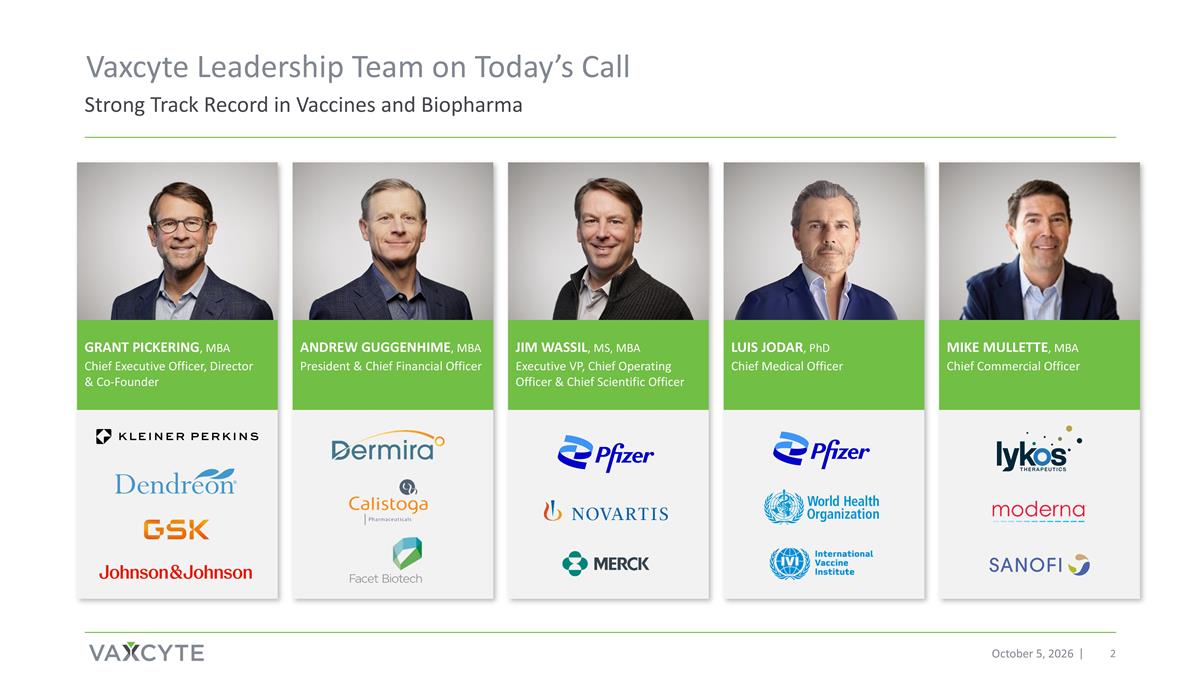
October 5, 2026 Strong Track Record in Vaccines and Biopharma Grant Pickering, MBA Chief Executive Officer, Director & Co-Founder Andrew Guggenhime, MBA President & Chief Financial Officer Jim Wassil, MS, MBA Executive VP, Chief Operating Officer & Chief Scientific Officer Luis Jodar, PhD Chief Medical Officer Mike Mullette, MBA Chief Commercial Officer Vaxcyte Leadership Team on Today’s Call
Forward-Looking Statements October 5, 2026 This presentation contains forward-looking statements within the meaning of the Private Securities Litigation Reform Act of 1995. These statements include, but are not limited to, statements related to the potential benefits of Vaxcyte’s carrier-sparing platform and vaccine candidates, including breadth of coverage and the ability to deliver potentially better immune responses, best-in-class vaccines and the improvement upon the standard-of-care; demand for Vaxcyte’s vaccine candidates; the design, timing of initiation, progress and expected results of Vaxcyte’s preclinical studies, clinical trials and research and development plans; the ability of Vaxcyte’s cell-free platform to deliver the broadest-spectrum PCVs that provide protection against both currently circulating and historically prevalent strains; expectations with regard to serotype cross-reactivity; the standards for review and licensure of vaccines and regulators accepting Vaxcyte’s study as designed; the ability of Vaxcyte to commercialize its PCV candidates and to meet the PCV franchise market demand for commercial markets; the growth and expansion of the pneumococcal vaccine market, and the potential to address the need for broader-spectrum of coverage in such market; the market opportunity for Vaxcyte’s vaccines; Vaxcyte’s expectations regarding the potential benefits, spectrum coverage, clinical or regulatory pathways, adoption speed and immunogenicity of its vaccine candidates and other statements that are not historical fact. The words “anticipate,” “believe,” “continue,” “could,” “designed,” “estimate,” “expect,” “intend,” “may,” “plan,” “potential,” “predict,” “project,” “should,” “target,” “will,” “would” and similar expressions are intended to identify forward-looking statements, although not all forward-looking statements contain these identifying words. These forward-looking statements are based on Vaxcyte’s current expectations and actual results and timing of events could differ materially from those anticipated in such forward-looking statements as a result of risks and uncertainties, including, without limitation, risks related to Vaxcyte’s product development programs, including development timelines, success and timing of chemistry, manufacturing and controls and related manufacturing activities; potential delays or inability to obtain and maintain required regulatory approvals for its vaccine candidates; the risks and uncertainties inherent with preclinical and clinical development processes; the success, cost and timing of all development activities and clinical trials; and sufficiency of cash and other funding to support Vaxcyte’s development programs and other operating expenses. These and other risks are described more fully in Vaxcyte’s filings with the Securities and Exchange Commission (SEC), including its Quarterly Report on Form 10-Q filed with the SEC on August 5, 2026 or in other documents Vaxcyte subsequently files with or furnishes to the SEC. Vaxcyte undertakes no duty or obligation to update any forward-looking statements contained in this presentation as a result of new information, future events or changes in its expectations.
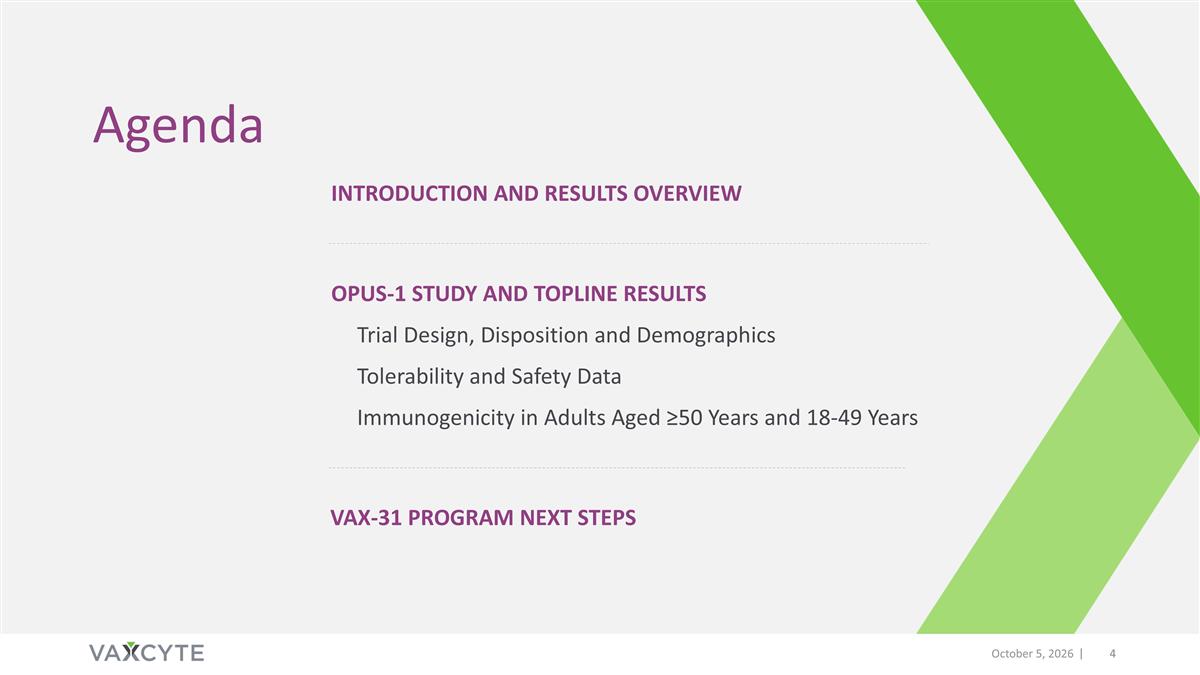
October 5, 2026 Introduction and results overview Agenda OPUS-1 Study and TOPLINE results Trial Design, Disposition and Demographics Tolerability and Safety Data Immunogenicity in Adults Aged ≥50 Years and 18-49 Years Vax-31 PROGRAM Next Steps

Introduction and Results Overview October 5, 2026
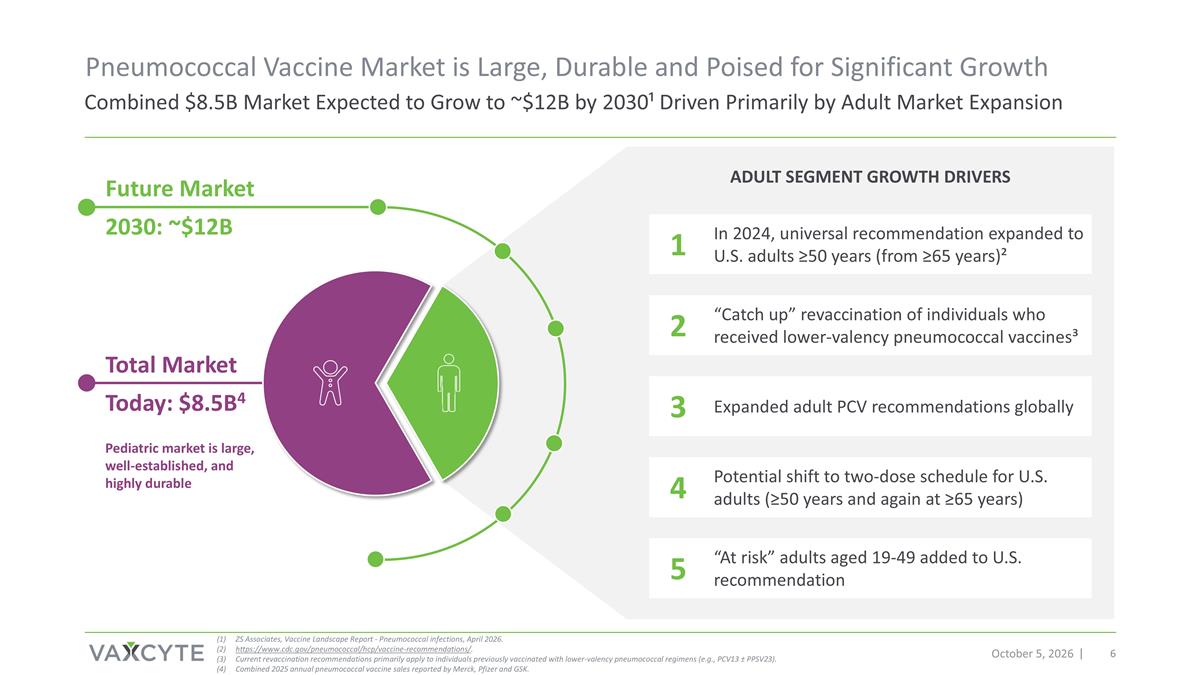
October 5, 2026 Combined $8.5B Market Expected to Grow to ~$12B by 2030¹ Driven Primarily by Adult Market Expansion Pneumococcal Vaccine Market is Large, Durable and Poised for Significant Growth Future Market 2030: ~$12B Pediatric market is large, well-established, and highly durable Total Market Today: $8.5B4 ADULT SEGMENT GROWTH DRIVERS In 2024, universal recommendation expanded to U.S. adults ≥50 years (from ≥65 years)² “Catch up” revaccination of individuals who received lower-valency pneumococcal vaccines³ Expanded adult PCV recommendations globally Potential shift to two-dose schedule for U.S. adults (≥50 years and again at ≥65 years) “At risk” adults aged 19-49 added to U.S. recommendation ZS Associates, Vaccine Landscape Report - Pneumococcal infections, April 2026. https://www.cdc.gov/pneumococcal/hcp/vaccine-recommendations/. Current revaccination recommendations primarily apply to individuals previously vaccinated with lower‑valency pneumococcal regimens (e.g., PCV13 ± PPSV23). Combined 2025 annual pneumococcal vaccine sales reported by Merck, Pfizer and GSK. 1 2 3 4 5
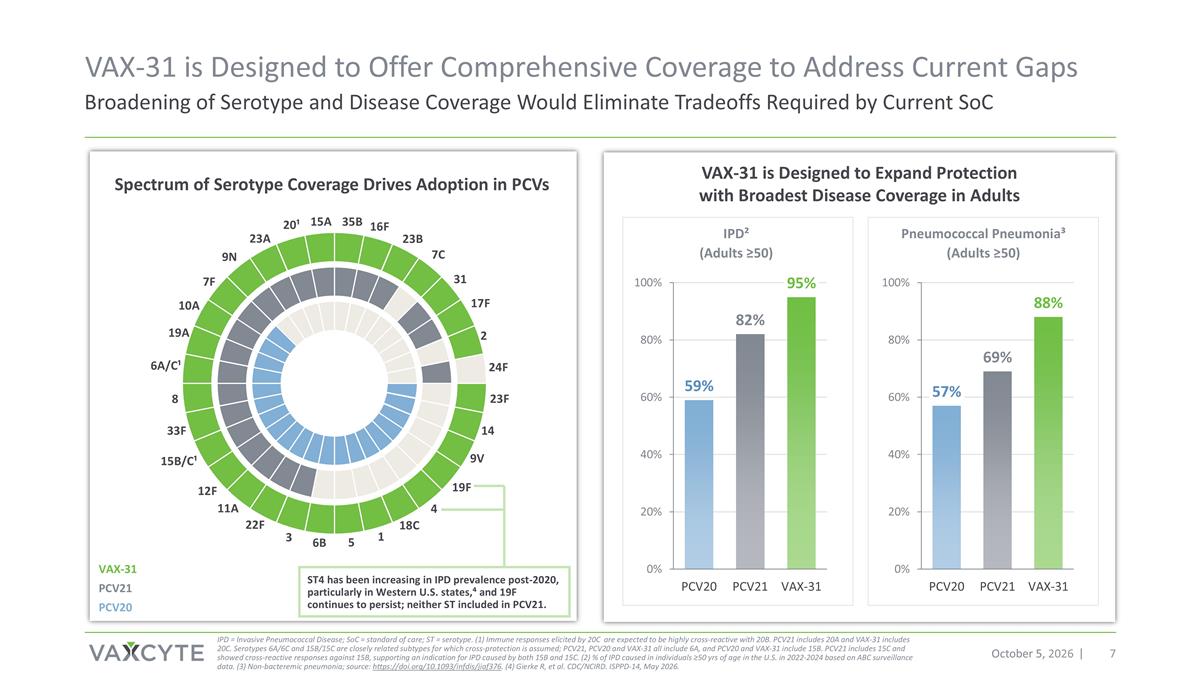
VAX-31 is Designed to Expand Protection with Broadest Disease Coverage in Adults IPD² (Adults ≥50) IPD = Invasive Pneumococcal Disease; SoC = standard of care; ST = serotype. (1) Immune responses elicited by 20C are expected to be highly cross-reactive with 20B. PCV21 includes 20A and VAX-31 includes 20C. Serotypes 6A/6C and 15B/15C are closely related subtypes for which cross-protection is assumed; PCV21, PCV20 and VAX-31 all include 6A, and PCV20 and VAX-31 include 15B. PCV21 includes 15C and showed cross-reactive responses against 15B, supporting an indication for IPD caused by both 15B and 15C. (2) % of IPD caused in individuals ≥50 yrs of age in the U.S. in 2022-2024 based on ABC surveillance data. (3) Non-bacteremic pneumonia; source: https://doi.org/10.1093/infdis/jiaf376. (4) Gierke R, et al. CDC/NCIRD. ISPPD-14, May 2026. October 5, 2026 ST4 has been increasing in IPD prevalence post-2020, particularly in Western U.S. states,⁴ and 19F continues to persist; neither ST included in PCV21. 16F 35B 15A 20¹ 24F 2 17F 31 7C 23B 23A 9N 7F 10A 19A 6A/C¹ 23F 14 9V 19F 4 18C 1 5 6B 3 22F 11A 12F 15B/C¹ 33F 8 VAX-31 PCV21 PCV20 Spectrum of Serotype Coverage Drives Adoption in PCVs Pneumococcal Pneumonia³ (Adults ≥50) Broadening of Serotype and Disease Coverage Would Eliminate Tradeoffs Required by Current SoC VAX-31 is Designed to Offer Comprehensive Coverage to Address Current Gaps
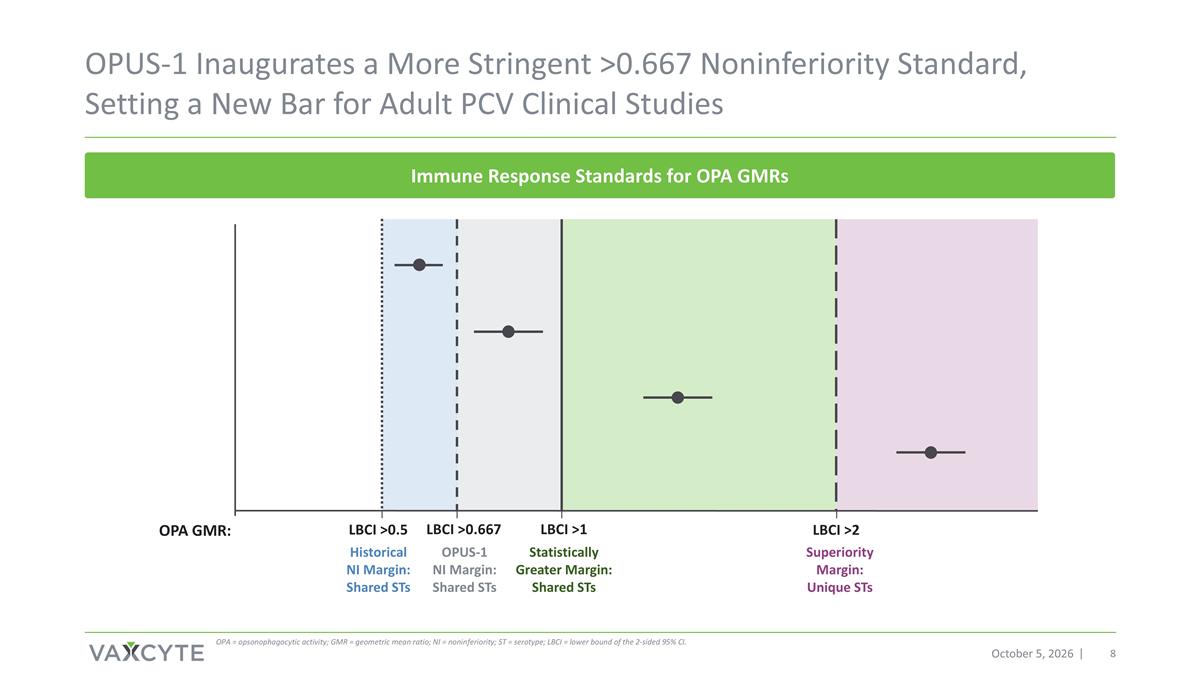
LBCI >1 OPUS-1 Inaugurates a More Stringent >0.667 Noninferiority Standard, Setting a New Bar for Adult PCV Clinical Studies October 5, 2026 OPA GMR: LBCI >0.5 LBCI >0.667 Immune Response Standards for OPA GMRs OPA = opsonophagocytic activity; GMR = geometric mean ratio; NI = noninferiority; ST = serotype; LBCI = lower bound of the 2-sided 95% CI. Historical NI Margin: Shared STs OPUS-1 NI Margin: Shared STs Statistically Greater Margin: Shared STs LBCI >2 Superiority Margin: Unique STs
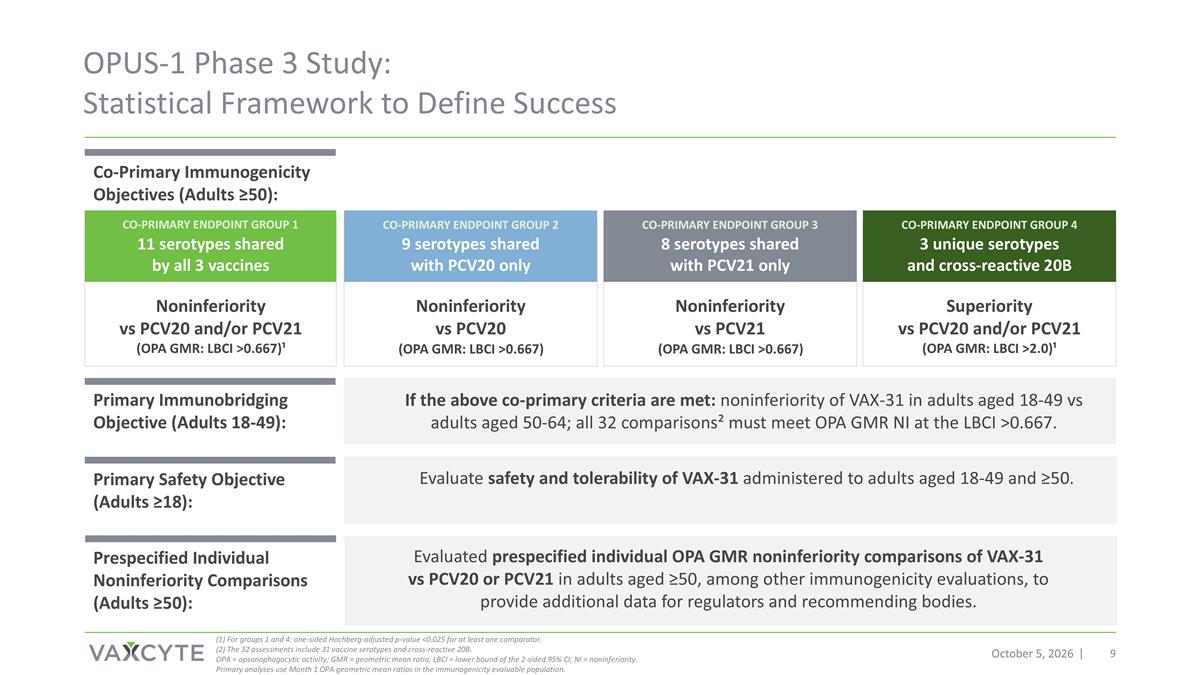
October 5, 2026 OPUS-1 Phase 3 Study: Statistical Framework to Define Success 11 serotypes shared by all 3 vaccines Noninferiority vs PCV20 and/or PCV21 (OPA GMR: LBCI >0.667)¹ 9 serotypes shared with PCV20 only Noninferiority vs PCV20 (OPA GMR: LBCI >0.667) 8 serotypes shared with PCV21 only Noninferiority vs PCV21 (OPA GMR: LBCI >0.667) 3 unique serotypes and cross-reactive 20B Superiority vs PCV20 and/or PCV21 (OPA GMR: LBCI >2.0)¹ (1) For groups 1 and 4: one-sided Hochberg-adjusted p-value <0.025 for at least one comparator. (2) The 32 assessments include 31 vaccine serotypes and cross-reactive 20B. OPA = opsonophagocytic activity; GMR = geometric mean ratio; LBCI = lower bound of the 2-sided 95% CI; NI = noninferiority. Primary analyses use Month 1 OPA geometric mean ratios in the immunogenicity evaluable population. CO-PRIMARY ENDPOINT GROUP 1 CO-PRIMARY ENDPOINT GROUP 2 CO-PRIMARY ENDPOINT GROUP 3 CO-PRIMARY ENDPOINT GROUP 4 Prespecified Individual Noninferiority Comparisons (Adults ≥50): Primary Safety Objective (Adults ≥18): Primary Immunobridging Objective (Adults 18-49): Co-Primary Immunogenicity Objectives (Adults ≥50): If the above co-primary criteria are met: noninferiority of VAX-31 in adults aged 18-49 vs adults aged 50-64; all 32 comparisons² must meet OPA GMR NI at the LBCI >0.667. Evaluate safety and tolerability of VAX-31 administered to adults aged 18-49 and ≥50. Evaluated prespecified individual OPA GMR noninferiority comparisons of VAX-31 vs PCV20 or PCV21 in adults aged ≥50, among other immunogenicity evaluations, to provide additional data for regulators and recommending bodies.
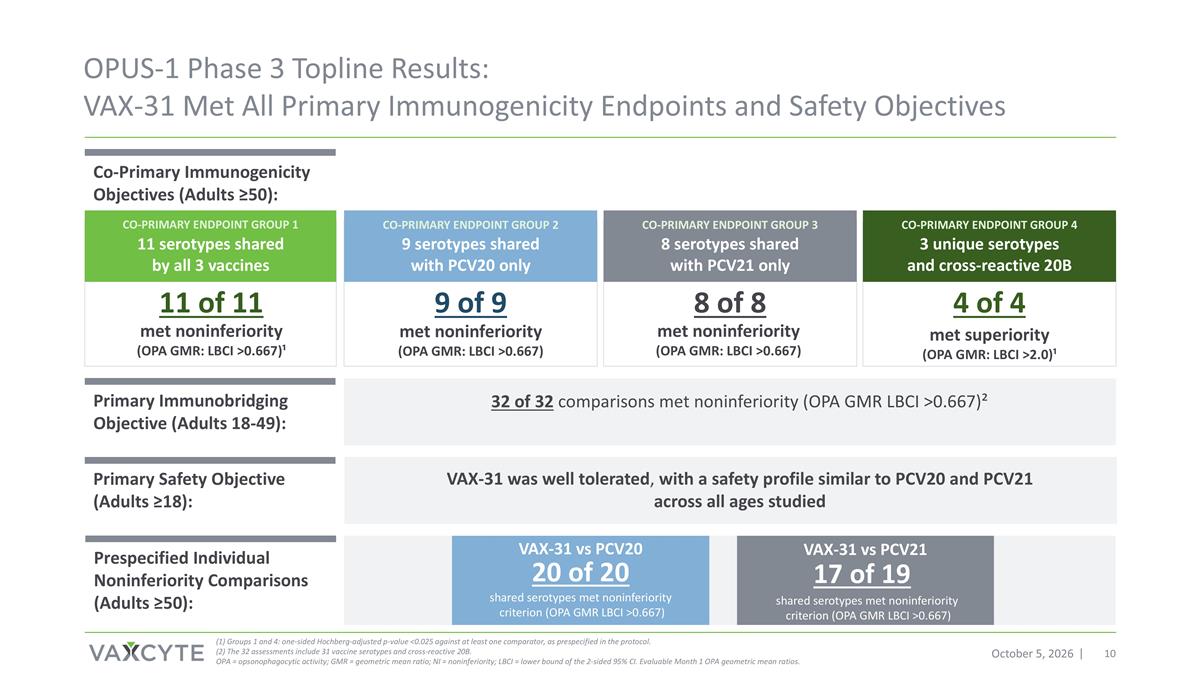
October 5, 2026 OPUS-1 Phase 3 Topline Results: VAX-31 Met All Primary Immunogenicity Endpoints and Safety Objectives (1) Groups 1 and 4: one-sided Hochberg-adjusted p-value <0.025 against at least one comparator, as prespecified in the protocol. (2) The 32 assessments include 31 vaccine serotypes and cross-reactive 20B. OPA = opsonophagocytic activity; GMR = geometric mean ratio; NI = noninferiority; LBCI = lower bound of the 2-sided 95% CI. Evaluable Month 1 OPA geometric mean ratios. VAX-31 was well tolerated, with a safety profile similar to PCV20 and PCV21 across all ages studied VAX-31 vs PCV20 shared serotypes met noninferiority criterion (OPA GMR LBCI >0.667) 20 of 20 VAX-31 vs PCV21 shared serotypes met noninferiority criterion (OPA GMR LBCI >0.667) 17 of 19 Co-Primary Immunogenicity Objectives (Adults ≥50): Prespecified Individual Noninferiority Comparisons (Adults ≥50): Primary Safety Objective (Adults ≥18): Primary Immunobridging Objective (Adults 18-49): 32 of 32 comparisons met noninferiority (OPA GMR LBCI >0.667)² 11 serotypes shared by all 3 vaccines 9 serotypes shared with PCV20 only 8 serotypes shared with PCV21 only 3 unique serotypes and cross-reactive 20B CO-PRIMARY ENDPOINT GROUP 1 CO-PRIMARY ENDPOINT GROUP 2 CO-PRIMARY ENDPOINT GROUP 3 CO-PRIMARY ENDPOINT GROUP 4 11 of 11 met noninferiority (OPA GMR: LBCI >0.667)¹ 9 of 9 met noninferiority (OPA GMR: LBCI >0.667) 8 of 8 4 of 4 met superiority (OPA GMR: LBCI >2.0)¹ met noninferiority (OPA GMR: LBCI >0.667)

OPUS-1 Study and Topline Results October 5, 2026

Trial Design, Disposition and Demographics October 5, 2026
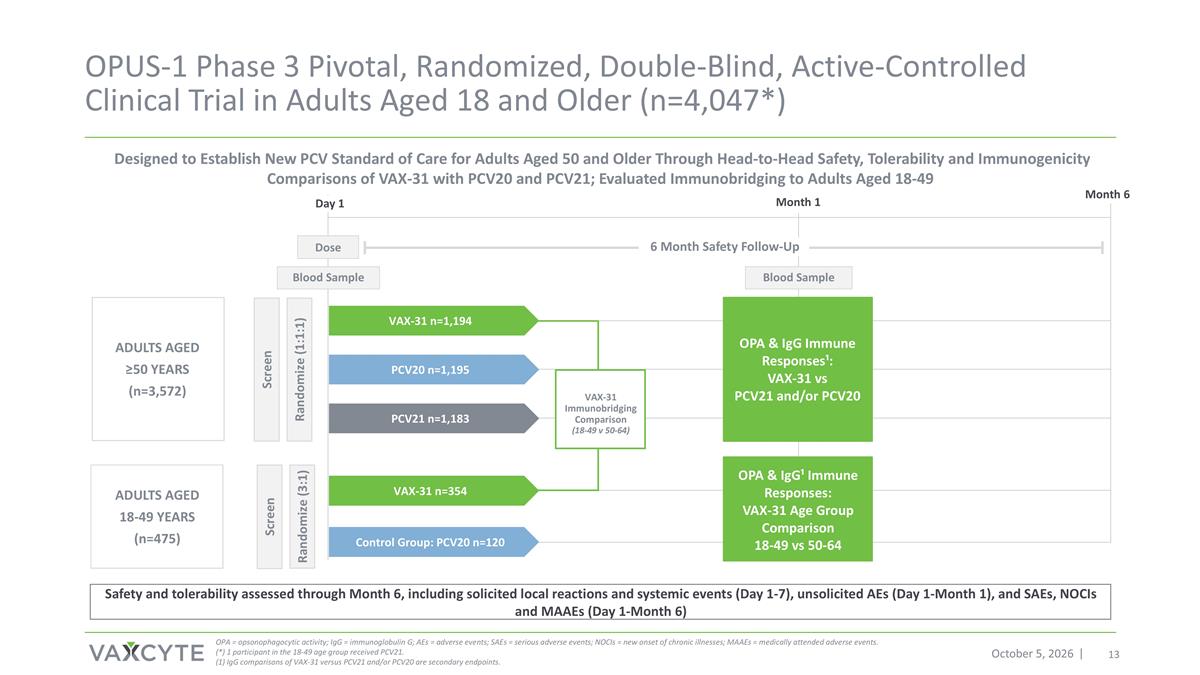
6 Month Safety Follow-Up OPUS-1 Phase 3 Pivotal, Randomized, Double-Blind, Active-Controlled Clinical Trial in Adults Aged 18 and Older (n=4,047*) October 5, 2026 Adults aged ≥50 years (n=3,572) Adults aged 18-49 years (n=475) Screen Blood Sample Screen Randomize (3:1) Month 1 Month 6 Day 1 Blood Sample Dose Designed to Establish New PCV Standard of Care for Adults Aged 50 and Older Through Head-to-Head Safety, Tolerability and Immunogenicity Comparisons of VAX-31 with PCV20 and PCV21; Evaluated Immunobridging to Adults Aged 18-49 OPA = opsonophagocytic activity; IgG = immunoglobulin G; AEs = adverse events; SAEs = serious adverse events; NOCIs = new onset of chronic illnesses; MAAEs = medically attended adverse events. (*) 1 participant in the 18-49 age group received PCV21. (1) IgG comparisons of VAX‑31 versus PCV21 and/or PCV20 are secondary endpoints. Safety and tolerability assessed through Month 6, including solicited local reactions and systemic events (Day 1-7), unsolicited AEs (Day 1-Month 1), and SAEs, NOCIs and MAAEs (Day 1-Month 6) OPA & IgG Immune Responses¹: VAX-31 vs PCV21 and/or PCV20 OPA & IgG¹ Immune Responses: VAX-31 Age Group Comparison 18-49 vs 50-64 Control Group: PCV20 n=120 Randomize (1:1:1) VAX-31 Immunobridging Comparison (18-49 v 50-64) PCV21 n=1,183 VAX-31 n=1,194 PCV20 n=1,195 VAX-31 n=354
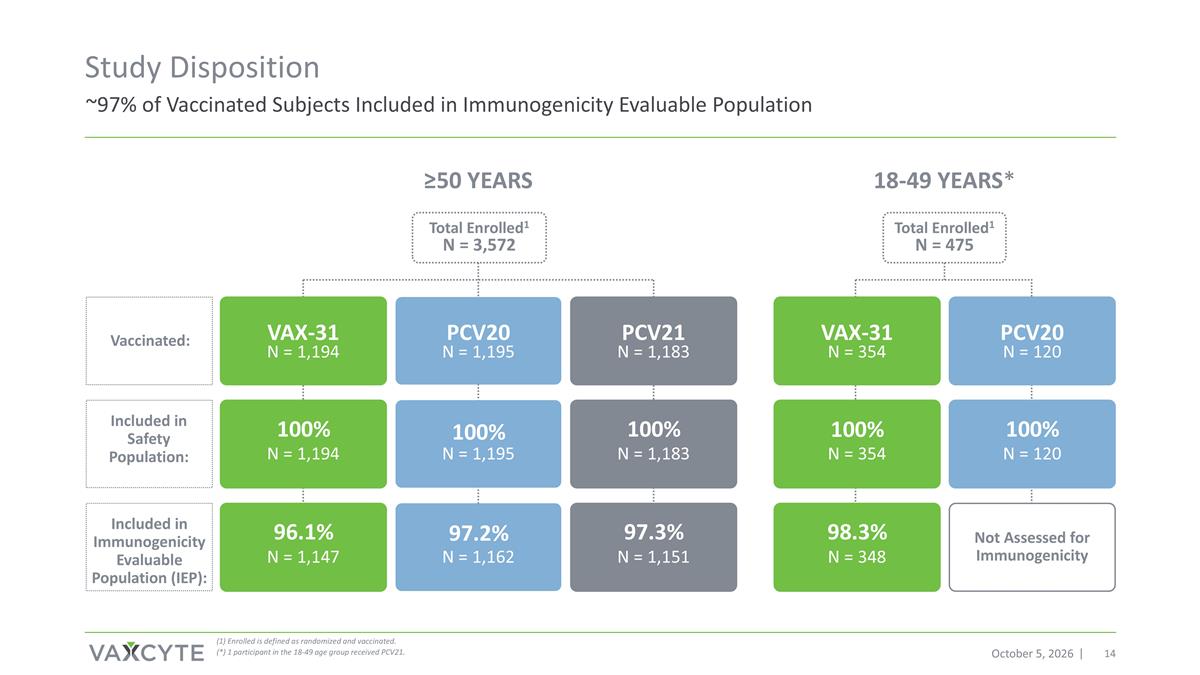
~97% of Vaccinated Subjects Included in Immunogenicity Evaluable Population Study Disposition October 5, 2026 ≥50 YEARS 18-49 YEARS* Total Enrolled1 N = 3,572 Total Enrolled1 N = 475 VAX-31 N = 1,194 PCV20 N = 1,195 PCV21 N = 1,183 N = 1,194 N = 1,195 N = 1,183 N = 1,147 N = 1,162 N = 1,151 VAX-31 N = 354 PCV20 N = 120 N = 354 N = 120 N = 348 Not Assessed for Immunogenicity 100% 100% 100% 100% 96.1% 97.3% 98.3% Included in Safety Population: Included in Immunogenicity Evaluable Population (IEP): Vaccinated: (1) Enrolled is defined as randomized and vaccinated. (*) 1 participant in the 18-49 age group received PCV21. 100% 97.2%
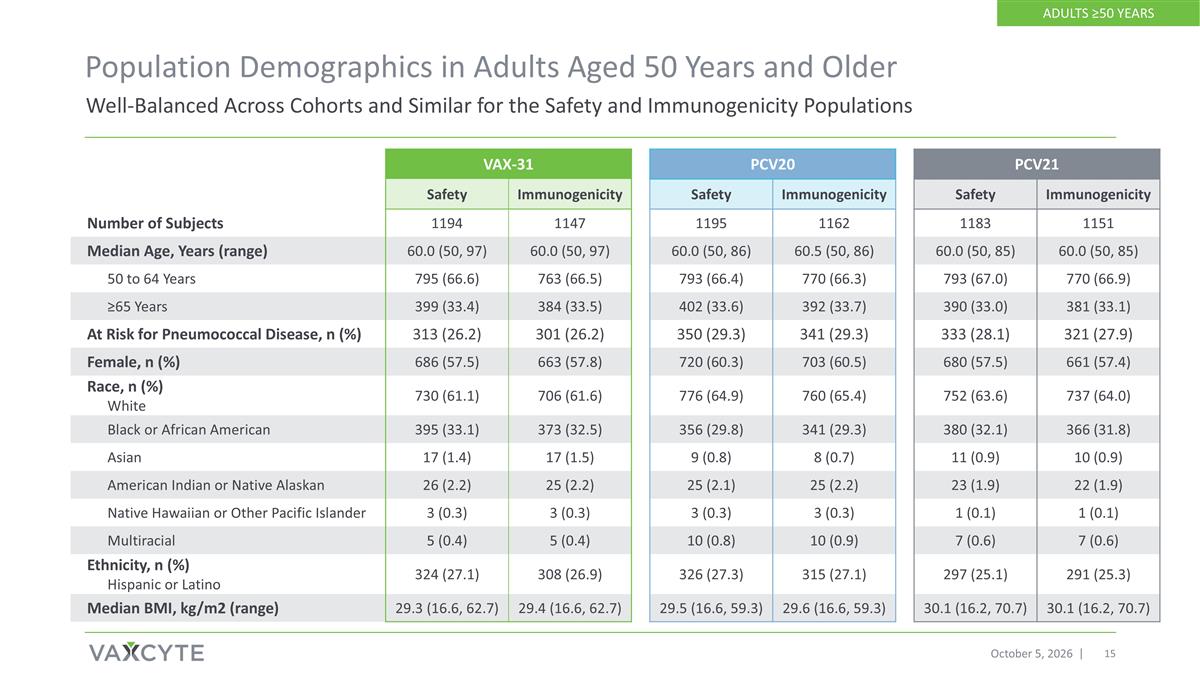
Population Demographics in Adults Aged 50 Years and Older October 5, 2026 VAX-31 PCV20 PCV21 Safety Immunogenicity Safety Immunogenicity Safety Immunogenicity Number of Subjects 1194 1147 1195 1162 1183 1151 Median Age, Years (range) 60.0 (50, 97) 60.0 (50, 97) 60.0 (50, 86) 60.5 (50, 86) 60.0 (50, 85) 60.0 (50, 85) 50 to 64 Years 795 (66.6) 763 (66.5) 793 (66.4) 770 (66.3) 793 (67.0) 770 (66.9) ≥65 Years 399 (33.4) 384 (33.5) 402 (33.6) 392 (33.7) 390 (33.0) 381 (33.1) At Risk for Pneumococcal Disease, n (%) 313 (26.2) 301 (26.2) 350 (29.3) 341 (29.3) 333 (28.1) 321 (27.9) Female, n (%) 686 (57.5) 663 (57.8) 720 (60.3) 703 (60.5) 680 (57.5) 661 (57.4) Race, n (%) White 730 (61.1) 706 (61.6) 776 (64.9) 760 (65.4) 752 (63.6) 737 (64.0) Black or African American 395 (33.1) 373 (32.5) 356 (29.8) 341 (29.3) 380 (32.1) 366 (31.8) Asian 17 (1.4) 17 (1.5) 9 (0.8) 8 (0.7) 11 (0.9) 10 (0.9) American Indian or Native Alaskan 26 (2.2) 25 (2.2) 25 (2.1) 25 (2.2) 23 (1.9) 22 (1.9) Native Hawaiian or Other Pacific Islander 3 (0.3) 3 (0.3) 3 (0.3) 3 (0.3) 1 (0.1) 1 (0.1) Multiracial 5 (0.4) 5 (0.4) 10 (0.8) 10 (0.9) 7 (0.6) 7 (0.6) Ethnicity, n (%) Hispanic or Latino 324 (27.1) 308 (26.9) 326 (27.3) 315 (27.1) 297 (25.1) 291 (25.3) Median BMI, kg/m2 (range) 29.3 (16.6, 62.7) 29.4 (16.6, 62.7) 29.5 (16.6, 59.3) 29.6 (16.6, 59.3) 30.1 (16.2, 70.7) 30.1 (16.2, 70.7) Well-Balanced Across Cohorts and Similar for the Safety and Immunogenicity Populations ADULTS ≥50 YEARS
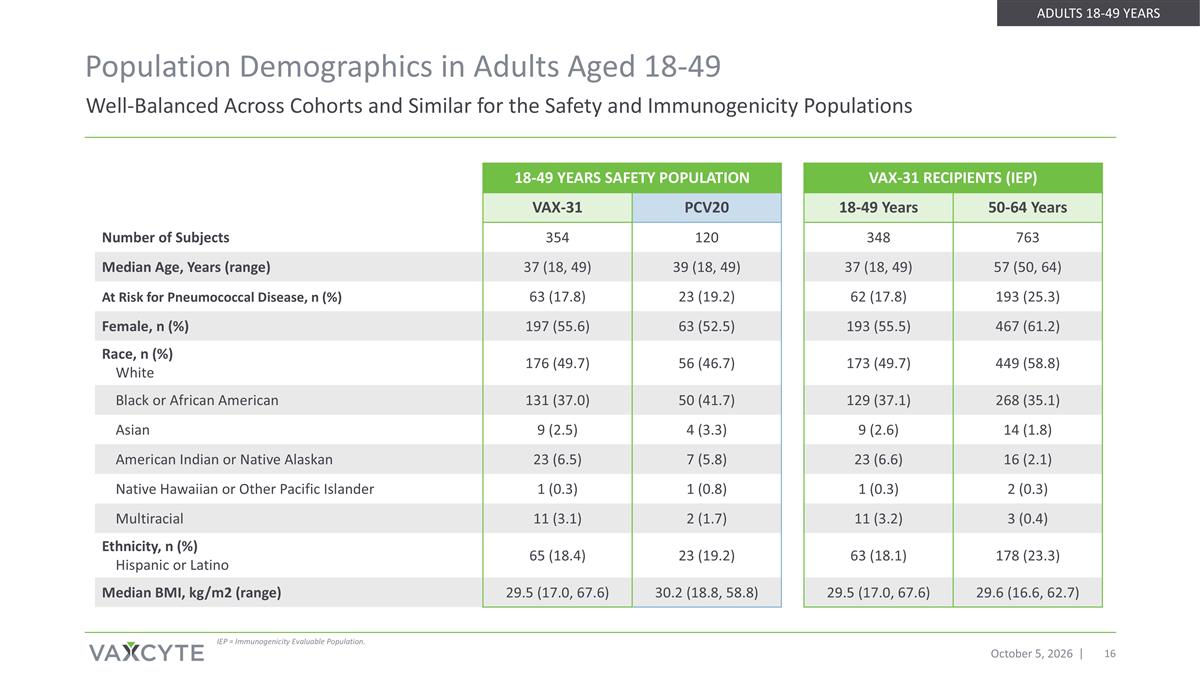
Well-Balanced Across Cohorts and Similar for the Safety and Immunogenicity Populations Population Demographics in Adults Aged 18-49 October 5, 2026 18-49 YEARS SAFETY POPULATION VAX-31 RECIPIENTS (IEP) VAX-31 PCV20 18-49 Years 50-64 Years Number of Subjects 354 120 348 763 Median Age, Years (range) 37 (18, 49) 39 (18, 49) 37 (18, 49) 57 (50, 64) At Risk for Pneumococcal Disease, n (%) 63 (17.8) 23 (19.2) 62 (17.8) 193 (25.3) Female, n (%) 197 (55.6) 63 (52.5) 193 (55.5) 467 (61.2) Race, n (%) White 176 (49.7) 56 (46.7) 173 (49.7) 449 (58.8) Black or African American 131 (37.0) 50 (41.7) 129 (37.1) 268 (35.1) Asian 9 (2.5) 4 (3.3) 9 (2.6) 14 (1.8) American Indian or Native Alaskan 23 (6.5) 7 (5.8) 23 (6.6) 16 (2.1) Native Hawaiian or Other Pacific Islander 1 (0.3) 1 (0.8) 1 (0.3) 2 (0.3) Multiracial 11 (3.1) 2 (1.7) 11 (3.2) 3 (0.4) Ethnicity, n (%) Hispanic or Latino 65 (18.4) 23 (19.2) 63 (18.1) 178 (23.3) Median BMI, kg/m2 (range) 29.5 (17.0, 67.6) 30.2 (18.8, 58.8) 29.5 (17.0, 67.6) 29.6 (16.6, 62.7) ADULTS 18-49 YEARS IEP = Immunogenicity Evaluable Population.
Tolerability and Safety Data October 5, 2026
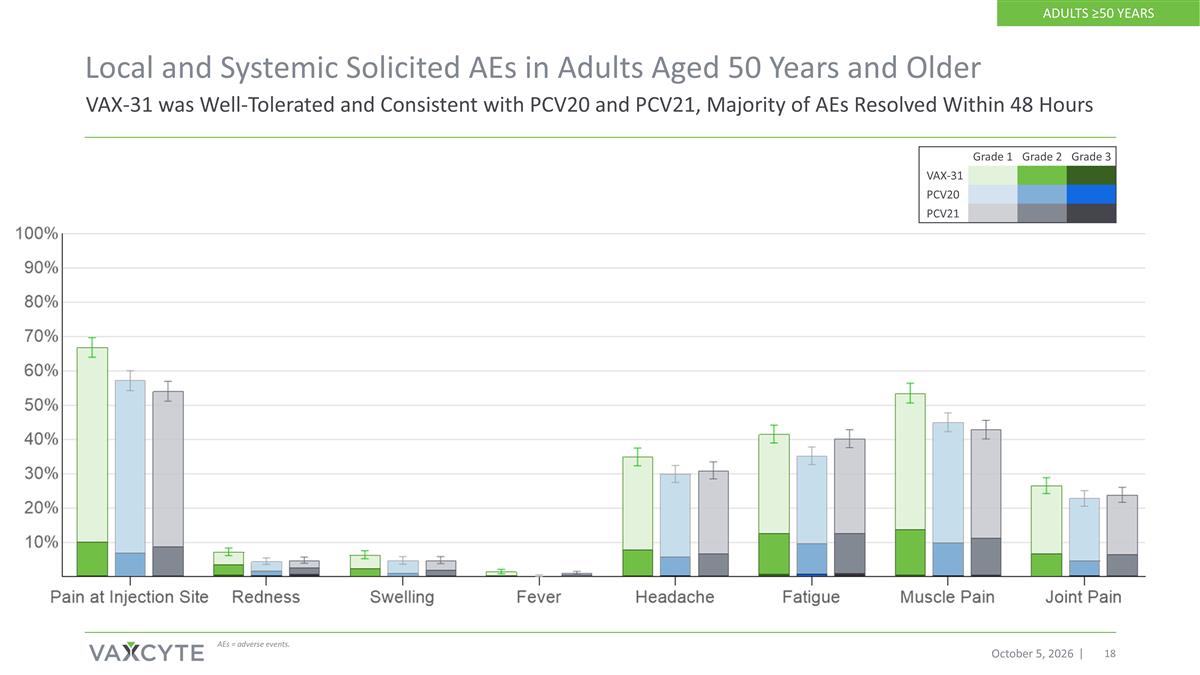
Local and Systemic Solicited AEs in Adults Aged 50 Years and Older October 5, 2026 VAX-31 was Well-Tolerated and Consistent with PCV20 and PCV21, Majority of AEs Resolved Within 48 Hours AEs = adverse events. Grade 1 Grade 2 Grade 3 VAX-31 PCV20 PCV21 ADULTS ≥50 YEARS
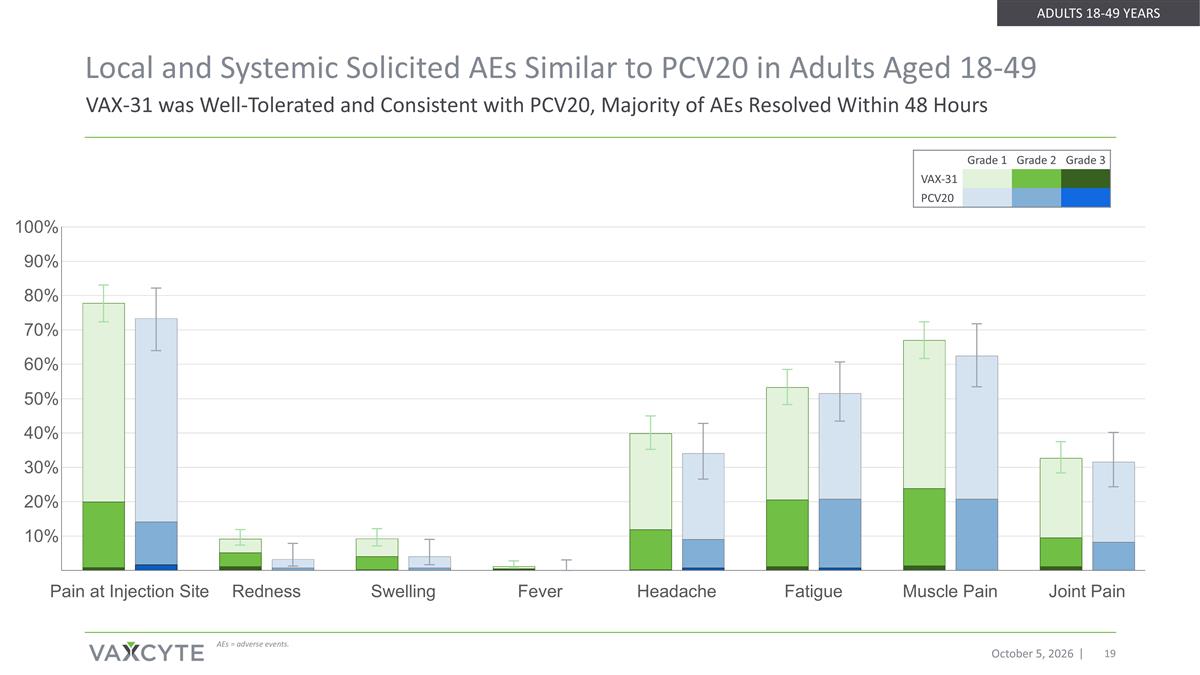
Local and Systemic Solicited AEs Similar to PCV20 in Adults Aged 18-49 October 5, 2026 AEs = adverse events. VAX-31 was Well-Tolerated and Consistent with PCV20, Majority of AEs Resolved Within 48 Hours Grade 1 Grade 2 Grade 3 VAX-31 PCV20 ADULTS 18-49 YEARS
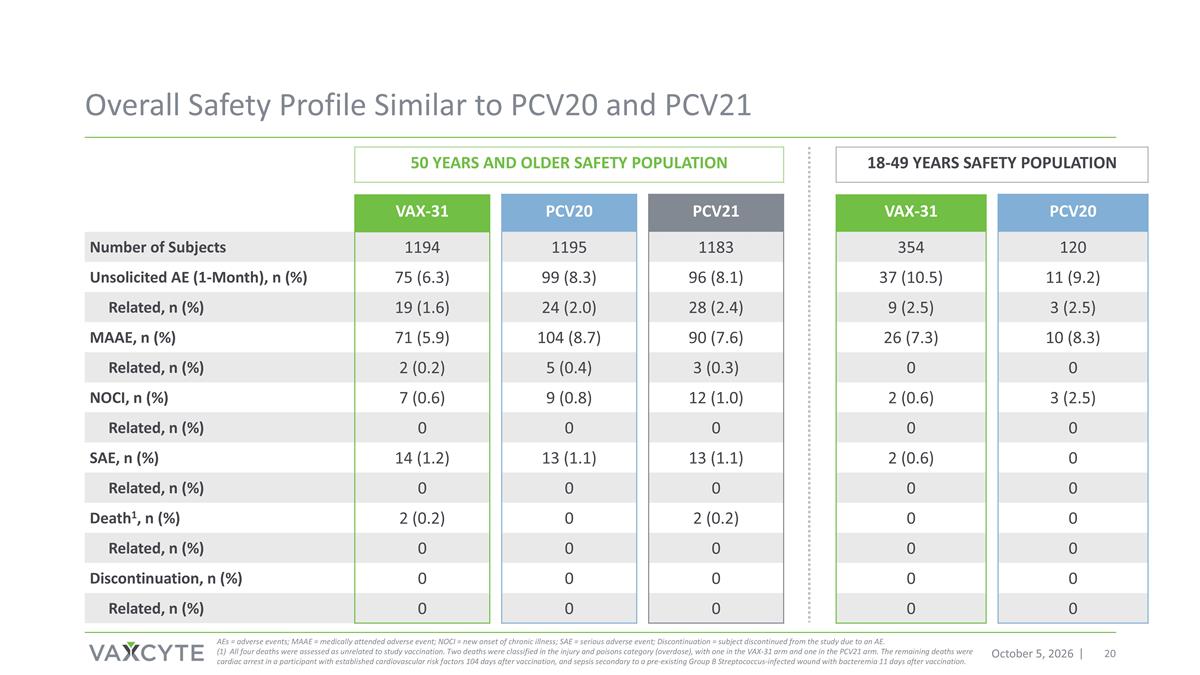
Overall Safety Profile Similar to PCV20 and PCV21 October 5, 2026 AEs = adverse events; MAAE = medically attended adverse event; NOCI = new onset of chronic illness; SAE = serious adverse event; Discontinuation = subject discontinued from the study due to an AE. (1) All four deaths were assessed as unrelated to study vaccination. Two deaths were classified in the injury and poisons category (overdose), with one in the VAX-31 arm and one in the PCV21 arm. The remaining deaths were cardiac arrest in a participant with established cardiovascular risk factors 104 days after vaccination, and sepsis secondary to a pre-existing Group B Streptococcus-infected wound with bacteremia 11 days after vaccination. 50 YEARS AND OLDER SAFETY POPULATION 18-49 YEARS SAFETY POPULATION VAX-31 PCV20 PCV21 VAX-31 PCV20 Number of Subjects 1194 1195 1183 354 120 Unsolicited AE (1-Month), n (%) 75 (6.3) 99 (8.3) 96 (8.1) 37 (10.5) 11 (9.2) Related, n (%) 19 (1.6) 24 (2.0) 28 (2.4) 9 (2.5) 3 (2.5) MAAE, n (%) 71 (5.9) 104 (8.7) 90 (7.6) 26 (7.3) 10 (8.3) Related, n (%) 2 (0.2) 5 (0.4) 3 (0.3) 0 0 NOCI, n (%) 7 (0.6) 9 (0.8) 12 (1.0) 2 (0.6) 3 (2.5) Related, n (%) 0 0 0 0 0 SAE, n (%) 14 (1.2) 13 (1.1) 13 (1.1) 2 (0.6) 0 Related, n (%) 0 0 0 0 0 Death1, n (%) 2 (0.2) 0 2 (0.2) 0 0 Related, n (%) 0 0 0 0 0 Discontinuation, n (%) 0 0 0 0 0 Related, n (%) 0 0 0 0 0
Immunogenicity Data In Adults Aged ≥50 Years and 18-49 Years October 5, 2026
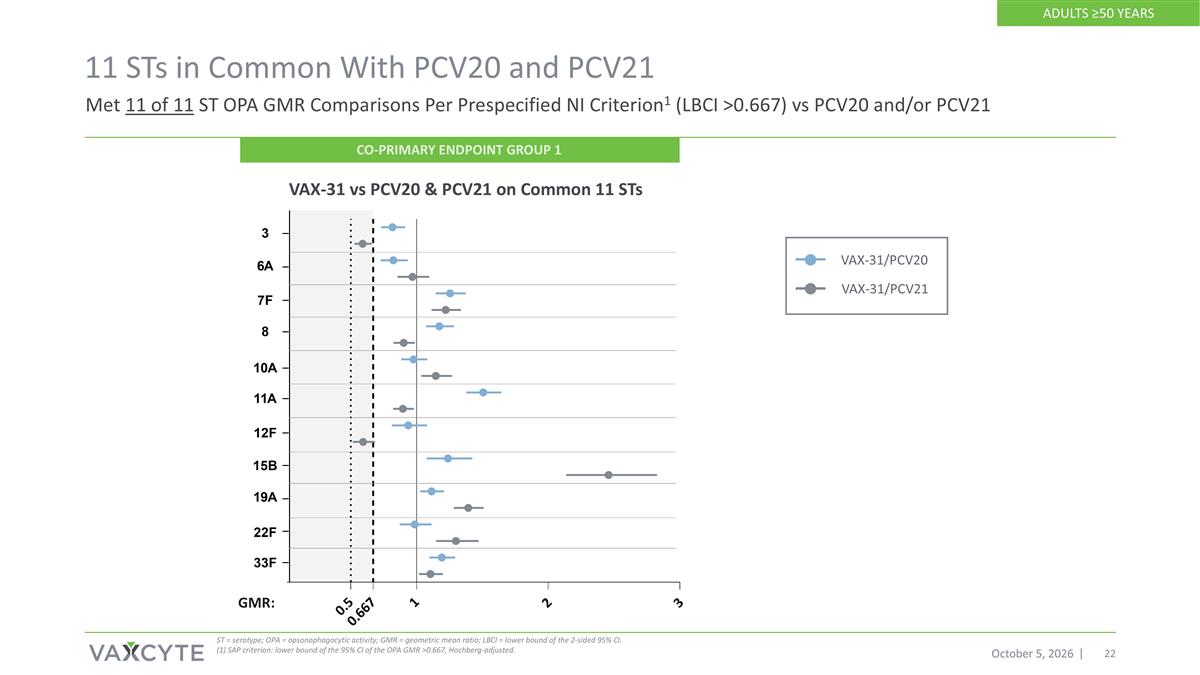
VAX-31/PCV20 VAX-31/PCV21 11 STs in Common With PCV20 and PCV21 October 5, 2026 VAX-31 vs PCV20 & PCV21 on Common 11 STs ST = serotype; OPA = opsonophagocytic activity; GMR = geometric mean ratio; LBCI = lower bound of the 2-sided 95% CI. (1) SAP criterion: lower bound of the 95% CI of the OPA GMR >0.667, Hochberg-adjusted. Met 11 of 11 ST OPA GMR Comparisons Per Prespecified NI Criterion1 (LBCI >0.667) vs PCV20 and/or PCV21 GMR: CO-PRIMARY ENDPOINT GROUP 1 ADULTS ≥50 YEARS
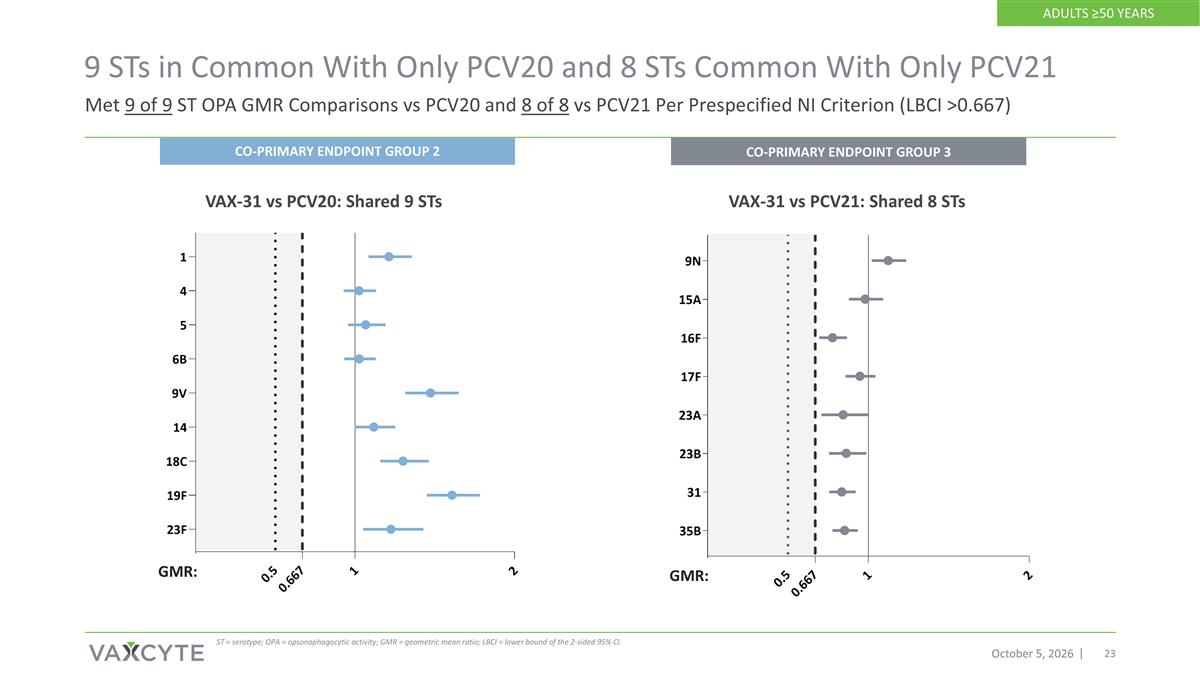
9 STs in Common With Only PCV20 and 8 STs Common With Only PCV21 October 5, 2026 ST = serotype; OPA = opsonophagocytic activity; GMR = geometric mean ratio; LBCI = lower bound of the 2-sided 95% CI. VAX-31 vs PCV20: Shared 9 STs GMR: Met 9 of 9 ST OPA GMR Comparisons vs PCV20 and 8 of 8 vs PCV21 Per Prespecified NI Criterion (LBCI >0.667) VAX-31 vs PCV21: Shared 8 STs GMR: CO-PRIMARY ENDPOINT GROUP 2 CO-PRIMARY ENDPOINT GROUP 3 ADULTS ≥50 YEARS
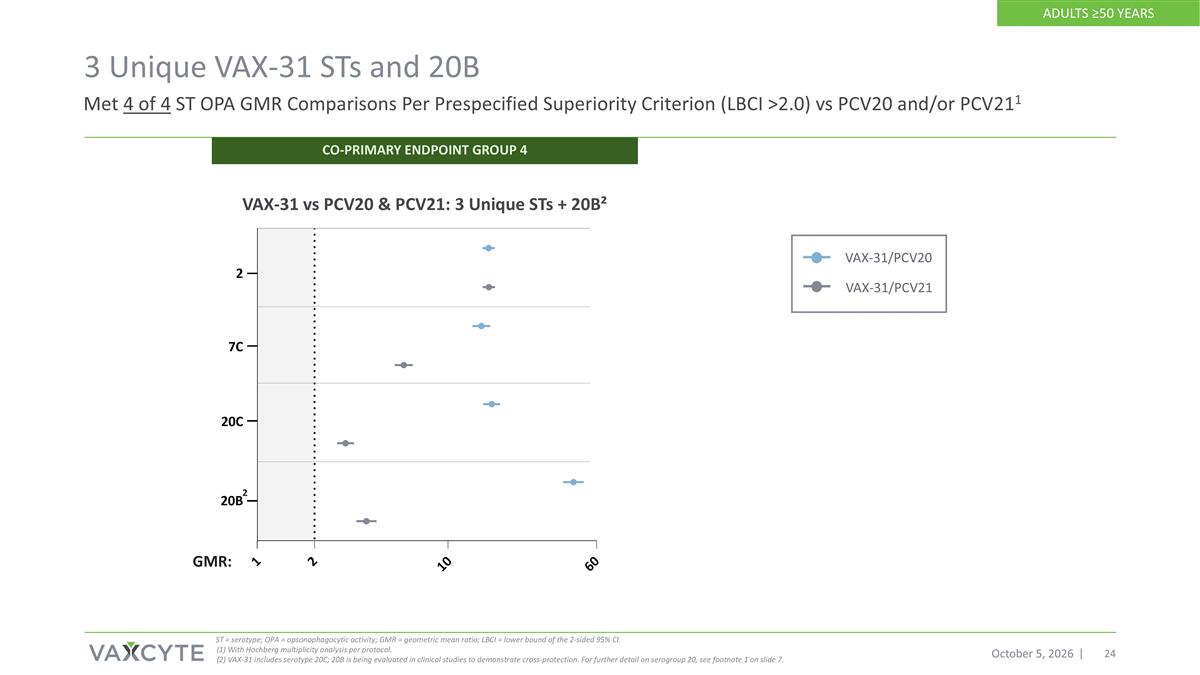
3 Unique VAX-31 STs and 20B October 5, 2026 ST = serotype; OPA = opsonophagocytic activity; GMR = geometric mean ratio; LBCI = lower bound of the 2-sided 95% CI. (1) With Hochberg multiplicity analysis per protocol. (2) VAX-31 includes serotype 20C; 20B is being evaluated in clinical studies to demonstrate cross-protection. For further detail on serogroup 20, see footnote 1 on slide 7. Met 4 of 4 ST OPA GMR Comparisons Per Prespecified Superiority Criterion (LBCI >2.0) vs PCV20 and/or PCV211 VAX-31 vs PCV20 & PCV21: 3 Unique STs + 20B² GMR: VAX-31/PCV20 VAX-31/PCV21 2 CO-PRIMARY ENDPOINT GROUP 4 ADULTS ≥50 YEARS
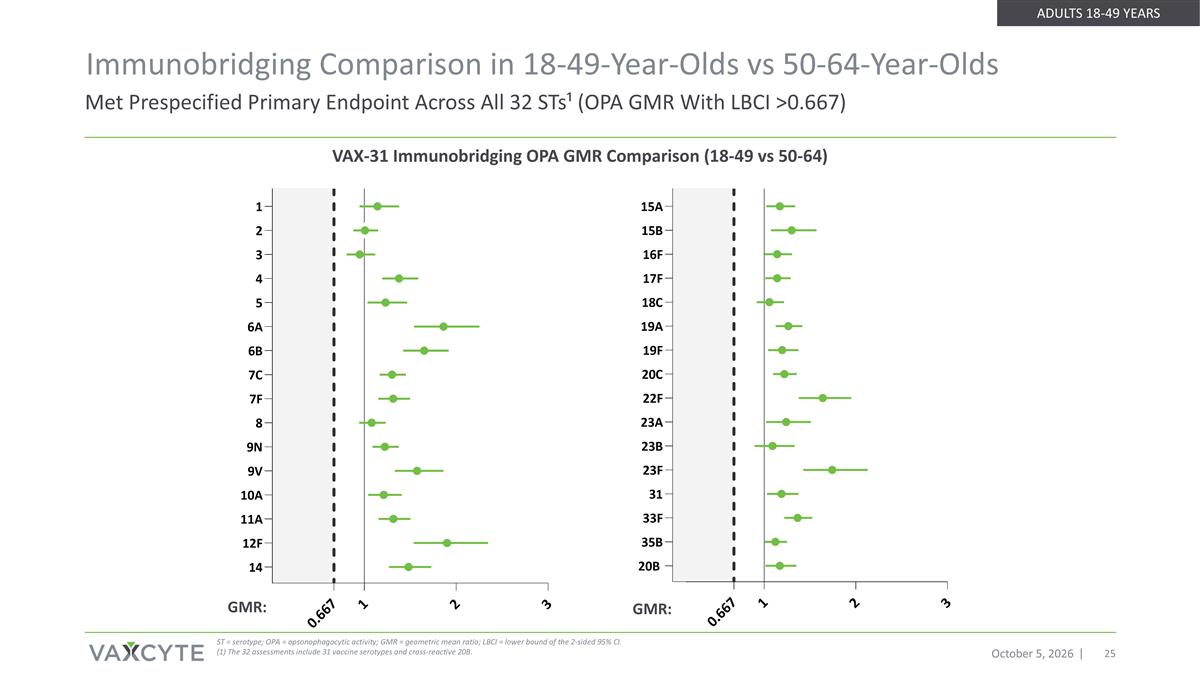
October 5, 2026 Met Prespecified Primary Endpoint Across All 32 STs¹ (OPA GMR With LBCI >0.667) ST = serotype; OPA = opsonophagocytic activity; GMR = geometric mean ratio; LBCI = lower bound of the 2-sided 95% CI. (1) The 32 assessments include 31 vaccine serotypes and cross-reactive 20B. GMR: GMR: VAX-31 Immunobridging OPA GMR Comparison (18-49 vs 50-64) Immunobridging Comparison in 18-49-Year-Olds vs 50-64-Year-Olds ADULTS 18-49 YEARS
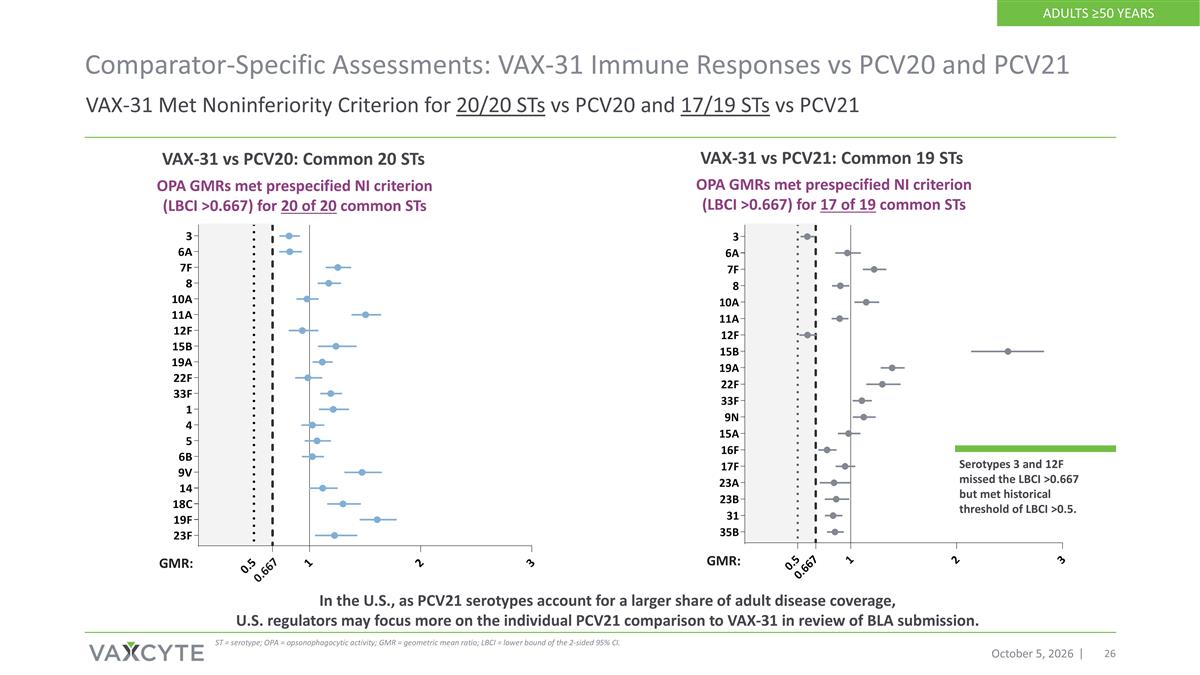
0.667 VAX-31 Met Noninferiority Criterion for 20/20 STs vs PCV20 and 17/19 STs vs PCV21 Comparator-Specific Assessments: VAX-31 Immune Responses vs PCV20 and PCV21 October 5, 2026 VAX-31 vs PCV20: Common 20 STs ST = serotype; OPA = opsonophagocytic activity; GMR = geometric mean ratio; LBCI = lower bound of the 2-sided 95% CI. OPA GMRs met prespecified NI criterion (LBCI >0.667) for 20 of 20 common STs VAX-31 vs PCV21: Common 19 STs OPA GMRs met prespecified NI criterion (LBCI >0.667) for 17 of 19 common STs GMR: GMR: In the U.S., as PCV21 serotypes account for a larger share of adult disease coverage, U.S. regulators may focus more on the individual PCV21 comparison to VAX-31 in review of BLA submission. Serotypes 3 and 12F missed the LBCI >0.667 but met historical threshold of LBCI >0.5. ADULTS ≥50 YEARS
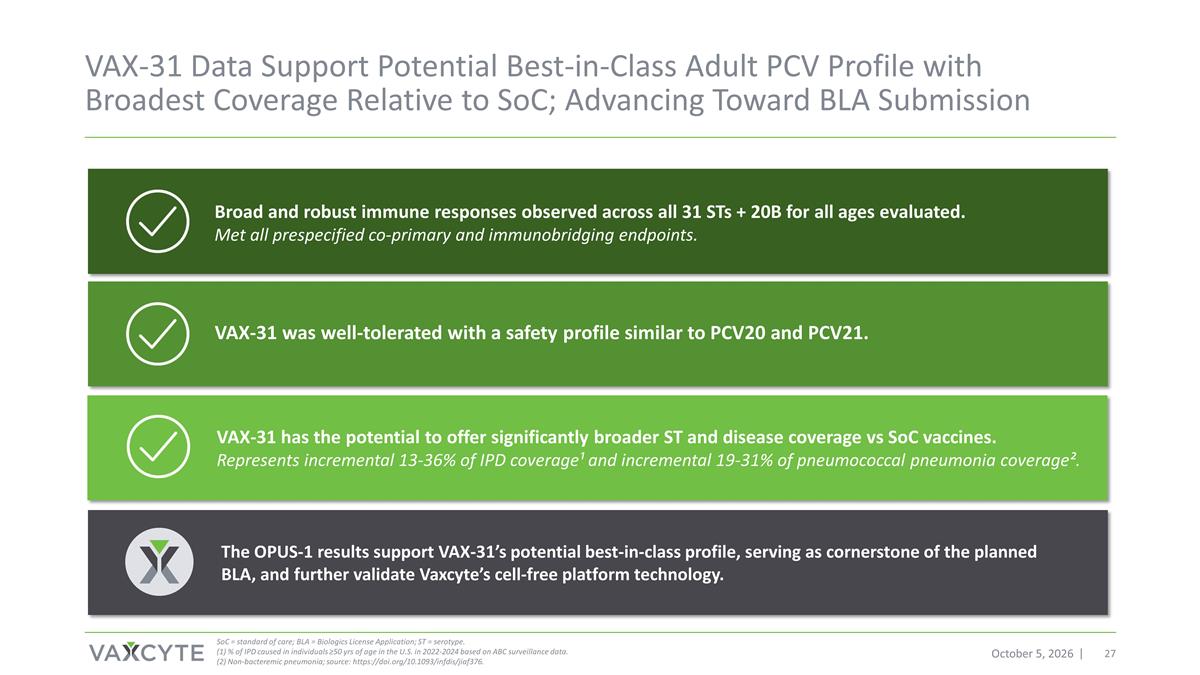
VAX-31 Data Support Potential Best-in-Class Adult PCV Profile with Broadest Coverage Relative to SoC; Advancing Toward BLA Submission October 5, 2026 SoC = standard of care; BLA = Biologics License Application; ST = serotype. (1) % of IPD caused in individuals ≥50 yrs of age in the U.S. in 2022-2024 based on ABC surveillance data. (2) Non-bacteremic pneumonia; source: https://doi.org/10.1093/infdis/jiaf376. Broad and robust immune responses observed across all 31 STs + 20B for all ages evaluated. Met all prespecified co-primary and immunobridging endpoints. VAX-31 has the potential to offer significantly broader ST and disease coverage vs SoC vaccines. Represents incremental 13-36% of IPD coverage¹ and incremental 19-31% of pneumococcal pneumonia coverage². The OPUS-1 results support VAX-31’s potential best-in-class profile, serving as cornerstone of the planned BLA, and further validate Vaxcyte’s cell-free platform technology. VAX-31 was well-tolerated with a safety profile similar to PCV20 and PCV21.

VAX-31 Program Next Steps October 5, 2026
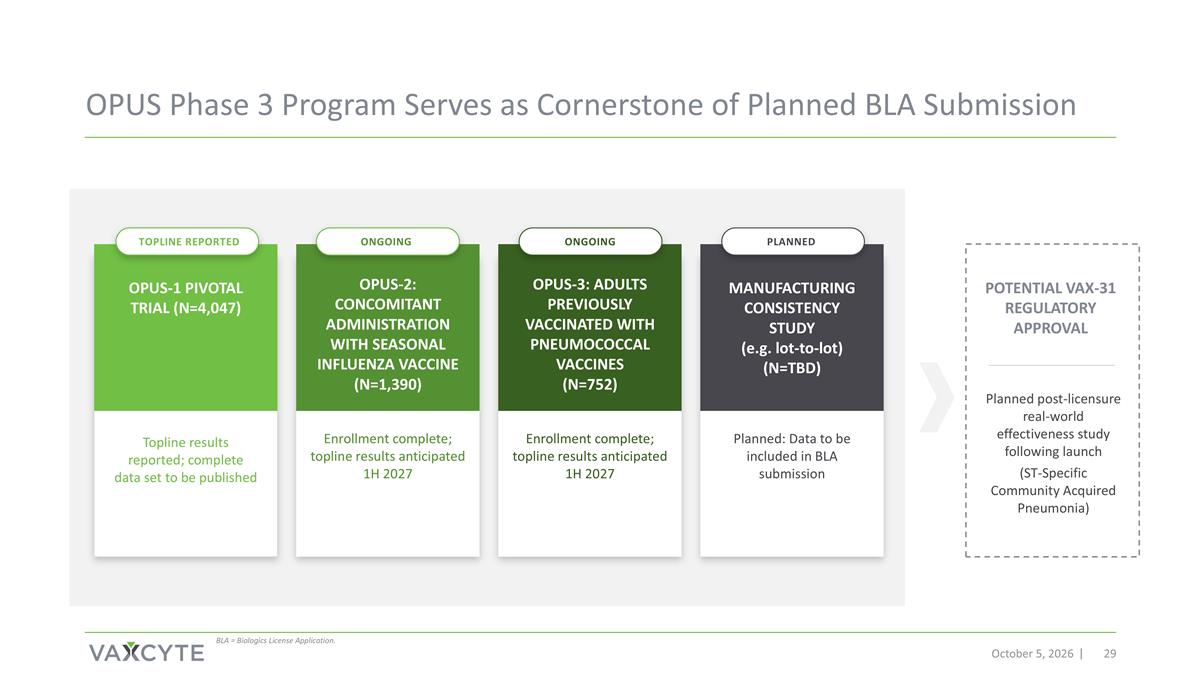
October 5, 2026 OPUS-1 PIVOTAL TRIAL (N=4,047) Topline results reported; complete data set to be published MANUFACTURING CONSISTENCY STUDY (e.g. lot-to-lot) (N=TBD) OPUS-2: CONCOMITANT ADMINISTRATION WITH SEASONAL INFLUENZA VACCINE (N=1,390) Enrollment complete; topline results anticipated 1H 2027 OPUS-3: ADULTS PREVIOUSLY VACCINATED WITH PNEUMOCOCCAL VACCINES (N=752) Enrollment complete; topline results anticipated 1H 2027 POTENTIAL VAX-31 REGULATORY APPROVAL OPUS Phase 3 Program Serves as Cornerstone of Planned BLA Submission Planned post-licensure real-world effectiveness study following launch (ST-Specific Community Acquired Pneumonia) Planned: Data to be included in BLA submission BLA = Biologics License Application. TOPLINE REPORTED ONGOING ONGOING PLANNED
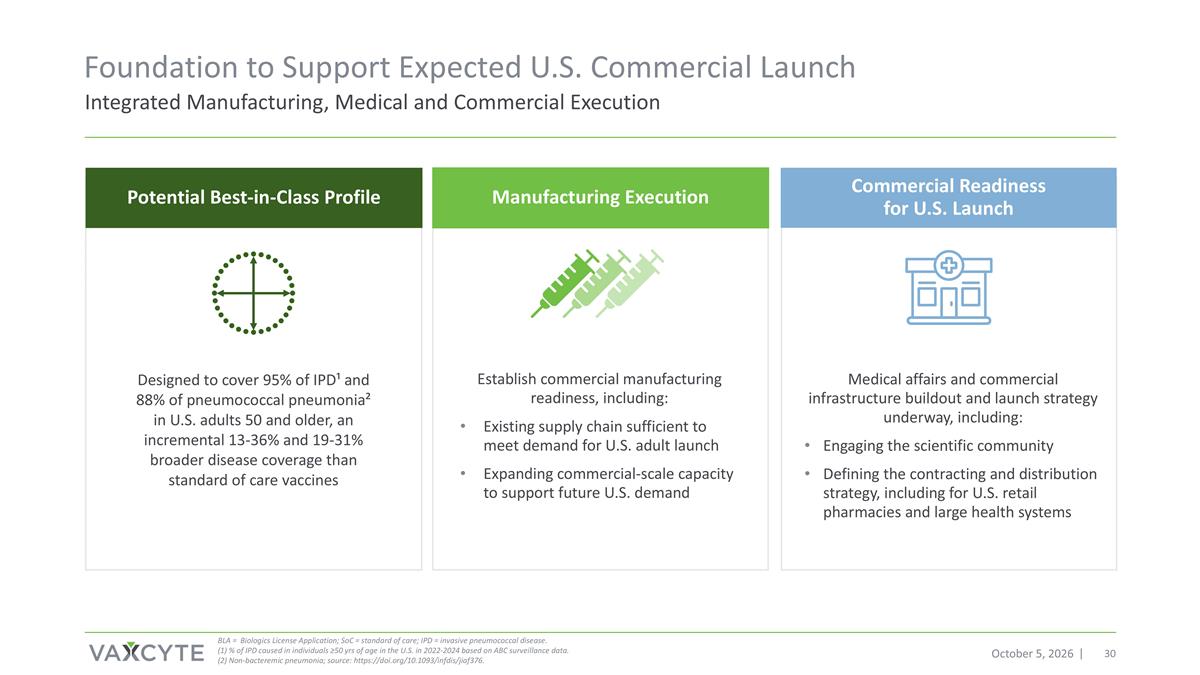
Establish commercial manufacturing readiness, including: Existing supply chain sufficient to meet demand for U.S. adult launch Expanding commercial-scale capacity to support future U.S. demand Foundation to Support Expected U.S. Commercial Launch October 5, 2026 Medical affairs and commercial infrastructure buildout and launch strategy underway, including: Engaging the scientific community Defining the contracting and distribution strategy, including for U.S. retail pharmacies and large health systems Designed to cover 95% of IPD¹ and 88% of pneumococcal pneumonia² in U.S. adults 50 and older, an incremental 13-36% and 19-31% broader disease coverage than standard of care vaccines BLA = Biologics License Application; SoC = standard of care; IPD = invasive pneumococcal disease. (1) % of IPD caused in individuals ≥50 yrs of age in the U.S. in 2022-2024 based on ABC surveillance data. (2) Non-bacteremic pneumonia; source: https://doi.org/10.1093/infdis/jiaf376. Potential Best-in-Class Profile Manufacturing Execution Commercial Readiness for U.S. Launch Integrated Manufacturing, Medical and Commercial Execution
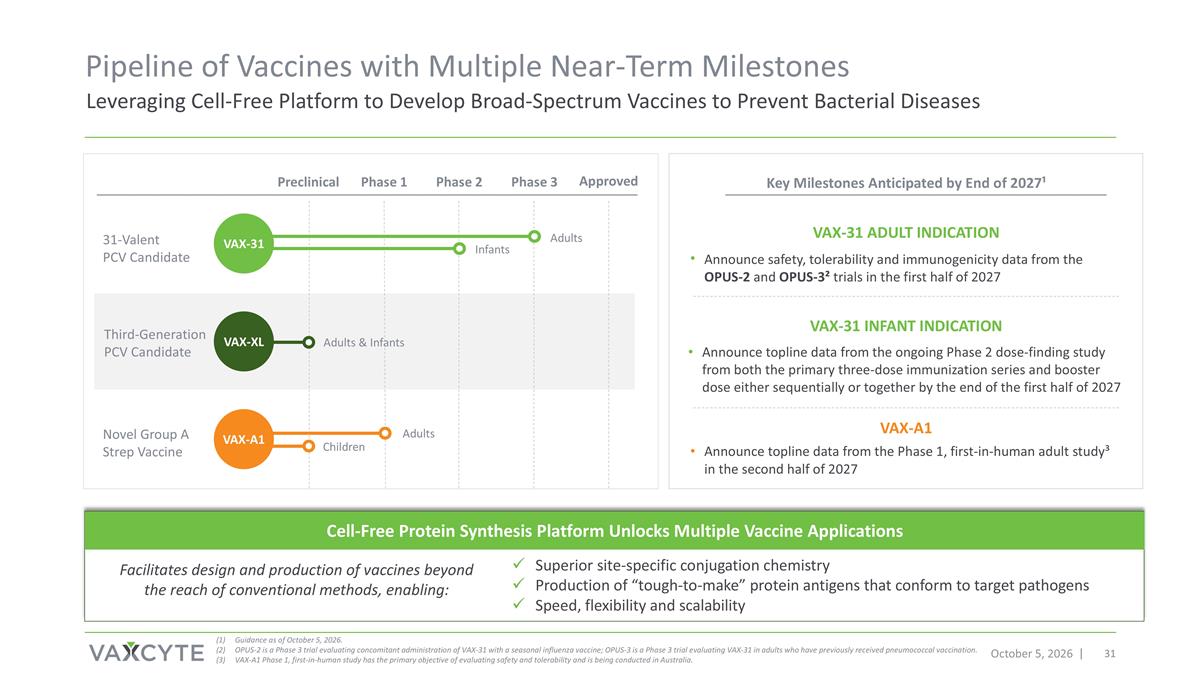
Announce safety, tolerability and immunogenicity data from the OPUS-2 and OPUS-3² trials in the first half of 2027 Pipeline of Vaccines with Multiple Near-Term Milestones October 5, 2026 Guidance as of October 5, 2026. OPUS-2 is a Phase 3 trial evaluating concomitant administration of VAX-31 with a seasonal influenza vaccine; OPUS-3 is a Phase 3 trial evaluating VAX-31 in adults who have previously received pneumococcal vaccination. VAX-A1 Phase 1, first-in-human study has the primary objective of evaluating safety and tolerability and is being conducted in Australia. Leveraging Cell-Free Platform to Develop Broad-Spectrum Vaccines to Prevent Bacterial Diseases Preclinical Phase 1 Phase 2 Phase 3 Approved 31-Valent PCV Candidate Adults Infants VAX-31 Third-Generation PCV Candidate Adults & Infants VAX-XL Key Milestones Anticipated by End of 2027¹ Announce topline data from the ongoing Phase 2 dose-finding study from both the primary three-dose immunization series and booster dose either sequentially or together by the end of the first half of 2027 VAX-31 Adult indication VAX-31 Infant indication Announce topline data from the Phase 1, first-in-human adult study³ in the second half of 2027 VAX-A1 Cell-Free Protein Synthesis Platform Unlocks Multiple Vaccine Applications Superior site-specific conjugation chemistry Production of “tough-to-make” protein antigens that conform to target pathogens Speed, flexibility and scalability Facilitates design and production of vaccines beyond the reach of conventional methods, enabling: Novel Group A Strep Vaccine Adults VAX-A1 Children


Appendix October 5, 2026
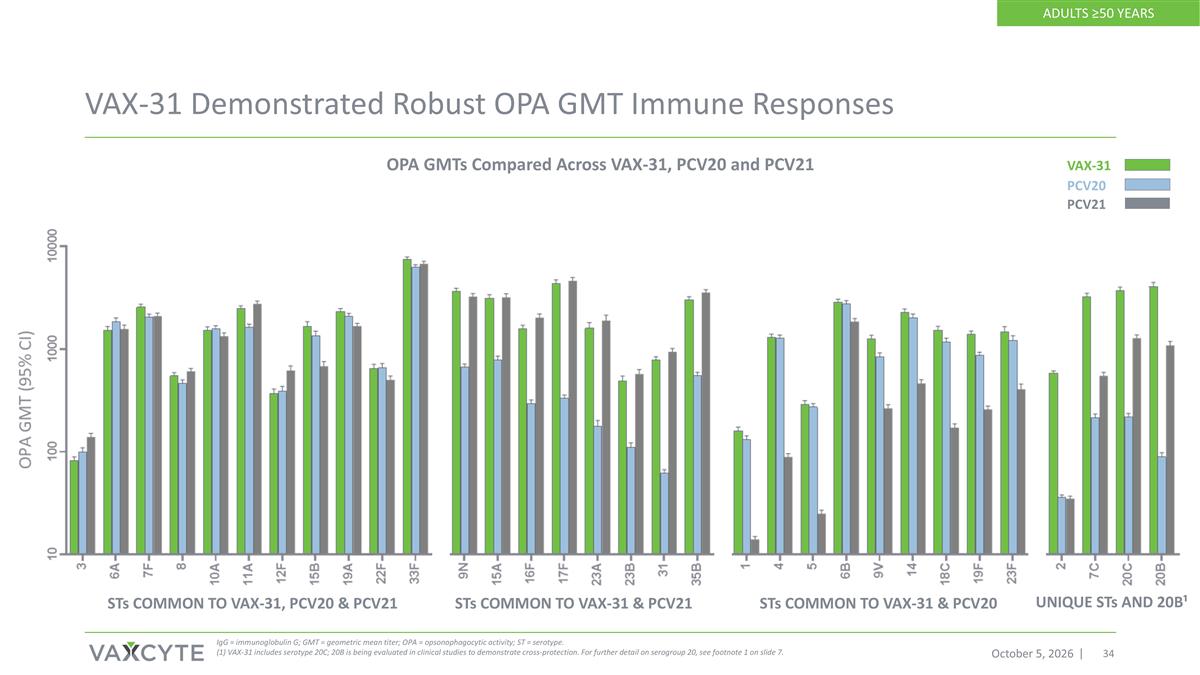
VAX-31 Demonstrated Robust OPA GMT Immune Responses October 5, 2026 IgG = immunoglobulin G; GMT = geometric mean titer; OPA = opsonophagocytic activity; ST = serotype. (1) VAX-31 includes serotype 20C; 20B is being evaluated in clinical studies to demonstrate cross-protection. For further detail on serogroup 20, see footnote 1 on slide 7. STs COMMON TO VAX-31, PCV20 & PCV21 STs COMMON TO VAX-31 & PCV20 STs COMMON TO VAX-31 & PCV21 UNIQUE STs AND 20B¹ OPA GMTs Compared Across VAX-31, PCV20 and PCV21 ADULTS ≥50 YEARS VAX-31 PCV21 PCV20
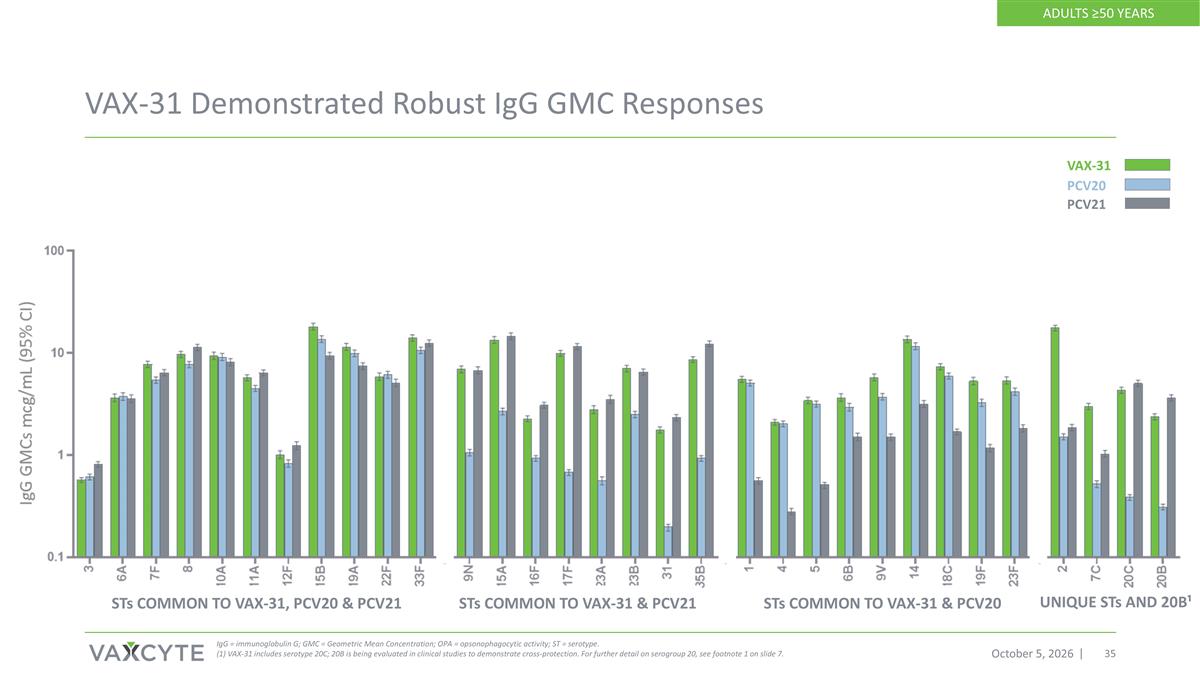
VAX-31 Demonstrated Robust IgG GMC Responses October 5, 2026 IgG = immunoglobulin G; GMC = Geometric Mean Concentration; OPA = opsonophagocytic activity; ST = serotype. (1) VAX-31 includes serotype 20C; 20B is being evaluated in clinical studies to demonstrate cross-protection. For further detail on serogroup 20, see footnote 1 on slide 7. STs COMMON TO VAX-31, PCV20 & PCV21 STs COMMON TO VAX-31 & PCV20 STs COMMON TO VAX-31 & PCV21 UNIQUE STs AND 20B¹ ADULTS ≥50 YEARS VAX-31 PCV21 PCV20